 5 citations
,
October 2022 in “Phenomics”
5 citations
,
October 2022 in “Phenomics” Your skin is like an ecosystem, with its own community of microbes and substances that interact and affect its health.
7 citations
,
September 1980 in “Zoological Journal of the Linnean Society” Dendritic cells help regulate skin development and hair growth in mice.
February 2023 in “Biological and Clinical Sciences Research Journal” Chemotherapy often causes hair loss, mouth sores, and dry skin.
January 2014 in “ACTA SCIENTIAE VETERINARIAE” The cat's skin condition was resistant to treatment and did not improve.
7 citations
,
March 1986 in “British Veterinary Journal” Canine skin has two main layers: the epidermis and dermis, with a supportive subcutis layer.
 12 citations
,
January 2005 in “Pediatric Dermatology”
12 citations
,
January 2005 in “Pediatric Dermatology” Fox Fordyce disease might be more common in prepubertal girls than thought and can be managed with treatment.
1 citations
,
October 2025 in “Journal of Visualized Experiments” The method creates skin organoids with hair follicles for research on skin conditions and treatments.
 November 2022 in “Journal of Investigative Dermatology”
 Ultrasound is a useful, safe, and affordable tool for diagnosing and managing skin nodules.
2 citations
,
January 2014 in “Photochemical & photobiological sciences” Grasp protein helps maintain skin health after UVB exposure.
 1 citations
,
July 2016 in “Elsevier eBooks”
1 citations
,
July 2016 in “Elsevier eBooks” Understanding skin structure and development helps diagnose and treat skin disorders.
The nail immune system is similar to hair but different from skin, with fewer immune markers.
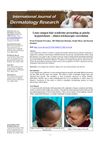 January 2026 in “International Journal of Dermatology Research”
 Early recognition of loose anagen hair syndrome is important to prevent misdiagnosis and unnecessary treatments.
 5 citations
,
January 2006 in “Indian Journal of Dermatology, Venereology and Leprology”
5 citations
,
January 2006 in “Indian Journal of Dermatology, Venereology and Leprology” Synthetic hairs are not recommended for use.
19 citations
,
May 2016 in “Matrix Biology” Deleting a specific protein in skin cells disrupts normal hair growth and development.
Some goats get rare skin diseases from not enough vitamin E, selenium, or zinc, but they're usually still healthy.
12 citations
,
December 2010 in “Burns” P-auricular skin is the best donor site for high stem cell content in keratinocyte cultures.
July 1974 in “Archives of dermatology” The woman's widespread skin condition did not improve despite various treatments.
118 citations
,
January 1992 in “Experientia” October 2025 in “The Sri Lanka Journal of Dermatology” Inverted follicular keratosis can look like cancer but is actually a harmless tumor.
18 citations
,
June 1993 in “Archives of Dermatological Research” Human hair follicles can be used to create skin-like tissue for wound healing and drug testing.
 38 citations
,
June 2018 in “Archives of Toxicology”
38 citations
,
June 2018 in “Archives of Toxicology” Different species and human skin models vary in their skin enzyme activities, with pig skin and some models closely matching human skin, useful for safety assessments and understanding the skin's protective roles.
 33 citations
,
September 2016 in “British journal of dermatology/British journal of dermatology, Supplement”
33 citations
,
September 2016 in “British journal of dermatology/British journal of dermatology, Supplement” Human hair follicle dermal cells can effectively replace other cells in engineered skin.
 27 citations
,
October 2017 in “British Journal of Dermatology”
27 citations
,
October 2017 in “British Journal of Dermatology” Patients with GATA2 deficiency show early skin symptoms that help diagnose the condition.
82 citations
,
January 1994 in “Skin Pharmacology and Physiology” Hair follicles and glands significantly increase steroid absorption in skin.
 4 citations
,
August 2017 in “Journal of cutaneous pathology”
4 citations
,
August 2017 in “Journal of cutaneous pathology” An 8-year-old girl had a rare, benign skin tumor on her forehead.

Researchers developed a cost-effective, ethical skin model using hairless guinea pig cells for toxicology studies.
December 2025 in “Skin Appendage Disorders” Scalp apocrine glands may help remove waste and balance electrolytes, but their role is not fully understood.
25 citations
,
January 2003 in “Plastic & Reconstructive Surgery” Nail-matrical fibroblasts can make non-nail cells produce hard keratin, useful for nail repair.
1 citations
,
October 2024 in “Indian Dermatology Online Journal” PRP injections for hair loss may cause scalp nodules that can persist but often regress on their own.
March 2018 in “Dermatologic Surgery”