 61 citations
,
September 2008 in “Stem Cells”
61 citations
,
September 2008 in “Stem Cells” Most hair follicle stem cells do not protect their DNA by dividing it unevenly.
Keratinocytes grew and migrated into hair follicle areas but disappeared after 15-20 days.
 1 citations
,
December 2010 in “Elsevier eBooks”
1 citations
,
December 2010 in “Elsevier eBooks” Cell transplantation faces challenges in genitourinary reconstruction, but alternative tissue sources and microencapsulation show promise.
 3 citations
,
January 2022 in “Biomaterials Science”
3 citations
,
January 2022 in “Biomaterials Science” The dressing can track joint movement and speed up healing of joint wounds.
43 citations
,
July 1994 in “Journal of Cell Science” Cross-linked proteins help maintain the structure of hair, feathers, and hagfish teeth.
 153 citations
,
August 2002 in “Dermatologic Surgery”
153 citations
,
August 2002 in “Dermatologic Surgery” Follicular Unit Extraction (FUE) is a less invasive hair transplant method with minimal scarring, suitable for about 60% of patients, especially those needing fewer grafts and quicker recovery.
92 citations
,
March 2016 in “Developmental Cell” Zebrafish skin regeneration relies on cell behaviors and reactive oxygen species, with antioxidants reducing and hydrogen peroxide increasing regeneration.
 1 citations
,
June 2017 in “Actas Dermo-Sifiliográficas”
1 citations
,
June 2017 in “Actas Dermo-Sifiliográficas” Follicular Unit Extraction (FUE) is a hair transplant method with less scarring and discomfort but requires skilled surgeons and has limitations on graft numbers per session.

Fraser's Dolphin can heal skin wounds with minimal scarring, unlike humans.
 30 citations
,
May 2005 in “Pediatric dermatology”
30 citations
,
May 2005 in “Pediatric dermatology” Some families have a genetic condition where they are born with irregular scalp defects.
11 citations
,
July 2014 in “Journal of The Royal Society Interface” A new method accurately estimates clone sizes in cells without considering time.
Hair follicle-like structures can form when specific hair cells are mixed and implanted in mice.
33 citations
,
September 1987 in “American Journal of Medical Genetics” Uncombable hair is inherited dominantly with complete penetrance.
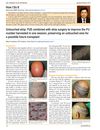 4 citations
,
January 2012 in “International Society of Hair Restoration Surgery”
4 citations
,
January 2012 in “International Society of Hair Restoration Surgery” Combining FUE and strip surgery increases hair harvested in one session and keeps options open for future transplants.
 7 citations
,
November 2014 in “Histochemistry and Cell Biology”
7 citations
,
November 2014 in “Histochemistry and Cell Biology” The we/we wal/wal mice have defects in hair growth and skin layer formation, causing hair loss, useful for understanding alopecia.
 1 citations
,
July 2010 in “Dermatologic Surgery”
1 citations
,
July 2010 in “Dermatologic Surgery” Splitting one hair follicle into two can help regrow hair with a 50% to 70% success rate, useful when donor hair is limited.
4 citations
,
January 2025 in “Annals of the New York Academy of Sciences” Spiny mice can regenerate tissues instead of forming scars.
28 citations
,
October 1985 in “The Journal of Cell Biology” Researchers isolated and identified structural components of human hair follicles, providing a model for studying hair formation.
 January 2023 in “Journal of Cutaneous and Aesthetic Surgery”
 Follicular unit extraction can effectively treat a specific type of vitiligo.
49 citations
,
March 1996 in “Experimental Brain Research” 421 citations
,
September 2003 in “Development” Stem cell behavior varies with stimuli, and lineage changes can happen without affecting stem cell division.
15 citations
,
November 2020 in “Development” Stem cells in the eye have different roles and behaviors, helping maintain and repair the eye's surface.
61 citations
,
February 1982 in “Cell and Tissue Research” 8 citations
,
October 2024 in “Frontiers in Cell and Developmental Biology” Telocytes help organize male reproductive tissues and their changes can lead to diseases.
12 citations
,
April 2019 in “Nature protocols” Scientists created a functional 3D skin system from stem cells that can be transplanted into wounds.
 14 citations
,
March 2017 in “Plastic and reconstructive surgery. Global open”
14 citations
,
March 2017 in “Plastic and reconstructive surgery. Global open” Hair follicle damage happens during hair transplants and can impact success; better surgical methods are needed.

Contractile hydrogels help wounds heal faster and with less scarring.
 17 citations
,
June 2002 in “Dermatologic Surgery”
17 citations
,
June 2002 in “Dermatologic Surgery” Chinese patients have fewer hair follicles than Caucasians, and transplanting hair at 40% of normal density works for natural-looking hairlines.
 14 citations
,
January 2021 in “Scientific Reports”
14 citations
,
January 2021 in “Scientific Reports” Using micro skin tissue columns improves skin wound healing and reduces scarring.
 1 citations
,
January 2017 in “International Journal of Dermoscopy”
1 citations
,
January 2017 in “International Journal of Dermoscopy” Digital imaging can effectively evaluate the donor area for hair transplants, showing variations in hair density and grouping by age and severity of hair loss.