 5 citations
,
January 1990 in “Journal of Society of Cosmetic Chemists of Japan”
5 citations
,
January 1990 in “Journal of Society of Cosmetic Chemists of Japan” Permanent wave lotion can extract proteins from hair, especially when pH is higher, and repeated treatments or bleaching can damage hair.
10 citations
,
December 2001 in “PubMed” The conclusion is that substances can penetrate hair fibers through multiple pathways, including both the cell membrane complex and the non-keratinous parts.
30 citations
,
April 2009 in “Mycoses” Microsporum gypseum fungus breaks down keratin in hair by digesting it enzymatically, starting with less keratinized parts.
 January 2019 in “Durham e-Theses (Durham University)”
 Advanced microscopy shows hair damage and keratin proteins' roles, aiding future cosmetic treatments.
 54 citations
,
January 2013 in “Journal of Biological Macromolecules”
54 citations
,
January 2013 in “Journal of Biological Macromolecules” A new method effectively separates keratin-associated proteins and keratin from human hair.
 10 citations
,
May 2020 in “Journal of proteome research”
10 citations
,
May 2020 in “Journal of proteome research” Explosions don't stop hair proteins from being used to identify people.
 January 2023 in “Czech Journal of Animal Science”
 Proteins influence the quality and traits of cashmere goat fleece, affecting hair strength and diameter.
 35 citations
,
April 2014 in “Journal of proteomics”
35 citations
,
April 2014 in “Journal of proteomics” Feed restriction in sheep leads to finer wool fibers but may reduce wool quality.
 1 citations
,
January 2013 in “Chronicles of young scientists”
1 citations
,
January 2013 in “Chronicles of young scientists” Immuno-cosmeceuticals from chicken egg yolk can effectively repair and improve damaged hair.
13 citations
,
February 2019 in “Zoology” Lustre mutant sheep have normal hair structure and proteins but differ in felting properties.
 3 citations
,
January 2004 in “Sen i Gakkaishi”
3 citations
,
January 2004 in “Sen i Gakkaishi” DTDG in hair treatments reduces damage and preserves hair structure.
 April 2024 in “Advances in Redox Research”
 Human hair strength and health are linked to sulfur compounds that can be reduced by stress but improved with sulfur supplements.
 12 citations
,
July 2016 in “Forensic science international”
12 citations
,
July 2016 in “Forensic science international” The research found that postmortem root bands in hair are likely caused by the breakdown of a specific part of the hair's inner structure after death.
 1 citations
,
July 2019 in “Microscopy Today”
1 citations
,
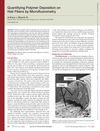
July 2019 in “Microscopy Today” Microfluorometry effectively measures how much polymer coats and penetrates hair, useful for evaluating hair products.

Human hair keratins can self-assemble and support cell growth, useful for biomedical applications.
 191 citations
,
November 1959 in “Annals of the New York Academy of Sciences”
191 citations
,
November 1959 in “Annals of the New York Academy of Sciences” Hair and wool have complex microscopic structures with microfibrils and varying cystine content.
Acidic sandy clay damages archaeological hair the most, while dry conditions preserve but make it brittle; silicone oil can help keep the hair flexible.
37 citations
,
October 2015 in “PeerJ” Perming significantly changes hair's molecular structure, while shampoo and conditioner do not.
53 citations
,
July 2016 in “Cosmetics” Future hair cosmetics will be safer and more effective.
 April 2024 in “Cosmetics”
 Different oils affect hair flexibility and strength, with their impact varying on whether hair is virgin or bleached.
 May 2024 in “Ultramicroscopy”
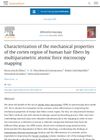
 Atomic Force Microscopy is a more accurate way to assess hair damage and the effect of cosmetic treatments.
66 citations
,
June 2004 in “Biophysical Journal” Hard α-keratin in hair has a unique, nonordered structure, different from other fibers.
 56 citations
,
January 1996 in “Journal of Forensic Sciences”
56 citations
,
January 1996 in “Journal of Forensic Sciences” Dye enters hair at the edges of cuticle cells and penetrates more from water than alcohol-based solutions.
August 1989 in “Proceedings ... annual meeting, Electron Microscopy Society of America/Proceedings, annual meeting, Electron Microscopy Society of America” The research provided a detailed view of the non-keratinous parts of human hair fibers.
10 citations
,
November 2013 in “Biochemistry and Molecular Biology Education” Keratins are crucial proteins for hair and nails, with a structure that helps teach protein principles.
13 citations
,
May 2001 in “Current problems in dermatology” Keratin proteins in epithelial cells are dynamic and crucial for cell processes and disease understanding.
 1398 citations
,
May 2008 in “Histochemistry and Cell Biology”
1398 citations
,
May 2008 in “Histochemistry and Cell Biology” Keratins are crucial for cell stability, wound healing, and cancer diagnosis.
52 citations
,
May 2006 in “Journal of Structural Biology” Keratin-associated proteins help link filaments and affect keratin's strength.
62 citations
,
August 2006 in “Journal of Chromatography B” Modern techniques have improved the understanding of keratin proteins, revealing their roles in various cells and potential in disease diagnosis.
44 citations
,
August 1990 in “PubMed” Keratins K1 and K10 are found in the inner root sheath and cuticle of human hair follicles.