Search
for
Sort by
Research
600-630 / 1000+ results
research Endocrine disorders and hormonal therapy for adolescent acne
Hormonal therapies are safe and effective for treating acne in female adolescents, with specific treatments for those with endocrine disorders.
research Dermatoses in Postmenopausal Women in a Tertiary Health Care Center of Bihar: A Prospective Cross-Sectional Study
Most postmenopausal women experience significant skin changes and various skin conditions.
research Oral finasteride use and sexual adverse events: signal detection from disproportionality analyses of data from the United States Food and Drug Administration Adverse Event Reporting System
Oral finasteride may cause more sexual side effects than expected, possibly due to negative publicity and reporting bias.
research Androgen Replacement in Women: A Commentary
Testosterone replacement may help some postmenopausal women with symptoms like fatigue and low libido, but more research is needed to fully understand its effects.
research FERTILITY-SPARING MANAGEMENT OF ENDOMETRIAL INTRAEPITHELIAL NEOPLASIA & ENDOMETRIAL CANCER: A COMPARISON OF THE LEVONORGESTREL-RELEASING INTRAUTERINE DEVICE VS SYSTEMIC THERAPY
Both LNG-IUD and systemic progestins are effective for fertility-sparing treatment, but close monitoring is needed due to recurrence risk.
research Early removal of the Norplant System.
Many women removed the Norplant implant early due to side effects like headaches and irregular bleeding, indicating a need for better patient counseling.
research Skin care during the menopause period: noninvasive procedures of beauty studies
The conclusion is that a combination of noninvasive treatments and lifestyle changes can improve skin health during menopause.
research 310 Clinical Improvements in Erectile Function and Mood in Hypogonadal Men Treated with 4.5% Nasal Testosterone Gel (Natesto)
Natesto nasal gel improves erectile function and mood in men with low testosterone within 30 days.
research Cardiovascular risk factors and events in women with androgen excess
Women with androgen excess, especially those with PCOS, have a much higher risk of heart disease and stroke.
research Menopause and the Skin
Menopause can cause skin to become dry, less elastic, and more wrinkled due to lower estrogen levels.
research PC039: Adverse effects at the level of marginal periodontium secondary to Finasteride administration
Finasteride can cause gum swelling and bleeding, but stopping the drug helps recovery.
research HORMONE THERAPIES: SCIENTIFIC EVIDENCE BASED ON EVIDENCE AND INDISCRIMINATE USE
Properly monitored hormone therapy can improve life quality, but misuse can cause serious health issues.
research Pharmacokinetics of two different formulations of finasteride (topical and oral) in male volunteers with androgeneic alopecia
Topical finasteride may better target hair follicles without significant benefits over oral form.
research Minoxidil for Endocrine Therapy–Induced Alopecia in Women With Breast Cancer—Saint Agatha’s Blessing?
Topical minoxidil improves hair loss in 80% of women with breast cancer undergoing endocrine therapy.
research A systematic review of antiandrogens and feminization in transgender women
Some antiandrogens may lower testosterone better than others, but it's unclear which is best for feminization in transgender women; more research is needed.
research Menopause
The document concludes that individualized treatment and lifestyle changes are important for managing menopause symptoms and health risks.
research PMON224 Newly Observed Interference of Oral Biotin with the Free Testosterone Assay? In a Woman with Postmenopausal Virilization.
Taking biotin can lead to incorrect low results in free testosterone tests.
research Nonsurgical Management of Facial Masculinization and Feminization
Injectables can feminize or masculinize a transgender person's face, but more research is needed for best practices.
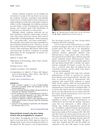
research Hypertrichosis around a leg ulcer being treated with prostaglandin E1 ointment
A woman's excessive hair growth around a leg ulcer was linked to a treatment with Prostaglandin E1 ointment.
research In vivo and in vitro effect of novel 4,16-pregnadiene-6,20-dione derivatives, as 5α-reductase inhibitors
The new compounds may be more effective and cheaper than current treatments for conditions like baldness.
research Clinical efficacy and safety of low‐dose flutamide alone and combined with an oral contraceptive for the treatment of idiopathic hirsutism
Low-dose flutamide helps reduce excessive hair growth and is even more effective with birth control, without bad effects on blood fats.
research DHEA : why, when, and how much ? D’après la conférence de Bruno Allolio (Wuerzburg), 50e Journées internationales d’endocrinologie clinique Henri-Pierre KLOTZ, septembre 2007
DHEA supplementation may improve quality of life, neuropsychological functions, and sexual satisfaction in individuals with adrenal insufficiency, but more research is needed to confirm its safety and effectiveness.
research Is oral minoxidil an effective treatment for female androgenic alopecia?

research Nutraceuticals for Hormonal Imbalance Management
Nutraceuticals can effectively manage hormonal imbalances and related health issues.
research Gender‐affirming hormone therapy for transgender and gender‐diverse adults in Australia
Gender-affirming hormone therapy improves mental health and gender incongruence but requires careful management of cardiovascular and cancer risks.
research Recent advances in oxasteroids chemistry
New methods to make oxasteroids show promise for medical treatments like osteoporosis and breast cancer.
research A finasteride patch for the treatment of androgenetic alopecia: A study of promoting permeability strategy using synthetic novel O-acylmenthols combined with ion-pair
The finasteride patch effectively treats hair loss by enhancing skin absorption.
research Virilizing Ovarian Tumor in a Postmenopausal Women
research Oral Contraception and the Treatment of Acne: Where are we?
Birth control pills help treat acne, especially when caused by excess male hormones, and are safe to use with antibiotics.