 20 citations
,
March 2006 in “Seminars in Cutaneous Medicine and Surgery”
20 citations
,
March 2006 in “Seminars in Cutaneous Medicine and Surgery” Minoxidil and finasteride can help with hair loss, but more research is needed to improve treatments for certain types of hair loss.
5 citations
,
June 2016 in “JAMA Dermatology” People with hair loss should use strong sun protection to prevent scalp skin cancer.
 16 citations
,
March 2013 in “JAMA Dermatology”
16 citations
,
March 2013 in “JAMA Dermatology” A cancer drug called nilotinib might cause hair loss due to inflammation around hair follicles.
 May 2025 in “Frontiers in Pharmacology”
 New treatments are needed for non-scarring alopecia due to current limitations.
 2 citations
,
August 1997 in “Postgraduate Medicine”
2 citations
,
August 1997 in “Postgraduate Medicine” Hair loss common in men and women, limited treatments available.
 1 citations
,
February 2020 in “International Journal of Research in Dermatology”
1 citations
,
February 2020 in “International Journal of Research in Dermatology” Scalp alopecia areata mostly affects young adult males, often starts suddenly, and usually presents as single, patchy lesions.
 March 2023 in “PARIPEX INDIAN JOURNAL OF RESEARCH”
 Dermoscopy helps diagnose different types of hair loss and may reduce the need for biopsies.
 7 citations
,
January 2015 in “Current problems in dermatology”
7 citations
,
January 2015 in “Current problems in dermatology” Hair loss can be caused by stress, infections, drugs, and various diseases, with treatment depending on accurate diagnosis.
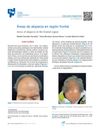 January 2025 in “Revista del Centro Dermatológico Pascua”
 Early diagnosis and treatment can help manage fibrosing alopecia in older women.
 14 citations
,
January 2011 in “International Journal of Trichology”
14 citations
,
January 2011 in “International Journal of Trichology” Some people with severe, long-lasting baldness responded well to a specific combination treatment.
 July 2023 in “Deleted Journal”
 Alopecia areata is the most common type of baldness treated with corticosteroids and minoxidil.
January 2026 in “Journal of Case Reports and Scientific Images” Homeopathic treatment led to full recovery from scarring alopecia.
3 citations
,
January 2020 in “International journal of trichology” Congenital triangular alopecia is a hair loss condition present from birth or early childhood with no effective treatment needed.
 164 citations
,
April 2008 in “Cochrane library”
164 citations
,
April 2008 in “Cochrane library” Current treatments for alopecia show no significant long-term benefits.
 20 citations
,
January 2013 in “Annals of Dermatology”
20 citations
,
January 2013 in “Annals of Dermatology” Topical minoxidil successfully treated temporal triangular alopecia.
October 2025 in “Indian Journal of Paediatric Dermatology” The infant's hair loss resolved naturally by 20 months without treatment.
 41 citations
,
July 2015 in “Clinical and Experimental Dermatology”
41 citations
,
July 2015 in “Clinical and Experimental Dermatology” Psoriasis can cause temporary or permanent hair loss.
July 2024 in “LA CIENCIA AL SERVICIO DE LA SALUD Y NUTRICIÓN” The condition is harmless, doesn't worsen, and needs no invasive treatment.
 47 citations
,
December 2020 in “Journal of the European Academy of Dermatology and Venereology”
47 citations
,
December 2020 in “Journal of the European Academy of Dermatology and Venereology” The document concludes that understanding and treating hair loss requires recognizing its various types and using appropriate diagnostic tools and treatments.
2 citations
,
May 2014 in “PubMed” A 10-year-old boy was diagnosed with a rare scalp condition causing hair loss and treated with a topical cream.
 December 2016 in “Springer eBooks”
 A 45-year-old woman with autoimmune diseases experienced patchy hair loss due to alopecia areata, which has no cure but can be treated, with varying success.
 October 1990 in “Archives of Dermatology”
 Hair loss and growth can be accurately measured using computer-assisted counting.
 13 citations
,
January 2011 in “International Journal of Trichology”
13 citations
,
January 2011 in “International Journal of Trichology” CTA is often mistaken for AA but doesn't respond to steroids and may require hair transplantation.
14 citations
,
September 2015 in “PubMed” Alopecia areata can be managed with various treatments, and severe cases should be referred to dermatologists.
 January 2022 in “Clinical Cases in Dermatology”
 Stress can cause temporary hair loss, which usually gets better after the stress is gone.
 February 2026 in “Zenodo (CERN European Organization for Nuclear Research)”
 New treatments for androgenetic alopecia are emerging, improving options for managing hair loss.
26 citations
,
January 2009 in “Annals of Dermatology” Two rare bald spots on the back of the scalp were found to be lupus, not alopecia areata.
 January 2026 in “Forum Dermatologicum”
 Hair loss can be caused by cancer, treatments, or skin conditions, and trichoscopy helps diagnose it.
 7 citations
,
September 1977 in “PubMed”
7 citations
,
September 1977 in “PubMed” A new technique called hair-lifting was introduced to treat male-pattern baldness and can also give a partial face-lift.
May 1979 in “Archives of Dermatology” Alopecia can be linked to autoimmune issues, vitiligo, nail problems, and sometimes cancer treatments.