 March 2024 in “Frontiers in Endocrinology”
 The study found that alopecia areata and hypothyroidism increase the risk of each other, but androgenetic alopecia and hypothyroidism do not.
 122 citations
,
April 1995 in “Journal of Cutaneous Pathology”
122 citations
,
April 1995 in “Journal of Cutaneous Pathology” The document describes how to tell different types of non-scarring hair loss apart by looking at hair and scalp tissue under a microscope.
 4 citations
,
January 2023 in “Frontiers in Immunology”
4 citations
,
January 2023 in “Frontiers in Immunology” Shorter telomeres in white blood cells may increase the risk of a common type of hair loss.
 2 citations
,
January 2021 in “Przegląd Dermatologiczny (1959)”
2 citations
,
January 2021 in “Przegląd Dermatologiczny (1959)” The article discusses various treatments for different types of non-scarring hair loss.
 1 citations
,
February 2019 in “PubMed”
1 citations
,
February 2019 in “PubMed” Minoxidil is effective in treating various types of hair loss and can improve quality of life, with combination therapies showing increased effectiveness.
1 citations
,
January 2019 in “Via Medica Journals” Graham-Little syndrome causes hair loss and skin bumps, with difficult treatment options.
 1 citations
,
December 2015 in “Vestnik dermatologii i venerologii”
1 citations
,
December 2015 in “Vestnik dermatologii i venerologii” Patients with non-scarring alopecia often experience emotional disorders like depression and stress.
June 2026 in “Journal of Cutaneous Pathology” Polarized light microscopy is better at distinguishing scarring from non-scarring alopecia than diffractive microscopy.
 January 2026 in “Archives of Current Medical Research”
 Telogen effluvium is the most common hair loss in women, often linked to low iron, while tight hairstyles and headscarves increase traction alopecia risk.
 November 2025 in “DOAJ (DOAJ: Directory of Open Access Journals)”
 Insomnia may increase alopecia areata risk, but more research is needed.
October 2025 in “JDDG Journal der Deutschen Dermatologischen Gesellschaft” Hair loss negatively impacts quality of life, and psychological support can help.
 May 2025 in “Frontiers in Pharmacology”
 New treatments are needed for non-scarring alopecia due to current limitations.
May 2025 in “OPAL (Open@LaTrobe) (La Trobe University)” Current treatments for non-scarring alopecia have limited effectiveness and side effects, while natural remedies may offer safer alternatives but need more research.

Tumid lupus erythematosus can cause non-scarring hair loss on the scalp and requires careful diagnosis.

Teledermatology effectively diagnoses and manages non-scarring alopecia remotely.
 June 2024 in “Дерматовенерология Косметология”
 Autologous follicular stem cells improved hair loss in 57% of patients.

Higher levels of β-carotene and vitamin E may help prevent certain types of hair loss.
 November 2023 in “Journal of Cosmetic Dermatology”
 People with non-scarring hair loss often have lower vitamin D levels than those without hair loss.
 September 2023 in “Дерматовенерология, косметология”
 Digital video microscopy is a useful non-invasive tool for diagnosing non-scarring alopecia.
 September 2023 in “Medicina-lithuania”
 The study suggests that analyzing DNA can help treat hair loss, but more research is needed.
 December 2022 in “Cureus”
 Low iron levels are linked to hair loss in women.
 October 2022 in “Benha Journal of Applied Sciences”
 People with non-scarring hair loss have higher levels of DKK-1, a protein linked to hair growth, than those with scarring hair loss or no hair loss.
 September 2022 in “Nepal journal of dermatology, venereology & leprology”
 Nepalese patients with hair loss, especially women and those with androgenetic alopecia, experience a significant decrease in quality of life.
 July 2022 in “المجلة العراقية للصيدلة”
 Most women with excessive hair growth (hirsutism) also experience a common type of non-scarring hair loss called Androgenetic alopecia with telogen effluvium.
May 2021 in “DOAJ (DOAJ: Directory of Open Access Journals)” New technologies may improve topical treatments for hair loss.
December 2020 in “RUHS Journal of Health Science” PRP can help hair growth in some types of hair loss.
 October 2018 in “Vestnik dermatologii i venerologii”
 Certain growth factors affect hair loss in women and could be targeted for treatment.
Multiphoton microscopy can effectively distinguish between scarring and non-scarring alopecia.
 August 2017 in “Journal of evolution of medical and dental sciences”
 Trichoscopy is effective for diagnosing different types of non-scarring hair loss.
 1 citations
,
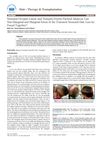
February 2014 in “Hair therapy & transplantation”
1 citations
,
February 2014 in “Hair therapy & transplantation” A baby boy had two types of temporary hair loss at birth, which might be two forms of newborn hair loss combined.