 March 2024 in “Indian Journal of Dermatology”
 The man was diagnosed with Cronkhite-Canada syndrome, a rare disorder with GI polyps, skin issues, hair loss, and nail problems.
Hair loss can be caused by hormones, illness, autoimmune disorders, or vitamin deficiencies, and treatments vary depending on the type.
 30 citations
,
January 2013 in “International Journal of Trichology”
30 citations
,
January 2013 in “International Journal of Trichology” The most common causes of hair loss in Jordanian children are fungal infections, autoimmune hair loss, and hair shedding after fever, with zinc deficiency also being a notable cause.
 2 citations
,
July 2013 in “InTech eBooks”
2 citations
,
July 2013 in “InTech eBooks” Scalp biopsy helps tell apart permanent and temporary hair loss types and guides treatment.
 1 citations
,
January 2009 in “Journal of Clinical Dermatology”
1 citations
,
January 2009 in “Journal of Clinical Dermatology” Hair loss after childbirth is more common in women who have had multiple births, cesarean deliveries, significant weight gain, and full-term pregnancies.
16 citations
,
February 1999 in “American Journal of Dermatopathology” Lymphocytes may hinder hair stem cells, causing hair loss without scarring.
 June 2017 in “Reactions Weekly”
 Some breast cancer treatments caused long-term hair loss in women, similar to a condition called alopecia areata.
 October 2016 in “Mağallaẗ Kulliyyaẗ al-ṭibb Baġdād”
 Most Iraqi women with telogen effluvium had no clear cause for their hair loss, and few had significant thinning.
 October 2016 in “Mağallaẗ Kulliyyaẗ al-ṭibb Baġdād”
 Most Iraqi women with telogen effluvium did not have a clear cause for their hair loss, and few had significant thinning.
 January 2008 in “Dialnet (Universidad de la Rioja)”
 Alopecia can be linked to autoimmune diseases and shows different hair loss patterns.
 11 citations
,
January 2018 in “Annals of Dermatology”
11 citations
,
January 2018 in “Annals of Dermatology” Some people experienced temporary hair loss after hair transplant surgery but recovered fully within 10 months.
 January 2022 in “Clinical Cases in Dermatology”
 Androgenetic alopecia, a common hair loss condition, can be treated with topical minoxidil, oral finasteride, or oral spironolactone, and new treatments like platelet-rich plasma, low-level laser therapy, and janus-kinase inhibitors are being explored.
 6 citations
,
October 2014 in “PubMed”
6 citations
,
October 2014 in “PubMed” Autoimmune diseases like lupus, dermatomyositis, and scleroderma can cause hair loss and other hair problems, and treatments for these diseases might also affect hair.
18 citations
,
January 2018 in “BMC dermatology” A new mutation in the PLEC gene causes a rare condition with skin blistering, muscle weakness, and hair loss.
 November 2021 in “CRC Press eBooks”
 Telogen effluvium is a common, temporary hair loss condition often affecting young women.
1 citations
,
October 2020 in “Journal of the American Society of Nephrology” Proguanil can cause anemia and hair loss in kidney disease patients.
 November 2021 in “CRC Press eBooks”
 Anagen effluvium is a reversible condition causing sudden hair loss, often due to chemotherapy or head radiation.
 3 citations
,
January 2019 in “Journal of Dermatology”
3 citations
,
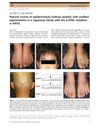
January 2019 in “Journal of Dermatology” The p.P25L mutation in the KRT5 gene causes a rare skin condition that worsens over time and may lead to hair loss starting in young adulthood.
 29 citations
,
January 2017 in “Skin appendage disorders”
29 citations
,
January 2017 in “Skin appendage disorders” Hair loss due to syphilis can be identified using trichoscopy and is treatable with antibiotics.
 7 citations
,
November 2000 in “Clinics in Dermatology”
7 citations
,
November 2000 in “Clinics in Dermatology” Most hair loss in children is caused by a few common conditions and is easy to diagnose, but rare types require careful evaluation.

The document says that Androgenetic alopecia, a common hair loss condition, affects women less often and usually less severely, but early diagnosis and treatment are important.
30 citations
,
May 2008 in “International Journal of Dermatology” Lipedematous alopecia causes permanent hair loss due to increased scalp fat.
1 citations
,
September 2003 in “Praxis” Hair loss is a significant challenge with psychological effects, but treatments like minoxidil and finasteride are effective.
 1 citations
,
May 2016 in “Current Opinion in Pediatrics”
1 citations
,
May 2016 in “Current Opinion in Pediatrics” Children's hair loss can be caused by various factors and should be treated with appropriate, age-specific methods and psychological support.
Androgenetic alopecia causes gradual hair thinning due to genetics and hormones, with treatment options including scalp prostheses.
 35 citations
,
September 2017 in “PubMed”
35 citations
,
September 2017 in “PubMed” The document concludes that hair loss has many causes and treatments vary, including medication for pattern baldness and addressing underlying issues for other types.
 9 citations
,
December 2014 in “British Journal of Dermatology”
9 citations
,
December 2014 in “British Journal of Dermatology” Hedgehog pathway inhibitors used for skin cancer can cause significant hair loss, which may improve after stopping the medication.
 November 2014 in “Prescriber”
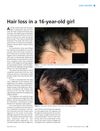
 The 16-year-old girl with hair loss was successfully treated for alopecia areata, leading to significant hair regrowth.
 19 citations
,
January 2012 in “International Journal of Trichology”
19 citations
,
January 2012 in “International Journal of Trichology” Propionibacterium acnes might be linked to hair casts and possibly alopecia.
Accurate diagnosis of hair loss types is crucial for effective treatment.