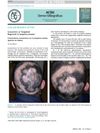
 April 2016 in “Actas Dermo-Sifiliográficas”
 The document concludes that a unique target-like hair regrowth pattern in alopecia areata may be more common than thought and should be properly identified.
717 citations
,
June 2010 in “Nature” Alopecia areata involves both innate and adaptive immunity, with specific genes linked to the disease.
 1 citations
,
December 2010 in “InnovAiT”
1 citations
,
December 2010 in “InnovAiT” The document concludes that accurate diagnosis and appropriate management are crucial for treating various hair disorders, which have significant psychological impacts.
 4 citations
,
October 2011 in “Pediatric dermatology”
4 citations
,
October 2011 in “Pediatric dermatology” Head lice can cause unusual patchy hair loss.
 4 citations
,
May 2022 in “Frontiers in Medicine”
4 citations
,
May 2022 in “Frontiers in Medicine” About 11% of patients with secondary syphilis had Syphilitic Alopecia, which usually improved with treatment.
July 1996 in “Hair transplant forum international” 
Different types of hair loss can be caused by hormones, stress, autoimmune disorders, illness, or nutritional deficiencies, and can be treated with medication, nutritional supplements, or hair transplantation.
 February 2013 in “Archives of Disease in Childhood: Education & Practice”
 Different types of alopecia in children require specific diagnoses and treatments.
 4 citations
,
May 2019 in “Journal of The European Academy of Dermatology and Venereology”
4 citations
,
May 2019 in “Journal of The European Academy of Dermatology and Venereology” Hair loss treatment caused more hair loss in a man.
AGA is caused by genetics and androgens, treatable with finasteride and minoxidil.
 October 2021 in “International journal of research in dermatology”
 No link between scalp patterns and alopecia severity in children, but more severe cases often had nail abnormalities.
April 2025 in “Pediatric Dermatology” Scalp biopsies are essential for diagnosing congenital alopecia areata.

Alopecia areata, a type of hair loss, may be passed through T cells and has genetic links, while treatments vary in effectiveness. Male pattern baldness can be treated with finasteride and is influenced by androgens in hair follicles.
 January 2023 in “Springer eBooks”
 Most older adults experience pattern hair loss due to shrinking hair follicles, with men and women showing different balding patterns.
 April 2026 in “International Journal of Drug Delivery Technology”
 Alopecia can often be managed effectively with various treatments, but early diagnosis is crucial for preventing permanent hair loss.
 November 2023 in “British Journal of Dermatology”
 Mutations in the WNT10A gene cause Short Anagen Hair syndrome and increase the risk of male pattern hair loss.
January 2025 in “Archivio istituzionale della ricerca (Alma Mater Studiorum Università di Bologna)” Accurate diagnosis is crucial to distinguish alopecia areata incognita from androgenetic alopecia in men for proper treatment.
 1 citations
,
May 1965 in “Medical Clinics of North America”
1 citations
,
May 1965 in “Medical Clinics of North America” Hair growth dysfunction involves various conditions with limited treatment options.
 18 citations
,
November 2012 in “Australasian Journal of Dermatology”
18 citations
,
November 2012 in “Australasian Journal of Dermatology” A 66-year-old man with a rare case of male frontal fibrosing alopecia did not regrow hair despite treatment.
 1 citations
,
July 2019 in “Case reports in dermatology”
1 citations
,
July 2019 in “Case reports in dermatology” A Thai boy was diagnosed with a rare hair disorder causing hair thinning and shedding.
 41 citations
,
July 2017 in “Journal of The American Academy of Dermatology”
41 citations
,
July 2017 in “Journal of The American Academy of Dermatology” Men with Frontal fibrosing alopecia typically lose hair on the front scalp and sometimes on sideburns and upper lip, with treatments showing varied success.
 2 citations
,
February 2014 in “Hair therapy & transplantation”
2 citations
,
February 2014 in “Hair therapy & transplantation” Alopecia Areata is an autoimmune condition causing hair loss, influenced by genetics, environment, and possibly improved by anti-MIF therapy, with many patients experiencing regrowth within a year.
 March 2023 in “Journal of Cosmetic Dermatology”
 A woman's progressive hair loss was correctly diagnosed as a rare condition called fibrosing alopecia in a pattern distribution after initially being mistaken for a more common type.
 November 2025 in “International Journal of Research in Medical Sciences”
 Diffuse alopecia in females is often linked to certain medications, diseases, and low hemoglobin, while female pattern hair loss is linked to age, duration, and family history.
 16 citations
,
May 2011 in “Dermatologic therapy”
16 citations
,
May 2011 in “Dermatologic therapy” Effective treatments for severe alopecia areata are still lacking.
 June 2023 in “Asian Journal of Pharmaceutical Research”
 Different types of hair loss require specific treatments, and new treatments are being developed.
 January 1953 in “The Lancet”
 Alopecia areata's causes are unclear, treatments exist but relapses are common.
 December 2024 in “Indian Journal of Dermatology Venereology and Leprology”
 Atypical male hair loss may not respond to usual treatments.
412 citations
,
January 1998 in “Science” A mutation in the human hairless gene causes alopecia universalis.
 20 citations
,
July 2008 in “Dermatologic Therapy”
20 citations
,
July 2008 in “Dermatologic Therapy” The document says that treating the root cause of hair follicle damage is crucial to prevent permanent hair loss, and treatment options vary.