Search
for
Sort by
Research
540-570 / 1000+ results
research Investigation and analysis of 1030 primary hair transplantation cases: a retrospective study
The study found that hair transplant complications are rare, with swelling being the most common issue.

research MALE-PATTERN HAIR LOSS — A SUPRAORBITAL NERVE ENTRAPMENT SYNDROME?
Hair loss might be due to nerve issues, treatable with electric stimulation or acupuncture.
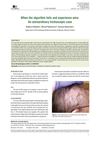
research When the algorithm fails and experience wins: An extraordinary trichoscopic case
Thorough hair examination is crucial for accurate diagnosis and treatment.

research Evaluation of hair follicles as a surrogate tissue for pharmacodynamics response in xenograft tumors
Hair follicles can be used to quickly assess drug effects in cancer treatment.

research 893 Low-level laser therapy for the treatment of male and female-pattern hair loss: A review of literature
Low-level laser therapy helps hair growth and reduces hair loss with few side effects.

research Comparative gene expression analysis of nestin-expressing hair follicle-derived cells
Nestin-expressing hair follicle cells may be useful for nerve repair and regeneration.

research The changing patterns of hair density and thickness in South Korean women with hair loss: clinical office-based phototrichogram analysis
South Korean women with hair loss have lower hair density and thickness compared to healthy women.

research Non-scarring Alopecias in Iranian Patients: A Histopathological Study With Hair Counts.
The most effective way to diagnose non-scarring hair loss is by transverse sectioning, and some cases, particularly in males with inflammation around hair follicles, might be curable.
research Microneedling for female pattern hair loss: case report and histopathological changes
Microneedling showed slight improvement in hair loss but no major changes in hair follicles or scalp condition.

research Non-ablative radio frequency for the treatment of androgenetic alopecia
Non-ablative radio frequency can potentially increase hair count in men with androgenetic alopecia, but some may be bothered by the smell during treatment.

research Penetration and Distribution in Human Skin Focusing on the Hair Follicle
Targeting drugs to hair follicles can treat skin conditions, but reaching deep follicle areas is hard and needs more research.

research Critical study of hair growth analysis with computer-assisted methods
The Trichoscan system was found to be inaccurate for measuring hair growth, needing better software to be useful.

research Alopecia Totalis Treated with 1064 nm Picosecond Nd:YAG Laser: A Case Report
Laser therapy might help regrow hair in alopecia totalis better than steroids alone.

research Evaluation of the safety and effectiveness of intradermal administration of QR678 Neo® hair growth factor formulation: A phase‐IV, open‐label, single‐arm multi‐ethnicity clinical trial
QR678 Neo® is a safe and effective treatment for hair loss in men and women.
research Clinical observered human dermal papilla cells conditioned medium treated androgenetic alopecia
The treatment helped regrow hair in people with androgenetic alopecia.
research 688 Efficacy of topical Vorinostat in the reversal of alopecia areata
Topical Vorinostat shows promise for treating alopecia areata by promoting hair regrowth.

research Topical niacinamide does not stimulate hair growth based on the existing body of evidence
Niacinamide does not promote hair growth.
research FCP 8 : Effect on hair growth using microneedle devices in hairless mouse
A 0.5 mm microneedle roller best promotes hair growth.

research Microinjury-Induced Tumor Necrosis Factor-α Surge Stimulates Hair Regeneration in Mice
Minor injuries to hair follicles can stimulate hair growth in mice by increasing a specific protein.

research Peer Review #2 of "Nature-derived lignan compound VB-1 exerts hair growth-promoting effects by augmenting Wnt/β-catenin signaling in human dermal papilla cells (v0.1)"
A natural compound called VB-1 can help promote hair growth by boosting a specific cell signal in human skin cells.

research Representative Trichoscopic Findings of Outpatients with Androgenetic Alopecia and Alopecia Areata
Trichoscopy helps diagnose and assess the severity of two types of hair loss diseases, androgenetic alopecia and alopecia areata.

research Evaluation of wavelength-dependent hair growth effects on low-level laser therapy: an experimental animal study
The 830-nm wavelength was most effective at promoting hair growth in rats using low-level laser therapy.

research 1311 Efficacy of topical tofacitinib in promoting hair growth in non-scarring alopecia
Topical tofacitinib is effective in promoting hair growth for non-scarring alopecia.

research Scanning Electron Microscopy and X-ray Microanalysis of Reconstructive Hair Fibers.
All five hair fiber products improved appearance but didn't stick to completely bald areas.

research Hair pull test: Evidence-based update and revision of guidelines
The normal range for the hair pull test is 2 hairs or fewer, and washing or brushing hair before the test does not affect the results.

research The Value of Trichoscopy in the Follow-up of Treatment Response in Patients with Androgenetic Alopecia.
Trichoscopy is effective for tracking treatment progress in hair loss when used by an experienced doctor.
research Genetic and Environmental Factors Affecting Hair Density in East Asian Populations
Age, sex, BMI, menopause, and specific genes affect hair density in East Asians.
research [Nevus comedonicus. A rare skin disease of the hair follicles].
Nevus comedonicus is a rare skin condition causing dark bumps, treatable with retinoic acid or surgery.

research Efficacy and tolerability of HDMHG0401-10 in Patients with Androgenetic Alopecia: A Randomized Double-blind Placebo-controlled Trial
HDMHG0401-10 treatment significantly improved hair count and was better than a placebo in reducing hair loss in men with hereditary hair loss, with no major side effects.