 September 2025 in “Journal of Maxillofacial and Oral Surgery”
 Combining PRP with CGF is more effective for hair regrowth in androgenetic alopecia than PRP alone.
 July 2025 in “Journal of Dermatological Treatment”
 PRP improves hair growth in androgenic alopecia, especially when combined with minoxidil.
 June 2025 in “Indian Dermatology Online Journal”
 Severe hair loss may worsen with skin condition, suggesting treating the skin might help.
 May 2025 in “Anadolu Kliniği Tıp Bilimleri Dergisi”
 Gene variations may increase oxidative stress in male pattern baldness.
May 2025 in “Actas Dermo-Sifiliográficas” Botulinum toxin is not effective for treating androgenetic alopecia.
 May 2025 in “IP Indian Journal of Clinical and Experimental Dermatology”
 Both microneedling and PRP are effective for hair loss, with microneedling slightly better for hair growth and PRP better for hair retention.
May 2025 in “UNESP Institutional Repository (São Paulo State University)” The 5 mg dose of oral minoxidil is not more effective than the 2.5 mg dose for treating male hair loss.
April 2025 in “Acta Dermato Venereologica” Topical minoxidil may cause cherry hemangiomas in some users.
 April 2025 in “Journal of International Medical Research”
 Androgenetic alopecia has a minor impact on the quality of life for Jordanian men.
 March 2025 in “International Journal of Trichology”
 FAPD in children may not depend on androgens and should be treated with anti-inflammatory measures and minoxidil.

Combined oral minoxidil and finasteride significantly improve hair density in men with male pattern baldness.
 January 2025 in “International Journal of Trichology”
 Pattern hair loss is the most common type of alopecia.
 October 2024 in “Aesthetic Plastic Surgery”
 Micrografts are a safe and effective treatment for hair loss in both men and women.
 October 2024 in “Journal of College of Physicians And Surgeons Pakistan”
 People with androgenetic alopecia are more likely to have metabolic syndrome.
 September 2024 in “LUTS Lower Urinary Tract Symptoms”
 People with hair loss may have worse urinary symptoms due to an enlarged prostate.
 May 2024 in “Medical Journal Armed Forces India/MJAFI”
 Both low-level light therapy and 5% minoxidil are effective and safe for treating male hair loss, with no significant difference in results.
 March 2024 in “Dermatology and therapy (Internet)”
 Genetic factors could lead to personalized treatments for hair loss.
 March 2024 in “Skin research and technology”
 New dermoscopic criteria accurately diagnose and grade the severity of hair loss in androgenetic alopecia.

Combining PRP with low-level laser therapy is better for hair growth than PRP alone.

Men with male pattern baldness are more likely to have unhealthy blood lipid levels, which could signal other health issues.
Homeopathy may help treat hair loss and improve quality of life.
 December 2023 in “PubMed”
 Both single-spin and double-spin PRP methods effectively treat hair loss, with single-spin slightly increasing platelet count more.
October 2023 in “Pakistan Journal of Medical & Health Sciences” Men with hair loss often have abnormal cholesterol levels, so early screening is advised.

Thicker scalp fat may link hair loss with metabolic syndrome.
 May 2023 in “Photobiomodulation, photomedicine, and laser surgery”
 The 675 nm laser treatment significantly increased hair density and reduced symptoms of androgenetic alopecia in both men and women, with no side effects.
 May 2023 in “Vestnik dermatologii i venerologii”
 Early-stage male pattern baldness shows two types of hair loss: one on the top of the head linked to hormonal changes, and another at the back of the head. The top hair loss responds well to specific treatment, while the back hair loss does not.

Hair loss treatment using stem cells from baby teeth was effective for 75% of men tested, with mild side effects. A scoring system may predict how well this treatment works.
 March 2023 in “International Journal of Trichology”
 Using both minoxidil and finasteride together is more effective for male hair loss than using either one alone.
 January 2023 in “Intisari Sains Medis”
 Andropause is strongly associated with hair loss in male civil servants.
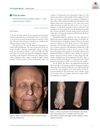 March 2019 in “Journal der Deutschen Dermatologischen Gesellschaft”
 Rothmund-Thomson syndrome type 2 can cause chronic, poorly healing wounds.