
EfficientNet improves accuracy in diagnosing hair loss stages.
16 citations
,
January 2002 in “Dermatology” Early baldness is noticed due to both reduced hair density and thinner hair shafts.
 48 citations
,
May 2015 in “PLOS ONE”
48 citations
,
May 2015 in “PLOS ONE” DNA variants can predict male pattern baldness, with higher risk scores increasing baldness likelihood.
 1 citations
,
September 2016 in “Hair transplant forum international”
1 citations
,
September 2016 in “Hair transplant forum international” Dr. Muhammad Ahmad created a simpler system to better describe male pattern hair loss.
December 2021 in “Biomarkers” Men with early baldness have similar heart risk factors as others, but certain proteins are linked to higher heart disease risk.
 19 citations
,
December 2008 in “Medical Journal of Australia”
19 citations
,
December 2008 in “Medical Journal of Australia” Baldness does not affect vitamin D levels in men.
16 citations
,
January 2000 in “Dermatology” Men with X-linked recessive ichthyosis can still experience male-pattern baldness.
 5 citations
,
July 2000 in “Southern Medical Journal”
5 citations
,
July 2000 in “Southern Medical Journal” Male pattern baldness is often genetic and linked to a hormone, with treatments like finasteride and minoxidil being effective for some men.
 January 2024 in “International Ayurvedic medical journal”
 Certain Prakruti types are more prone to early male pattern baldness.
 1 citations
,
March 2019 in “Economic Inquiry”
1 citations
,
March 2019 in “Economic Inquiry” Balding men value hair restoration highly, willing to pay over $5,000 for a slight improvement.
 1 citations
,
September 1997 in “PubMed”
1 citations
,
September 1997 in “PubMed” The uniform density approach in hair restoration is less noticeable in situations like wind or exercise.
14 citations
,
January 2003 in “Skin Research and Technology” The new scalp coverage scoring method accurately measures hair loss and growth in men.
 6 citations
,
April 2017 in “JAMA Dermatology”
6 citations
,
April 2017 in “JAMA Dermatology” Men's hair loss is not linked to their sex hormone levels, except for lower DHEAS in those with hair loss.
1 citations
,
April 2019 in “Acta medica Philippina” Androgenetic alopecia is linked to a higher risk of metabolic syndrome.
 April 2025 in “Cytotherapy”
 UC-MSCs derived secretome therapy may help treat hair loss safely.
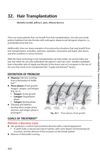 January 2018 in “Georg Thieme Verlag eBooks”
 Hair transplantation is a surgical procedure to move hair to bald areas, requires good donor hair, and results show in about a year.
 29 citations
,
July 2020 in “Journal of The American Academy of Dermatology”
29 citations
,
July 2020 in “Journal of The American Academy of Dermatology” Men with severe balding have a higher risk of getting very sick from COVID-19.
 6 citations
,
September 2020 in “Journal of The American Academy of Dermatology”
6 citations
,
September 2020 in “Journal of The American Academy of Dermatology” Severe male balding may increase the risk of serious COVID-19, and treatments that reduce androgens or block a specific enzyme might help protect these individuals.
3 citations
,
November 2021 in “Frontiers in Medicine” Advanced male pattern baldness affects the back of the scalp, reducing hair follicles.
 2 citations
,
August 2020 in “Journal of The American Academy of Dermatology”
2 citations
,
August 2020 in “Journal of The American Academy of Dermatology” High incidence of hair loss found in COVID-19 patients, but no severity correlation established.
 January 2025 in “International Journal of Trichology”
 Severe hair loss may increase the risk of dying from COVID-19.
 June 2024 in “Indian Journal of Plastic Surgery/Indian journal of plastic surgery”
 A new method helps ensure long-lasting hair transplant results by accurately calculating the donor area.
 May 2023 in “Bali Medical Journal”
 Higher sebum levels are linked to more severe male baldness.
January 2020 in “International journal of scientific research” Dermoscopy shows that varying hair shaft thickness and single hair follicles are main signs of male pattern baldness, especially in the fronto-temporal region.
December 2022 in “Pakistan Armed Forces Medical Journal” Androgenetic alopecia may increase the severity of COVID-19.
October 2021 in “DOAJ (DOAJ: Directory of Open Access Journals)” Trichoscopy effectively distinguishes between severe and mild male pattern hair loss.
Androgenetic alopecia may be linked to severe COVID-19.
 January 2017 in “IP Indian journal of clinical and experimental dermatology”
 Early-onset male baldness is not linked to insulin resistance, but is significantly associated with metabolic syndrome.
 April 2026 in “Journal of Gandhara Medical and Dental Science”
 Oral Minoxidil effectively treats male pattern baldness.
July 2016 in “IP Indian journal of clinical and experimental dermatology” PRP is effective in treating male pattern baldness.