 9 citations
,
October 2013 in “Journal of Investigative Dermatology”
9 citations
,
October 2013 in “Journal of Investigative Dermatology” The OVOL1 gene, controlled by β-catenin, is crucial for creating hair follicles.
 3 citations
,
April 2022 in “Frontiers in Physiology”
3 citations
,
April 2022 in “Frontiers in Physiology” Ptch2 plays a key role in controlling stem cell function and the ability to regenerate after birth.
6 citations
,
March 1996 in “Journal of Investigative Dermatology”  May 2026 in “Signal Transduction and Targeted Therapy”
 BMP signaling is essential for forming skin structures called rete ridges, aiding skin thickness and regeneration.
 43 citations
,
August 2018 in “Cell Stem Cell”
43 citations
,
August 2018 in “Cell Stem Cell” Hoxc genes control hair growth through Wnt signaling.
25 citations
,
November 2020 in “Proceedings of the National Academy of Sciences” HoxC genes are crucial for normal hair and nail development.
 245 citations
,
January 1998 in “Genes & Development”
245 citations
,
January 1998 in “Genes & Development” Hoxc13 gene is essential for hair, nail, and papilla development.
37 citations
,
December 1995 in “Journal of Cell Science” Nexin 1 may help control hair growth.
 65 citations
,
September 2004 in “The American journal of pathology”
65 citations
,
September 2004 in “The American journal of pathology” Blocking BMP signaling causes hair loss and disrupts hair growth cycles.
5 citations
,
January 2022 in “Health Science Reports” Gremlin proteins help regulate hair growth by balancing signals in hair follicles.
 October 2005 in “Nature reviews. Molecular cell biology (Print)”
 Hairless protein is key for hair growth, cell differences cause gene expression variation, and the N-end rule pathway senses nitric oxide for protein breakdown.
25 citations
,
October 2000 in “Gene” Gene regulatory regions evolve faster than protein coding regions, allowing new gene relationships without changing transcription factors.
1 citations
,
April 1998 in “PubMed” Nexin 1 helps control hair growth in young rats.
 April 2018 in “Journal of Investigative Dermatology”
  131 citations
,
March 2004 in “The American journal of pathology”
131 citations
,
March 2004 in “The American journal of pathology” Modulating BMP activity changes the number, size, shape, and type of ectodermal organs.
Nod factor can trigger changes in legume root hairs with just one molecule.
 April 2018 in “Journal of Investigative Dermatology”
 Higher levels of nidogen1 and type IV collagen are found in basal cell carcinoma compared to normal skin.
21 citations
,
September 2003 in “Journal of Clinical Investigation” Overexpressing noggin in mice causes severe osteoporosis.
 41 citations
,
October 2008 in “The American journal of pathology”
41 citations
,
October 2008 in “The American journal of pathology” Blocking a specific protein signal can make hair grow on mouse nipples.
January 2009 in “Bradford Scholars (University of Bradford)” BMP signaling helps prevent skin tumors by blocking cancer-promoting pathways.
 11 citations
,
August 2010 in “Developmental neurobiology”
11 citations
,
August 2010 in “Developmental neurobiology” Ptprq has multiple forms that change during inner ear development.
3 citations
,
March 2025 in “Science Advances” A specific DNA duplication in Polish chickens affects feather shape by altering gene expression.
 1 citations
,
October 2022 in “Scientific reports”
1 citations
,
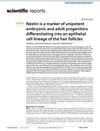
October 2022 in “Scientific reports” Nestin identifies specific progenitor cells in hair follicles that can become outer root sheath cells.
176 citations
,
September 2006 in “Stem Cells” BMP signaling prevents hair growth by stopping stem cell activation.
 April 2018 in “The journal of investigative dermatology/Journal of investigative dermatology”
 GATA6 is important for maintaining and differentiating cells in a key area of human skin.
 138 citations
,
June 2012 in “Genes & Development”
138 citations
,
June 2012 in “Genes & Development” Sonic hedgehog signaling is crucial for hair growth and maintaining hair follicle identity.
January 1998 in “Differentiation” Basonuclin is crucial for hair follicle development and cycling in mice.
July 2025 in “Journal of Investigative Dermatology” Secreted inhibitors of Wnt and IGF signaling control hair and tooth development, creating species-specific patterns.
Lhx2 is essential for effective Sonic Hedgehog signaling in early retinal development.
27 citations
,
October 1998 in “Differentiation” Basonuclin helps identify and track hair follicle development and cycling in mice.