 11 citations
,
September 2010 in “American Journal of Medical Genetics - Part A”
11 citations
,
September 2010 in “American Journal of Medical Genetics - Part A” A Turkish family with sparse hair and eyebrow loss has a mutation in the U2HR gene linked to Marie Unna hereditary hypotrichosis.
December 2019 in “Journal of Cosmetic Dermatology” A new training model using an orange helps surgeons practice parietal whorl hair transplants effectively.
 October 2024 in “Skin Research and Technology”
 Extracorporeal shock waves significantly improve hair growth in women with female pattern hair loss.
 April 2016 in “Journal of Investigative Dermatology”
 Decreasing MIG6 can increase the movement and invasiveness of MEK-inhibited mutant NRAS melanoma, particularly when stimulated by EGF.
 July 2016 in “Experimental Dermatology”
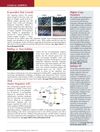
 New treatments for hair growth and psoriasis may be possible, and gene differences could affect baldness and the severity of skin conditions.
16 citations
,
April 2021 in “Plant Signaling & Behavior” MYB30 and EIN3 work against each other to control root hair growth and phosphorus uptake in plants when phosphate is low.
January 2011 in “The Chinese Journal of Dermatovenereology” Shorter GGN repeats in the androgen receptor gene are linked to androgenetic alopecia.
3 citations
,
March 2016 in “Experimental Dermatology” A mutation in the hairless gene speeds up severe itchy skin in mice on a special diet.
 1 citations
,
April 2009 in “The Proceedings of the International Plant Nutrition Colloquium XVI”
1 citations
,
April 2009 in “The Proceedings of the International Plant Nutrition Colloquium XVI” Certain genes may promote longer root hairs in plants when phosphorus is low.
January 2024 in “Kafkas Universitesi Veteriner Fakultesi Dergisi” A specific genetic variation affects wool quality in sheep.
February 2025 in “International Journal of Biological Macromolecules” The hydrogel effectively treats hair loss using light to release nitric oxide.
30 citations
,
February 2015 in “Anais Brasileiros de Dermatologia” Trichoscopy is useful for diagnosing Netherton syndrome in children with skin issues.
 April 2006 in “Dermatologic Clinics”
 White wax and its policosanol boost hair growth better than finasteride.
September 2025 in “OPAL (Open@LaTrobe) (La Trobe University)” The treatments stopped hair regrowth in mice.
 14 citations
,
January 2015 in “Clinical Nutrition Research”
14 citations
,
January 2015 in “Clinical Nutrition Research” MK-R7 supplement with Cistanche Tubulosa and Laminaria Japonica extracts improved hair density and scalp health without adverse effects.
30 citations
,
July 2021 in “Annals of Botany” Localized nutrients boost maize growth and phosphorus uptake by enhancing root hairs and lateral roots.
198 citations
,
September 2007 in “Clinics in Dermatology” Radiofrequency devices effectively tighten skin without surgery.
 June 2018 in “The Journal of Sexual Medicine”
 Finasteride helps female-pattern hair loss.
 May 2017 in “Journal of The American Academy of Dermatology”
 LED light helps human hair root cells grow and move by activating certain cell pathways.
4 citations
,
January 2023 in “bioRxiv (Cold Spring Harbor Laboratory)” PrrH sRNA controls pyochelin gene expression in Pseudomonas aeruginosa based on heme levels.
115 citations
,
December 2019 in “The Plant Journal” Nitrate helps plants manage phosphate uptake and starvation responses through NIGT1 proteins.
5 citations
,
July 2022 in “Frontiers in Medicine” Combining microneedle-delivered ECM and radiofrequency improves skin elasticity and thickness more than ECM alone.
 January 2020 in “bioRxiv (Cold Spring Harbor Laboratory)”
 Certain genetic variants in ERN1, TACR3, and SPPL2C are linked to when Alzheimer's disease starts.
 37 citations
,
August 2014 in “Journal of experimental botany”
37 citations
,
August 2014 in “Journal of experimental botany” A gene in Arabidopsis thaliana, AtPRPL1, affects root hair length but not cell wall composition.
December 2025 in “eTheses of Maulana Malik Ibrahim State Islamic University (Maulana Malik Ibrahim State Islamic University)” Combination 3 of ethnomedicinal plants from Nusa Tenggara Timur significantly increases hair-follicle thickness.
7 citations
,
February 2011 in “Journal of dermatology” The 736T>A mutation in the LIPH gene is common in Japanese people with autosomal recessive woolly hair.
 March 2026 in “Communications Biology”
 Certain compounds can boost hair and nail growth.
 1 citations
,
April 2021 in “Journal of Investigative Dermatology”
1 citations
,
April 2021 in “Journal of Investigative Dermatology” Activating TRPA1 reduces scarring and promotes tissue regeneration.