477 citations
,
March 2004 in “Proceedings of the National Academy of Sciences” The DMI3 gene is essential for nodule development and symbiosis in certain plants.
 86 citations
,
August 2011 in “Toxicological sciences”
86 citations
,
August 2011 in “Toxicological sciences” TCDD speeds up skin barrier formation by increasing certain gene expressions.
 6 citations
,
August 2022 in “International Journal of Molecular Sciences”
6 citations
,
August 2022 in “International Journal of Molecular Sciences” EDA signaling is linked to skin disorders, various cancers, and liver disease.
30 citations
,
January 2013 in “Human Mutation” A mutation in the HOXC13 gene causes hair and nail problems in a Syrian family.
 April 2023 in “The journal of investigative dermatology/Journal of investigative dermatology”
 SETDB1 is essential for controlling DNA methylation, silencing retrotransposons, and maintaining skin cell health, with its absence leading to skin inflammation and hair loss.
2 citations
,
December 1988 in “PubMed” C.I. Acid Orange 3 caused cancer in female rats but not in male rats or mice.

A genetic mutation in the EDA gene causes hypohidrotic ectodermal dysplasia in cats.
 10 citations
,
May 2012 in “PloS one”
10 citations
,
May 2012 in “PloS one” Low ERCC3 gene activity is linked to non-pigmented hair growth.
 December 2025 in “Meditsinskiy sovet = Medical Council”
 Early diagnosis and multidisciplinary care are crucial for managing CNOT3 syndrome.
74 citations
,
October 2012 in “The American Journal of Human Genetics” Mutations in the HOXC13 gene cause hair and nail development issues.
 59 citations
,
April 2016 in “Cell Reports”
59 citations
,
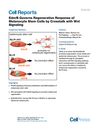
April 2016 in “Cell Reports” EdnrB signaling helps melanocyte stem cells regenerate and could be targeted to treat pigmentation issues.
12 citations
,
January 1987 in “Carcinogenesis” TCDD changes skin cell growth and keratin production in mice.
 4 citations
,
February 2012 in “Chinese Science Bulletin”
4 citations
,
February 2012 in “Chinese Science Bulletin” The MtAnn3 gene affects root hair growth and is influenced by cytokinin.
35 citations
,
December 2017 in “Journal of Experimental Botany” AtCSLD3 and GhCSLD3 genes enhance root growth and cell elongation in plants.
 April 2018 in “Journal of Investigative Dermatology”
 Desmoglein 3 organization in cell connections changes without calcium, affecting cell adhesion.
 37 citations
,
April 2010 in “FEBS Letters”
37 citations
,
April 2010 in “FEBS Letters” The study concludes that the EDA2R gene is activated by p53 during chemotherapy but is not necessary for chemotherapy-induced hair loss.
 55 citations
,
June 2014 in “Nature Communications”
55 citations
,
June 2014 in “Nature Communications” Tcf3 helps cells move and heal wounds by controlling lipocalin 2.
 March 2026 in “Calcified Tissue International”
 The EDA pathway plays a key role in bone development by interacting with other signaling pathways.
January 2026 in “Journal of Dermatological Science” DcR3 helps heal wounds and regrow hair by changing macrophages to a repair-focused type.
 3 citations
,
August 2021 in “Research Square (Research Square)”
3 citations
,
August 2021 in “Research Square (Research Square)” The most common sign of aging at the gene level is more Ectodysplasin A2 Receptor (EDA2R) being made.
CCC1 is essential for ion balance and proper plant cell function.
 11 citations
,
September 2011 in “Biochemical journal”
11 citations
,
September 2011 in “Biochemical journal” Neurotrophin-4 increases calcium current in specific mouse neurons through the PI3K pathway.
208 citations
,
November 2000 in “Development” Edar and Eda proteins are crucial for proper tooth development.
June 2020 in “Zenodo (CERN European Organization for Nuclear Research)” The DNMT3B -579G>T polymorphism may increase the risk of colorectal cancer.
 11 citations
,
August 2019 in “Journal of Molecular Histology”
11 citations
,
August 2019 in “Journal of Molecular Histology” NFIC helps rat dental cells grow and turn into bone-like cells.
35 citations
,
September 2009 in “Development” Necl2 affects skin cell behavior and slows wound healing.
The gene Endothelin 3 makes mice's fur darker by increasing pigment cells and pigment levels.
June 2025 in “Preprints.org” EDA is vital for bone and cartilage formation and could help treat skeletal disorders.
 1 citations
,
November 2017 in “Expert opinion on orphan drugs”
1 citations
,
November 2017 in “Expert opinion on orphan drugs” Scientists now better understand the genetics of hypohidrotic ectodermal dysplasia, leading to more accurate diagnoses and potential new treatments.