 July 2023 in “Hair transplant forum international”
 Eating the right foods can improve hair health by reducing damage and providing proper nutrients.
3 citations
,
July 2019 in “Fibers And Polymers/Fibers and polymers”  25 citations
,
August 2015 in “Journal of cosmetic dermatology”
25 citations
,
August 2015 in “Journal of cosmetic dermatology” African American women report more hair issues and use different hair care practices than Caucasian women, and have different hair and scalp characteristics.
October 2013 in “The New Scientist” New hair growth from skin cells may help cure baldness.
23 citations
,
December 1991 in “Annals of the New York Academy of Sciences” Balding scalps slow down hair growth.
49 citations
,
April 2007 in “Pediatric Dermatology” Biotin improved hair appearance in uncombable hair syndrome but didn't change hair structure.
 18 citations
,
August 2014 in “Lipids”
18 citations
,
August 2014 in “Lipids” Human hair has more unsaturated fats inside than on the surface, and certain lipids may help bind the outer and inner layers together.
June 2018 in “British Journal of Dermatology” Hair cells lose their nucleus and mitochondria in a specific order as they fill with keratin, which could help develop treatments for hair issues.
 November 2022 in “Innovation in aging”
 Older adults in Puerto Rico often couldn't be tested for hair cortisol due to refusal or lack of hair, with race and hair products affecting results.
7 citations
,
January 1959 in “Canadian Journal of Chemistry” Human and horse hair have similar end groups to wool and feathers.
 January 2006 in “Seibutsu Butsuri”
 Curly and straight hair differ in how their internal fibers are arranged.
42 citations
,
January 2014 in “BMC Genomics” Cetaceans lost hair genes to adapt to water.
 December 2023 in “Clinical, cosmetic and investigational dermatology”
 The new hair transplant technique is fast, effective, and satisfying for patients with different hair types.
45 citations
,
January 2010 in “Forensic science international” Neonatal hair can help determine drug exposure during pregnancy.
 July 2022 in “The journal of investigative dermatology/Journal of investigative dermatology”
 Early diagnosis and treatment of hair loss in hijab-wearing women are crucial to prevent permanent damage and improve quality of life.
13 citations
,
January 1953 in “Archives of Dermatology” Certain unsaturated compounds can cause temporary hair loss by affecting hair structure.
November 2009 in “Medical and Surgical Dermatology”  21 citations
,
March 2017 in “Skin research and technology”
21 citations
,
March 2017 in “Skin research and technology” Removing external lipids from hair reduces moisture and increases strength, while removing internal lipids decreases water permeability.
3 citations
,
May 2007 in “Clinical and Experimental Dermatology” Hair does not prevent acne.
 January 2025 in “Scientific Reports”
 Hair analysis can show changes in vitamin D levels over time.
 59 citations
,
August 2010 in “Journal of The American Academy of Dermatology”
59 citations
,
August 2010 in “Journal of The American Academy of Dermatology” Certain hairstyles and less hair oil use in African American girls can lead to scalp conditions like traction alopecia and seborrheic dermatitis.
32 citations
,
March 2016 in “American Journal of Physical Anthropology” African hair is curled, Asian hair is thick, European hair is lighter, and chemical methods help identify hair color differences.
2 citations
,
February 2013 in “Journal of the Saudi Society for Dermatology & Dermatologic Surgery” New hair spray caused a hair shaft disorder.
 January 2012 in “International Journal of Trichology”
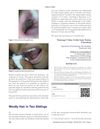
 Two siblings have a rare genetic condition causing curly, coarse hair.
1 citations
,
April 2013 in “Pakistan Journal of Biological Sciences” Hair coloring, waving, and ironing cause more hair damage than not using these treatments.
November 2009 in “Universiti Putra Malaysia Institutional Repository (Universiti Putra Malaysia)” The composition helps hair growth and prevents baldness.
 January 2026 in “Bandung Conference Series Medical Science”
 Wearing a hijab does not cause hair loss.
1 citations
,
January 2025 in “International Journal of Cosmetic Science” Age-related hair curvature increases due to internal structural changes from grooming.
January 2016 in “MRIMS Journal of Health Sciences” Good cultural practices and proper nutrition can prevent hair loss in girls.