January 2025 in “International Journal of Trichology” Increased hair growth after a cast is temporary and harmless.
12 citations
,
July 2015 in “British journal of dermatology/British journal of dermatology, Supplement” Curly hair breaks due to mechanical damage and environmental factors, not chemical makeup, and needs ongoing care to prevent breakage.
July 2017 in “ORTHOPAEDICS TRAUMATOLOGY and PROSTHETICS” Managing rare genetic diseases like osteogenesis imperfecta and Escobar syndrome is complex and requires both medical and surgical treatments.
 13 citations
,
March 2002 in “Pediatric Dermatology”
13 citations
,
March 2002 in “Pediatric Dermatology” A child was initially wrongly diagnosed with a fungal scalp infection but actually had a non-scarring hair loss condition called Temporal Triangular Alopecia.
 4 citations
,
October 2020 in “Journal of oral and maxillofacial surgery”
4 citations
,
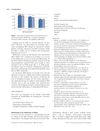
October 2020 in “Journal of oral and maxillofacial surgery” Tisseel shows promise for bone graft stabilization but needs more clinical trials to confirm its effectiveness.
 6 citations
,
April 2013 in “International Journal of Dermatology”
6 citations
,
April 2013 in “International Journal of Dermatology” Dermoscopy helps diagnose unusual skin lesions like osteonevus of Nanta and can prevent misdiagnosis of serious conditions.
14 citations
,
February 2013 in “PubMed” Patients treated with long-term intralesional corticosteroids for alopecia areata should be monitored for bone density changes and advised on osteoporosis prevention.
 10 citations
,
May 2012 in “Journal of Craniofacial Surgery”
10 citations
,
May 2012 in “Journal of Craniofacial Surgery” Cerament effectively corrected forehead irregularities in one patient, and various surgical techniques successfully reconstructed perioral soft tissue in 14 patients.
March 2022 in “JAAD case reports” Accurate diagnosis is crucial for effective treatment of hair loss.
17 citations
,
June 2016 in “Archives de Pédiatrie” Frontal fibrosing alopecia can occur in children, not just postmenopausal women.
 2 citations
,
September 2020 in “Hair transplant forum international”
2 citations
,
September 2020 in “Hair transplant forum international” A new tool makes hair transplant surgeries faster by creating multiple cuts in one go.
 33 citations
,
August 2013 in “British Journal of Dermatology”
33 citations
,
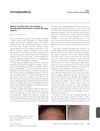
August 2013 in “British Journal of Dermatology” Lack of small, fine hair on the front hairline is a key sign of frontal fibrosing alopecia.
 December 2024 in “Cermin Dunia Kedokteran”
 Prompt treatment of intraocular foreign bodies is crucial to prevent blindness and improve outcomes.
 1 citations
,
January 2021 in “Dermatology Review”
1 citations
,
January 2021 in “Dermatology Review” A young man developed a rare, bilateral scalp condition after head trauma, causing hair loss but no neurological or eye issues.
 24 citations
,
September 2014 in “Journal of the European Academy of Dermatology and Venereology”
24 citations
,
September 2014 in “Journal of the European Academy of Dermatology and Venereology” Trichoscopy is reliable for diagnosing Temporal Triangular Alopecia and can prevent unnecessary biopsies and wrong treatments.
January 2025 in “Journal of Prescribing Practice” 6 citations
,
January 1997 in “Pediatric dermatology” The case suggests a possible link between severe acne and certain bone deformities.
 18 citations
,
July 2003 in “Dermatologic Surgery”
18 citations
,
July 2003 in “Dermatologic Surgery” The conclusion is that creating natural-looking hair restoration requires replicating natural scalp whorl patterns and inserting grafts at specific angles.
5 citations
,
February 2015 in “Egyptian Journal of Ear Nose Throat and Allied Sciences” A rare benign cheek tumor was successfully removed from a 15-year-old girl without complications or recurrence.
 July 2025 in “Dermatology Practical & Conceptual”
 A 2-year-old boy has a rare hair disorder causing brittle hair and hair loss, which may improve with age.
14 citations
,
January 2010 in “Dermatology” Some people with congenital triangular alopecia have a central tuft of hair in the bald patch, but the cause is unknown.
13 citations
,
January 2018 in “International Journal of Trichology” Intralesional triamcinolone injections can effectively stop frontal fibrosing alopecia with minimal side effects.
August 2023 in “Journal of the European Academy of Dermatology and Venereology” Onycholemmal horn is a rare nail tumor in elderly women, treated by surgical removal.
 57 citations
,
January 2003 in “Clinical and experimental dermatology”
57 citations
,
January 2003 in “Clinical and experimental dermatology” Postmenopausal frontal fibrosing alopecia is a type of hair loss in postmenopausal women that may stop on its own but has no effective treatment.
 33 citations
,
August 2005 in “The American Journal of Dermatopathology”
33 citations
,
August 2005 in “The American Journal of Dermatopathology” Both vertical and transverse sections are useful for diagnosing alopecia, but using both methods together is best.
 January 2022 in “Plastic and Aesthetic Research”
 Choose the simplest, most fitting scalp reconstruction method for each patient's unique needs.
 July 2024 in “Dermatology Practical & Conceptual”
 LC-OCT helps accurately diagnose different types of infant hair loss without invasive methods.
Vertex accentuation is a common pattern in female hair loss.
 September 2009 in “European Urology Supplements”
 Cone beam computed tomography can allow for smaller safety margins around the target area in prostate cancer radiation treatment if used for ongoing treatment checks.
2 citations
,
January 2016 in “Dermatology online journal” A 46-year-old man was diagnosed with frontal fibrosing alopecia, a condition usually seen in postmenopausal women.