14 citations
,
August 2024 in “Breast Cancer Research and Treatment” Oral minoxidil effectively improves hair regrowth in cancer survivors with late alopecia.
35 citations
,
January 2006 in “Dermatology Online Journal” Lipedematous scalp may be underdiagnosed and doesn't improve with finasteride.
 30 citations
,
December 2017 in “Journal of The American Academy of Dermatology”
30 citations
,
December 2017 in “Journal of The American Academy of Dermatology” New criteria for diagnosing frontal fibrosing alopecia include specific scalp and eyebrow hair loss as major factors and other hair loss areas and hair analysis as minor factors.
 30 citations
,
August 2015 in “JAAD case reports”
30 citations
,
August 2015 in “JAAD case reports” Platelet-rich plasma (PRP) injections successfully treated a woman's steroid-resistant hair loss, causing hair to regrow within a month.
 19 citations
,
August 2018 in “International Journal of Dermatology”
19 citations
,
August 2018 in “International Journal of Dermatology” Lupus panniculitis of the scalp causes linear hair loss and needs ongoing treatment to prevent recurrence and lupus.
 18 citations
,
June 2017 in “Journal of The American Academy of Dermatology”
18 citations
,
June 2017 in “Journal of The American Academy of Dermatology” Trichoscopy helps diagnose frontal fibrosing alopecia, even with unusual patterns.
 16 citations
,
June 2009 in “Dermatologic Surgery”
16 citations
,
June 2009 in “Dermatologic Surgery” A 17-year-old boy with Temporal Triangular Alopecia successfully grew new hair after a hair restoration surgery using follicular unit transplantation.
 9 citations
,
June 2014 in “British Journal of Dermatology”
9 citations
,
June 2014 in “British Journal of Dermatology” The study found that balding scalps have more thin hairs and larger oil glands, which might contribute to skin conditions related to hair loss.
 2 citations
,
January 2007 in “Journal of The American Academy of Dermatology”
2 citations
,
January 2007 in “Journal of The American Academy of Dermatology” Red and infrared light therapy improves hair growth in balding patients.
 2 citations
,
January 2003 in “PubMed”
2 citations
,
January 2003 in “PubMed” Hair loss in men might be linked to programmed cell death.
1 citations
,
June 2022 in “Journal of Clinical Oncology” Oral minoxidil may help hair regrowth in female cancer survivors.
 April 2026 in “International Journal of Homoeopathic Sciences”
 Homeopathic treatment improved stress-induced hair loss in an 18-year-old female.
 June 2025 in “Italian Journal of Dermatology and Venereology”
 Thorough scalp examination is crucial for diagnosing alopecia areata incognita in men with diffuse hair loss.
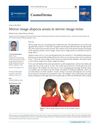
Mirror-image twins can have alopecia areata on opposite sides of their heads.
 May 2023 in “International Journal of Medical Arts (Print)”
 Retrograde Alopecia is fairly common in men with severe hair loss and needs careful examination for treatment and safe hair transplantation.
September 2021 in “Medicina Estética Revista Científica de la Sociedad Española de Medicina Estética (SEME)” The treatment improved hair growth and thickness in most patients with minimal side effects.
 January 2018 in “Figshare”
 Horizontal sections of scalp biopsies are useful for telling the difference between Androgenetic Alopecia and Alopecia Areata.
December 2021 in “Vestnik Rossiĭskoĭ akademii meditsinskikh nauk / Rossiĭskaia akademiia meditsinskikh nauk” Personalized vitamin and trace element treatment improves hair density and reduces hair loss in men with early-stage androgenic alopecia.
 January 2015 in “Journal of Cytology and Histology”
 Hair loss in Androgenetic Alopecia is not caused by damage to follicular stem cells.
June 2012 in “International journal of scientific research” Hair follicles in androgenetic alopecia show no chemical changes, only size reduction.
 January 1999 in “Journal of S C C J”
 Certain growth factors regulate hair growth cycles, male hormones affect hair cycles, and drugs like Minoxidil and Finasteride can stimulate hair growth and inhibit male pattern baldness respectively.
 46 citations
,
November 1995 in “The Journal of Dermatology”
46 citations
,
November 1995 in “The Journal of Dermatology” Alopecia areata was most common in people in their 30s and 40s, with some family history and a higher relapse rate, and larger bald areas responded better to specific immunotherapy.
 7 citations
,
January 2018 in “International Journal of Dermatology”
7 citations
,
January 2018 in “International Journal of Dermatology” Syphilis can cause hair loss without other symptoms and should be considered when diagnosing unexplained hair loss.
 1 citations
,
July 2019 in “Medicina Clínica (English Edition)”
1 citations
,
July 2019 in “Medicina Clínica (English Edition)” Tofacitinib partially improved hair regrowth in a patient with severe hair loss.
 February 2017 in “Medicina cutánea ibero-latino-americana”
 An 8-year-old boy with hair loss had hair regrowth and responded well to clobetasol propionate treatment.
 January 2014 in “International Journal of Trichology”
 A man had an unusual type of hair loss that didn't match known patterns and didn't improve with treatment.
 2 citations
,
January 2007 in “Toxicologie Analytique et Clinique”
2 citations
,
January 2007 in “Toxicologie Analytique et Clinique” A woman survived a massive lithium overdose that caused a form of hair loss.
 June 2023 in “British journal of dermatology/British journal of dermatology, Supplement”
 The case suggests that dissecting cellulitis of the scalp can occur in a White child and should be considered when diagnosing pediatric scarring alopecia.
 28 citations
,
July 2011 in “Journal of Plastic Reconstructive and Aesthetic Surgery”
28 citations
,
July 2011 in “Journal of Plastic Reconstructive and Aesthetic Surgery” A patient had skin tissue death at the hair removal site after a hair transplant, which was treated with surgery.
 11 citations
,
May 2010 in “Annals of the Academy of Medicine Singapore”
11 citations
,
May 2010 in “Annals of the Academy of Medicine Singapore” Tinea capitis can cause scalp issues in children and should be considered in similar cases; treatment with griseofulvin and selenium sulfide is effective.