 June 2023 in “Dermatology and therapy”
 The Middle East and Africa need better data, treatment consensus, and support for Alopecia Areata.
 January 2023 in “Journal of Cutaneous and Aesthetic Surgery”
 Follicular unit extraction can effectively treat a specific type of vitiligo.
 September 2022 in “Dermatology and therapy”
 Contact immunotherapy might help treat various skin conditions, but more research is needed to confirm its safety and effectiveness.
 June 2022 in “Revista del Hospital Italiano de Buenos Aires”
 A rare case of a man having both frontal fibrosing alopecia and vitiligo was reported.
 April 2022 in “Research Square (Research Square)”
 The combination of laser and topical steroids is more effective for treating alopecia areata than topical steroids alone.
 January 2022 in “The Egyptian Journal of Hospital Medicine”
 Higher IL-21 levels may help predict alopecia areata activity.
 April 2021 in “Anatolian current medical journal :”
 A patient developed hair loss after hepatitis C treatment with sofosbuvir and ribavirin.
 January 2020 in “Medpulse International Journal of General Medicine/Medpulse International Journal of Medicine”
 Premature graying of hair is often linked with other health issues, but treatment with biotin, zinc, and calcium pantothenate is not very effective.
 September 2019 in “Journal of Investigative Dermatology”
 Dermal Papilla Cells grown in 3D and with stem cells better mimic natural hair growth conditions than cells grown in 2D.
 September 2019 in “Journal of Investigative Dermatology”
 The 3D-SeboSkin model effectively simulates Hidradenitis suppurativa and is useful for future research.
 July 2019 in “Reactions Weekly”
 Two women experienced temporary hair loss and other side effects from imiquimod treatment for cervical issues, which stopped after ending the treatment.
 April 2019 in “Journal of Medical Science And clinical Research”
 The grey patch variant of tinea capitis is most common, mainly spread through family and animals.
 November 2018 in “Springer eBooks”
 The document concludes that specialized hair transplant techniques can be effective, with varying success rates depending on the donor area and patient factors.

The combination therapy effectively improved acne keloidalis nuchae.
 January 2017 in “Nasza Dermatologia Online”
 Both treatments helped hair regrowth in alopecia areata, with isopropanol being better tolerated.
 April 2016 in “Journal of The American Academy of Dermatology”
 AGA patients have a lower quality of life than AA patients.
 April 2016 in “Journal of The American Academy of Dermatology”
 Online medical education helps doctors better understand and treat nail fungus.
 February 2016 in “Acta Medica Marisiensis”
 A woman with chronic hepatitis C had a rare skin condition linked to her illness.

Hormonal treatments can help with hair loss, acne, and excess hair growth, but it takes 3-6 months to see results and patients should know the possible side effects.
 January 2015 in “Springer eBooks”
 Understanding hair structure and growth is key for diagnosing hair diseases accurately.
 May 2014 in “JAMA Dermatology”
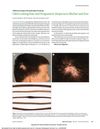
 Mother and son diagnosed with a rare genetic hair loss condition with no effective treatment.

Botulinum toxin injections can reduce hair loss and stimulate new hair growth in some men with male pattern baldness.

Botulinum toxin-A injections in the scalp can reduce hair loss and promote new hair growth in men with certain types of baldness.

Botulinum toxin-A may increase hair growth and reduce hair loss in men with baldness, and injecting near blood vessels can improve pain relief and last longer.
 May 2013 in “Trends in Urology & Men's Health”
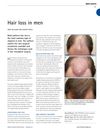
 Male-pattern hair loss is normal, often involves hormone effects on hair follicles, and can be treated with medication or surgery, but new treatments are being researched.

Infliximab was effective in treating a scalp condition that did not respond to other treatments.
 April 2012 in “Journal of the American Academy of Dermatology”
 Dermoscopy can help diagnose tinea capitis in children by looking for comma hairs, black dots, and broken hairs with white bands.
 April 2012 in “Informa Healthcare eBooks”
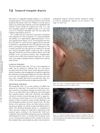
 Temporal triangular alopecia is a lifelong condition with hairless patches on the side of the head that may be present from birth.

A man's scalp hair loss was due to a combined melanocytic nevus and alopecia areata, suggesting a possible link between the two conditions.
 January 2012 in “Elsevier eBooks”
 Hair transplantation is highly effective with careful technique and attention to patient needs.