 April 2016 in “Proceedings of SPIE”
 UV-induced autofluorescence is effective for identifying different types of alopecia.
 February 2016 in “Acta Medica Marisiensis”
 A woman with chronic hepatitis C had a rare skin condition linked to her illness.
 January 2016 in “Springer eBooks”
 Cryotherapy may be an effective and simple treatment for mild hair loss with few side effects.
 May 2015 in “Journal of Dermatological Science”
 Researchers found a new area on chromosome 2 linked to a genetic hair loss condition.
 May 2015 in “Journal of Investigative Dermatology”
 Melanoma risk tools need improvement, a gene mutation causes a hair disorder that might be treated by managing cell stress, a potential therapy for a skin-ear disorder involves blocking cell channels, skin wrinkling may indicate lung aging regardless of smoking, and oxidative stress might contribute to common baldness.
 April 2015 in “Experimental Dermatology”
 Melanoma risk tools need improvement, certain gene mutations cause skin diseases and could be treated by targeting those mutations, skin wrinkling may relate to lung aging due to genetic factors, and oxidative stress affects hair loss but can be reduced in low oxygen.
 January 2015 in “Springer eBooks”
 Understanding hair structure and growth is key for diagnosing hair diseases accurately.
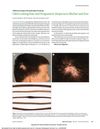 May 2014 in “JAMA Dermatology”
 Mother and son diagnosed with a rare genetic hair loss condition with no effective treatment.

Human scalp hair follicles have PGE2 and its receptors, which might affect hair growth.
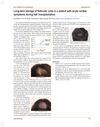 July 2013 in “International Society of Hair Restoration Surgery”
 Effective storage of hair follicles is crucial for successful hair transplants, especially in patients with heart issues.

Isotretinoin reduced inflammation in tufted hair folliculitis, but hair tufting remained.

Botulinum toxin injections can reduce hair loss and stimulate new hair growth in some men with male pattern baldness.

Botulinum toxin-A injections in the scalp can reduce hair loss and promote new hair growth in men with certain types of baldness.

Botulinum toxin-A may increase hair growth and reduce hair loss in men with baldness, and injecting near blood vessels can improve pain relief and last longer.
 January 2013 in “International Journal of Trichology”
 A new mutation in the TRPS1 gene was found in a Ukrainian girl with Trichorhinophalangeal syndrome type I.
 June 2012 in “Springer eBooks”
 Eating disorders can cause various hair problems, and while hair loss in these disorders is linked to metabolic syndrome, treatment focuses on specific medications and lifestyle changes for the syndrome.
 June 2012 in “Expert Review of Dermatology”
 Japanese researchers created new hair follicles from human cells that grew hair when put into mice, and other findings showed a link between eye disease severity and corneal thickness, gene mutations affecting hearing and touch, and the safety of the shingles vaccine for adults over 50.
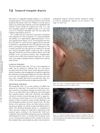 April 2012 in “Informa Healthcare eBooks”
 Temporal triangular alopecia is a lifelong condition with hairless patches on the side of the head that may be present from birth.
 March 2012 in “Journal of The American Academy of Dermatology”
 Hand-foot-mouth disease may cause nail loss in children.
 March 2012 in “Journal of The American Academy of Dermatology”
 Hair casts are often mistaken for head lice, scalp pain in hair loss is linked to certain nerve factors, eyelash growth treatment is safe and effective, and nail shedding in children may follow hand-foot-mouth disease.
 March 2012 in “Journal of The American Academy of Dermatology”
 Higher levels of certain nerve-related proteins are linked to hair loss in women with scalp pain.
 March 2012 in “Journal of The American Academy of Dermatology”
 A 7-year-old boy's unusual hair loss was caused by a herpes infection and healed after treatment.
 March 2012 in “Journal of The American Academy of Dermatology”
 Temporal triangular alopecia usually starts in early childhood and treatment with Minoxidil has limited effectiveness.
 January 2012 in “Journal of the Dermatology Nurses’ Association”
 The document explains hair growth, hair loss types, and other hair-related terms.
 January 2012 in “Yearbook of Dermatology and Dermatologic Surgery”
 Alopecia areata is a hair loss condition that often starts before age 30 and can affect various body parts, with unpredictable hair regrowth chances.

Hair transplants can cause hair loss if done while lichen planopilaris is active; wait until it's inactive for two years and check with a scalp biopsy first.

Hair restoration surgery has improved to transplant hair in natural groupings, but it's labor-intensive and can't fully restore normal hair density.
 August 2005 in “British journal of dermatology/British journal of dermatology, Supplement”
 Melatonin may help treat hair loss and needs more research.
 December 2002 in “International Journal of Cosmetic Surgery and Aesthetic Dermatology”
 Scalp reduction surgery is safe and effective for certain patients with hair loss, leading to dense hair coverage and high satisfaction.
 November 2002 in “Dermatologic Surgery”
 Scalp reduction gives the most natural result for significant crown baldness, despite potential complications, and a systematic approach to surgical hair restoration results in few complications and high graft survival.