 17 citations
,
June 2011 in “The journal of investigative dermatology/Journal of investigative dermatology”
17 citations
,
June 2011 in “The journal of investigative dermatology/Journal of investigative dermatology” The G60S Connexin43 mutation causes hair growth issues and poor hair quality in mice, similar to human ODDD patients.
Mutant Cx43 causes slower wound healing and hair growth issues in ODDD.
 November 2019 in “Harper's Textbook of Pediatric Dermatology”
 The document is a detailed medical reference on skin and genetic disorders.

Researchers found a genetic link for hereditary hair loss but need more analysis to identify the exact gene.
 36 citations
,
January 2012 in “International Journal of Trichology”
36 citations
,
January 2012 in “International Journal of Trichology” Losing eyelashes or eyebrows can be a sign of many different health problems and needs a careful approach to treat effectively.
 32 citations
,
November 2016 in “Journal of Dental Research”
32 citations
,
November 2016 in “Journal of Dental Research” Pannexin 3 is important for bone formation and the development of bone cells.
 13 citations
,
January 2021 in “Scientific Reports”
13 citations
,
January 2021 in “Scientific Reports” Pannexin 3 helps skin and hair growth by controlling a protein called Epiprofin.
 4 citations
,
September 2016 in “Molecular Medicine Reports”
4 citations
,
September 2016 in “Molecular Medicine Reports” Specific genes influence hair and cashmere growth in Laiwu black goats.
9 citations
,
August 2021 in “Journal of clinical medicine” Pili torti is a rare condition where hair is twisted and breaks easily, often linked to genetic disorders or other health issues.
30 citations
,
December 2014 in “BMC Genetics” Certain genes and proteins may influence wool growth in Aohan fine wool sheep.
Certain genes may influence hair loss differently in men and women.
 April 2017 in “Journal of Investigative Dermatology”
 A boy with Oculodentodigital syndrome had a unique GJA1 gene mutation causing his symptoms.
 37 citations
,
June 2002 in “The Laryngoscope”
37 citations
,
June 2002 in “The Laryngoscope” Ectodermal dysplasia causes various symptoms and early treatment is important for eye, dental, and skin issues.
November 2025 in “Indian Journal of Dermatology” Early diagnosis and multidisciplinary care are crucial for improving the quality of life in patients with ectodermal dysplasia.
 28 citations
,
February 2010 in “British journal of dermatology/British journal of dermatology, Supplement”
28 citations
,
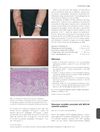
February 2010 in “British journal of dermatology/British journal of dermatology, Supplement” WNT10A mutations cause varied symptoms in patients with odonto-onycho-dermal dysplasia.
39 citations
,
September 2018 in “American Journal of Medical Genetics Part A” A new genetic mutation in the ODC1 gene causes developmental delay and other symptoms in a young girl.
5 citations
,
February 2003 in “American Journal of Medical Genetics Part A” A chromosomal change may cause ectodermal dysplasia and developmental issues in a child.
 12 citations
,
January 2016 in “Journal of Orofacial Orthopedics / Fortschritte der Kieferorthopädie”
12 citations
,
January 2016 in “Journal of Orofacial Orthopedics / Fortschritte der Kieferorthopädie” Researchers found a new mutation in the EDA gene that likely causes missing teeth and mild skin symptoms in one family.
15 citations
,
November 2012 in “Archives of Ophthalmology” A deletion in the CDH3 gene causes a rare disorder with short hair and vision loss.
28 citations
,
November 2018 in “American Journal of Medical Genetics Part A” ODC1 gene mutations cause a neurodevelopmental disorder with large head size, hair loss, and facial abnormalities.
15 citations
,
June 2019 in “Biochemical Journal” A new genetic disorder caused by an ODC1 mutation can be treated with DFMO.
23 citations
,
July 2016 in “JAMA Ophthalmology” CDH3-related disease causes worsening eye and hair issues.
A new genetic mutation was found causing hair and eye issues in a boy.
 4 citations
,
January 2018 in “International Journal of Trichology”
4 citations
,
January 2018 in “International Journal of Trichology” A rare genetic disease causes sparse hair and early blindness due to a gene mutation.
9 citations
,
June 2017 in “American journal of ophthalmology. Case reports” A new mutation in the CDH3 gene causes hair loss and vision problems in a young girl.
5 citations
,
January 2017 in “Arquivos Brasileiros de Oftalmologia” A rare genetic disorder causes sparse hair and vision loss due to a CDH3 gene mutation.
30 citations
,
August 2005 in “British journal of dermatology/British journal of dermatology, Supplement” A specific gene mutation causes hair loss and potential eye issues, even if vision seems normal.
9 citations
,
October 1995 in “Clinical Dysmorphology” The family has a unique form of ectodermal dysplasia similar to Clouston syndrome but with different hair and skin symptoms.
 June 2023 in “British journal of dermatology/British journal of dermatology, Supplement”
 A child with skin and tooth symptoms was found to have a genetic mutation causing cardiocutaneous syndrome, leading to heart problems.
3 citations
,
June 2004 in “Työväentutkimus Vuosikirja” Ectodermal dysplasia syndromes are caused by disruptions in key signaling pathways affecting tooth and hair development.