 September 2021 in “PubMed”
 Hair transplantation is effective for treating scar-related hair loss on the head and neck.
 July 2021 in “World journal of plastic surgery”
 Hair transplantation is effective for treating scar-related hair loss on the head and neck.
June 2004 in “Dermatologic Surgery” Mixing different sizes of hair follicles during hair restoration surgery can give excellent results, save time, and cause less damage.
 5 citations
,
May 2004 in “Dermatologic Surgery”
5 citations
,
May 2004 in “Dermatologic Surgery” A hair restoration technique was introduced that mixes different types of hair groupings to reduce procedure time, limit damage, and potentially increase hair density, suggesting more hair can be transplanted than previously thought.
 4 citations
,
May 2002 in “Dermatologic Surgery”
4 citations
,
May 2002 in “Dermatologic Surgery” The method improves natural appearance in hair restoration by properly evaluating and treating the temporal peak region.
 May 2002 in “Dermatologic Surgery”
 The method improves natural appearance in hair restoration by properly evaluating and treating the temporal peak region.
9 citations
,
August 2021 in “Experimental dermatology” Hidradenitis suppurativa is a skin disease caused by the breakdown of the skin's natural immune barriers, especially around hair follicles.
 5 citations
,
September 2000 in “Dermatologic Surgery”
5 citations
,
September 2000 in “Dermatologic Surgery” Lower hairlines using the rule of thirds can be used in hair transplants due to improved techniques.
 30 citations
,
June 2008 in “Dermatologic Surgery”
30 citations
,
June 2008 in “Dermatologic Surgery” The SAFE System may improve hair transplant results but isn't suitable for everyone.
 1 citations
,
January 2006 in “Dermatologic Surgery”
1 citations
,
January 2006 in “Dermatologic Surgery” The SAFE System may reduce hair transplant transection rates but has been critiqued for not being as minimally invasive as claimed.
 205 citations
,
March 2012 in “Science Translational Medicine”
205 citations
,
March 2012 in “Science Translational Medicine” PGD2 stops hair growth and is higher in bald men with AGA.
 22 citations
,
September 2014 in “Veterinary Dermatology”
22 citations
,
September 2014 in “Veterinary Dermatology” Low-level laser therapy seems to help dogs with noninflammatory alopecia grow hair back.
 6 citations
,
September 1997 in “Dermatologic Surgery”
6 citations
,
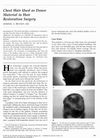
September 1997 in “Dermatologic Surgery” Chest hair can be used for scalp hair transplants when there's not enough scalp hair.
 5 citations
,
September 1997 in “Dermatologic Surgery”
5 citations
,
September 1997 in “Dermatologic Surgery” Dr. Russell Knudsen's system classifies hair grafts by class, shape, and size for clearer communication in hair restoration surgery.
 7 citations
,
January 2010 in “Animal”
7 citations
,
January 2010 in “Animal” Angora goat hair grows faster and produces more protein than cashmere goat hair, and certain hormones and nutrients positively affect hair growth and protein synthesis.
 218 citations
,
April 2008 in “Genes & Development”
218 citations
,
April 2008 in “Genes & Development” Skin stem cells help repair damage and maintain healthy skin.
 27 citations
,
January 2006 in “Dermatologic Surgery”
27 citations
,
January 2006 in “Dermatologic Surgery” The SAFE System for hair transplants results in low damage to follicles and could make the procedure suitable for more patients.
 153 citations
,
August 2002 in “Dermatologic Surgery”
153 citations
,
August 2002 in “Dermatologic Surgery” Follicular Unit Extraction (FUE) is a less invasive hair transplant method with minimal scarring, suitable for about 60% of patients, especially those needing fewer grafts and quicker recovery.
 15 citations
,
January 2013 in “Journal of Cutaneous and Aesthetic Surgery”
15 citations
,
January 2013 in “Journal of Cutaneous and Aesthetic Surgery” The modified Direct Hair Transplantation method is effective for treating baldness with better graft survival and less damage than standard techniques.
 13 citations
,
August 2002 in “Dermatologic Surgery”
13 citations
,
August 2002 in “Dermatologic Surgery” FUE is a less invasive hair transplant method suitable for many patients, but it has limitations and may not replace traditional techniques.
 9 citations
,
September 2016 in “Plastic and reconstructive surgery. Global open”
9 citations
,
September 2016 in “Plastic and reconstructive surgery. Global open” The curved nonrotary punch is better for hair extraction in people with tightly curled hair.
 4 citations
,
June 2022 in “Clinical, cosmetic and investigational dermatology”
4 citations
,
June 2022 in “Clinical, cosmetic and investigational dermatology” The new SFS Scale predicts hair transplant difficulty using hair and skin types, with thick skin and coily hair being hardest to work with.
 14 citations
,
April 2000 in “Animal Science/Animal science”
14 citations
,
April 2000 in “Animal Science/Animal science” Nutrients like vitamins, copper, zinc, and amino acids are crucial for healthy hair and wool growth.
 6 citations
,
September 2019 in “Archives of Dermatological Research”
6 citations
,
September 2019 in “Archives of Dermatological Research” Found 32 genes linked to male baldness, affecting hair growth and stress-related pathways.
 38 citations
,
August 2005 in “Veterinary dermatology”
38 citations
,
August 2005 in “Veterinary dermatology” A disease causing skin issues in young adult German short-haired pointers is hereditary, with most affected dogs not responding to treatment.
 7 citations
,
June 2004 in “Dermatologic Surgery”
7 citations
,
June 2004 in “Dermatologic Surgery” A new hair transplant method combines individual and group follicles for better results and efficiency.
 June 2020 in “Journal of cosmetic medicine”
 Eyebrow transplants use hair from the scalp or pubic area, with blonde hair looking more natural, and can leave scars depending on the method used.
 13 citations
,
May 2004 in “Dermatologic Surgery”
13 citations
,
May 2004 in “Dermatologic Surgery” The paper concludes that copying the natural direction and angle of hair in transplants is key for a natural look and doesn't harm hair survival.
 June 2004 in “Dermatologic Surgery”
 Dr. Walter P. Unger suggests that copying a person's natural hair direction and angle during transplants leads to a more natural and fuller appearance.
 11 citations
,
July 2008 in “Facial Plastic Surgery Clinics of North America”
11 citations
,
July 2008 in “Facial Plastic Surgery Clinics of North America” Hair restoration surgery redistributes existing hair to achieve a natural look, with visible regrowth in 3-4 months and rare complications, mostly aesthetic.