 1 citations
,
September 2020 in “Journal of Dermatological Science”
1 citations
,
September 2020 in “Journal of Dermatological Science” The gene LRRC15 is more active in balding areas of the scalp compared to non-balding areas.
 7 citations
,
June 2011 in “Movement Disorders”
7 citations
,
June 2011 in “Movement Disorders” A specific gene mutation is linked to a hereditary form of dystonia that responds well to certain medications.
52 citations
,
July 2011 in “PubMed” TRPS1 is crucial for bone, kidney, and hair follicle development.
1 citations
,
September 2020 in “Journal of dermatology” Researchers found a new mutation in the LIPH gene of a woman with a rare hair condition.
3 citations
,
November 2022 in “Frontiers in Medicine” Onychopapilloma likely originates from the nail bed, not the nail matrix.
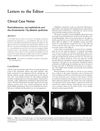 13 citations
,
February 2004 in “Clinical and Experimental Ophthalmology”
13 citations
,
February 2004 in “Clinical and Experimental Ophthalmology” A baby boy with 13q deletion syndrome had eye cancer, a woman's vision improved after stopping a breast cancer drug, a man developed cataracts from using Propecia, and a rare skin disorder called Lipoid Proteinosis was discussed. Also, a tool called OCT is useful for diagnosing macular diseases.
6 citations
,
December 2023 in “Journal of Molecular Cell Biology” Removing Gsdma1/2/3 genes reduces skin cell overgrowth by blocking a specific cell pathway.
 11 citations
,
December 2018 in “Bone”
11 citations
,
December 2018 in “Bone” Removing a methyl group from the ITGAV gene speeds up bone formation in a specific type of bone disease model.
 July 2022 in “The journal of investigative dermatology/Journal of investigative dermatology”
 Particulate matter causes inflammation in hair cells, potentially harming hair growth.
June 2020 in “Zenodo (CERN European Organization for Nuclear Research)” Controlled microflora in animals delays immune cell maturation and affects immunity.
475 citations
,
October 2006 in “Proceedings of the National Academy of Sciences” Folliculin helps regulate energy and nutrient sensing, impacting Birt–Hogg–Dubé syndrome.
January 1998 in “Differentiation” Basonuclin is crucial for hair follicle development and cycling in mice.
October 2007 in “Revue du Rhumatisme”  March 2025 in “International Journal of Molecular Sciences”
 The study created a mouse model to better understand hair follicle stem cells' role in hair growth and repair.

The human scalp has different types of pigment cells in hair follicles with varying abilities to produce pigment.
61 citations
,
February 1997 in “Differentiation” Hair differentiation starts earlier than thought, involving multiple type-II keratins.
 22 citations
,
April 2020 in “Scientific reports”
22 citations
,
April 2020 in “Scientific reports” Changthangi goats have specific genes that help produce Pashmina wool.
14 citations
,
July 2017 in “Fitoterapia” Oleanolic acid promotes hair growth by increasing cell proliferation through the Wnt/β-catenin pathway.
CCC1 is essential for ion balance and proper plant cell function.
28 citations
,
October 2014 in “Development” Fz3 and Fz6 can partially replace each other in tissue polarity and axon guidance.
January 2025 in “Dermatology Research and Practice” Higher activity in lichen planopilaris is linked to certain immune and tissue genes.
 December 2013 in “Appetite”
 A defective gene causes hair loss and taste insensitivity in BTBR mice.
 38 citations
,
July 2019 in “Nature Communications”
38 citations
,
July 2019 in “Nature Communications” Par3 protein is essential for skin cell balance and stability.
 12 citations
,
August 1984 in “Genetics Research”
12 citations
,
August 1984 in “Genetics Research” The N gene affects the protein makeup of mouse hair.
 94 citations
,
July 2020 in “European Journal of Human Genetics”
94 citations
,
July 2020 in “European Journal of Human Genetics” The guidelines ensure accurate genetic testing and reporting for 21-hydroxylase deficiency.
September 2024 in “The Journal of Dermatology” Nevus comedonicus can sometimes grow terminal hair, challenging previous beliefs.
 19 citations
,
March 1998 in “Endocrinology”
19 citations
,
March 1998 in “Endocrinology” Male rats have more somatostatin neurons than females due to testosterone converting to estrogen during early development.

Erythropoietin overexpression disrupts hair growth and fat formation in mice.
66 citations
,
December 1999 in “Journal of Investigative Dermatology” New mutations in the hairless gene may cause hair loss and affect bone development.
75 citations
,
September 2016 in “EMBO journal” PRC2 is essential for maintaining intestinal cell balance and aiding regeneration after damage.