 14 citations
,
October 2018 in “PloS one”
14 citations
,
October 2018 in “PloS one” Deleting the Far2 gene in mice causes sebaceous gland issues and patchy hair loss.

A new AIRE gene mutation causes rare autoimmune symptoms in a Lebanese boy.
October 2007 in “European Neuropsychopharmacology”  60 citations
,
January 2007 in “Human Genetics”
60 citations
,
January 2007 in “Human Genetics” AR polyglycine repeat doesn't cause baldness.
14 citations
,
January 1982 in “International journal of radiation biology & related studies in physics, chemistry & medicine” Heavy ions cause significant damage to rabbit forebrains, similar to other radiation effects.
 June 2018 in “Biomedical Journal of Scientific and Technical Research”
 Men with lower 2nd to 4th finger ratios tend to have larger sinus volumes.
 1 citations
,
July 2024 in “Indian Journal of Case Reports”
1 citations
,
July 2024 in “Indian Journal of Case Reports” GAPO syndrome causes growth issues, hair loss, missing teeth, and vision problems.
 1 citations
,
December 2018 in “Journal of genetic medicine”
1 citations
,
December 2018 in “Journal of genetic medicine” A small change in the TRPS1 gene leads to a less severe form of a syndrome affecting hair, nose, and finger development.
66 citations
,
May 2002 in “The Plant Journal” The IRE gene is important for normal root hair growth in Arabidopsis plants.
1 citations
,
July 2025 in “Journal of Investigative Dermatology” IL-27 may help prevent hair loss by creating immune-suppressing cells.
 1 citations
,
September 2023 in “eLife”
1 citations
,
September 2023 in “eLife” TLR2 is important for hair growth and can be targeted to treat hair loss.
 April 2012 in “The Journal of Urology”
 Early baldness increases prostate cancer risk, radiotherapy and surgery have similar second cancer rates, and ALA may reduce prostate cancer risk.
 111 citations
,
October 2008 in “Nature Genetics”
111 citations
,
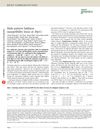
October 2008 in “Nature Genetics” Researchers found a new gene area linked to male-pattern baldness, which, along with another gene, significantly increases the risk of hair loss in men.
 42 citations
,
January 2017 in “Genes”
42 citations
,
January 2017 in “Genes” The gene KAP22-1 affects wool yield and fiber shape in sheep.
20 citations
,
October 2005 in “Archives of Dermatological Research” 20 citations
,
April 2000 in “Experimental dermatology” ODC transgenic mice can model human hair loss with skin lesions.
January 2003 in “Dialnet (Universidad de la Rioja)” The study found ways to create important compounds for male health from olive waste.
 40 citations
,
June 2011 in “Journal of biological chemistry/The Journal of biological chemistry”
40 citations
,
June 2011 in “Journal of biological chemistry/The Journal of biological chemistry” FA2H is essential for normal fur and sebum production in mice.
 13 citations
,
September 2019 in “EBioMedicine”
13 citations
,
September 2019 in “EBioMedicine” sPLA2-IIA increases growth in hair follicle stem cells and cancer cells, suggesting it could be targeted for hair growth and cancer treatment.
13 citations
,
December 2009 in “Journal of the Peripheral Nervous System” TRPA1 and TRPV1 channels don't affect mechanotransduction in rat sinus hair follicles.
 7 citations
,
July 2014 in “Reproductive Biomedicine Online”
7 citations
,
July 2014 in “Reproductive Biomedicine Online” The length of CAG repeats in the androgen receptor gene is linked to ovarian reserve but does not affect how the ovaries respond to stimulation.
 April 2017 in “The journal of investigative dermatology/Journal of investigative dermatology”
 Both induced and spontaneous AA lymphocytes can cause alopecia areata in mice.
1 citations
,
January 2025 in “Proceedings of the National Academy of Sciences” LPAR6 has a unique way of binding and activating, which helps in designing treatments for hair loss and cancer.
 23 citations
,
May 2019 in “Expert Opinion on Therapeutic Patents”
23 citations
,
May 2019 in “Expert Opinion on Therapeutic Patents” New androgen receptor modulators show promise for treating diseases like prostate cancer and muscle wasting.
June 2026 in “Mendeley Data” June 2026 in “Mendeley Data”  195 citations
,
February 2005 in “Journal of biological chemistry/The Journal of biological chemistry”
195 citations
,
February 2005 in “Journal of biological chemistry/The Journal of biological chemistry” The ZIP7 gene helps control zinc levels in cells by moving zinc from the Golgi apparatus to the cytoplasm.
11 citations
,
January 2016 in “Molecular and Cellular Neuroscience” Chronic ethanol increases certain brain receptor levels, influenced by steroids and protein changes.
 April 2017 in “Journal of Investigative Dermatology”
 The BMP/Smads pathway and Id2 gene control hair follicle stem cells, affecting their rest and growth phases.