 September 2025 in “Cureus”
 GLP-1 agonists may help treat certain skin conditions.
 July 2025 in “Scientific Reports”
 Pioglitazone, Trimipramine, and Dimetindene may be repurposed to treat psoriasis.
 January 2025 in “ARC Journal of Clinical Case Reports”
 Encapsulated retinol may effectively treat actinic keratosis without side effects.
 January 2025 in “RSC Pharmaceutics”
 Smart microneedles using advanced tech could improve psoriasis treatment.
 December 2024 in “Journal of Population Therapeutics and Clinical Pharmacology”
 Psoriasis worsens in winter in India due to less sunlight and dry skin, needing personalized treatment.
 October 2024 in “Reumatizam”
 New treatments and understanding of skin lupus are emerging in 2024.
 September 2024 in “Cureus”
 Guselkumab effectively treats skin reactions caused by adalimumab in certain conditions.
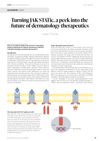 August 2024 in “New Zealand Medical Student Journal”
 JAK inhibitors show promise for treating skin diseases effectively and safely.
 July 2024 in “Romanian Journal of Veterinary Sciences”
 Cyclosporine improved skin condition in dogs with sebaceous adenitis.

Personalized care and evidence-based treatments are crucial for managing skin and hair conditions.
 June 2024 in “BioSCIENCE”
 Microinfusion of methotrexate can help treat frontal fibrosing alopecia.

Doctors should consider Netherton syndrome in patients with chronic skin and hair issues to avoid misdiagnosis.
 June 2023 in “Romanian Medical Journal”
 The case shows how hard it is to tell apart Multiple Autoimmune Syndrome from other similar autoimmune conditions, but correct diagnosis is key for treatment to work.
 March 2023 in “International Journal of Biomedicine”
 Hair loss from Telogen Effluvium can be managed by treating the underlying cause and may improve with treatments like minoxidil.

A rare skin condition in a 17-year-old was diagnosed late, stressing the need for careful evaluation and genetic testing.
 June 2022 in “Journal of the turkish academy of dermatology”
 The COVID-19 quarantine in Turkey disrupted dermatological care, increased stress-related skin issues, and showed the need for psychological support and teledermatology.

Researchers found a genetic link for hereditary hair loss but need more analysis to identify the exact gene.

The document describes a rare case of IFAP syndrome, a genetic condition with symptoms of hair loss, light sensitivity, and scaly skin.
 February 2020 in “International Journal of Research in Dermatology”
 EPDS is a rare, chronic scalp condition that's hard to treat and needs better awareness for improved outcomes.
 November 2019 in “Harper's Textbook of Pediatric Dermatology”
 Understanding normal hair growth and loss in children is key to diagnosing and treating hair disorders.

The document concludes that diagnosing female hair loss requires careful examination, with treatments varying by condition and psychological support often necessary.
 January 2019 in “Springer eBooks”
 Some chemicals and drugs can cause hair loss, which usually grows back after stopping the treatment.
 August 2018 in “Journal of the American Academy of Dermatology”
 Calcipotriol may effectively treat hair loss in alopecia areata, working better in children than adults.
 July 2018 in “Elsevier eBooks”
 Frontal Fibrosing Alopecia is a type of hair loss affecting mostly older women, with no agreed best treatment.
 January 2018 in “SOJ microbiology & infectious diseases”
 Etanercept, a psoriasis treatment, caused hair loss in a patient.

Proretinal nanoparticles are a safe and effective way to deliver retinal to the skin.
 January 2018 in “Springer eBooks”
 Cancer treatments targeting specific cells often cause skin, hair, and nail problems, affecting patients' lives and requiring careful management.
 January 2018 in “Springer eBooks”
 Hidradenitis Suppurativa is likely an autoinflammatory disease, and better understanding its causes could improve treatments.

Botulinum toxin type A significantly reduces scalp psoriasis severity compared to placebo.
 January 2018 in “Przegla̧d dermatologiczny”
 The Polish Dermatological Society recommends personalized treatment for cutaneous lupus, including lifestyle changes, medications, and monitoring, with specific drugs for severe cases.