 March 2021 in “Uludağ Üniversitesi Tıp Fakültesi dergisi”
 The review provided information on various treatments to stop hair thinning and increase hair density in people with common genetic hair loss.
 August 2020 in “Journal of The American Academy of Dermatology”
 Oral minoxidil can improve hair thickness and a comprehensive treatment approach leads to better alopecia outcomes.
March 2020 in “DOAJ (DOAJ: Directory of Open Access Journals)” Finasteride may help treat female hair loss, but has risks.
 January 2019 in “Skin appendage disorders”
 A woman's hair loss was linked to a rare hormone-secreting ovarian tumor, treated with surgery and hair loss medication.
 January 2017 in “Clinical approaches and procedures in cosmetic dermatology”
 Men are increasingly seeking quick-result cosmetic treatments for their thicker, oilier skin and hair loss issues.
 July 2015 in “Cambridge University Press eBooks”
 The document concludes that treatments for female hair loss and excess body hair are available, but managing expectations is important.
 May 2015 in “Journal of The American Academy of Dermatology”
 The research shows a potential way to regenerate hair using adult cells that have been grown and guided to produce new hair fibers.
 November 2014 in “British Journal of Dermatology”
 Male hair loss is mainly due to thinner hair, not less hair.
 May 2013 in “Trends in Urology & Men's Health”
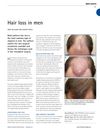
 Male-pattern hair loss is normal, often involves hormone effects on hair follicles, and can be treated with medication or surgery, but new treatments are being researched.
 January 2013 in “The Pan African medical journal”
 Monilethrix causes short, fragile hair with no specific treatment available.
 July 2011 in “Springer eBooks”
 The document concluded that FDA-approved treatments like minoxidil and finasteride are effective for hair loss, while the effectiveness of natural remedies and other non-approved treatments is not well-supported by evidence.
September 2004 in “Dépôt institutionnel de l'Université libre de Bruxelles (Université Libre de Bruxelles)” Early diagnosis and treatment can help manage hair loss effectively.
 March 2003 in “Dermatologic Surgery”
 Dr. Dominic A. Brandy shared methods to fix aesthetic problems from old hair restoration techniques, using methods like follicular unit grafting and scalp removal, which helped patients look more natural after surgery. He also suggested using oral finasteride and topical minoxidil to control hair loss in most men with baldness, especially those who had flap surgery.
 January 1998 in “Current Therapeutics”
 Different causes of hair loss require specific treatments, and most men and women will experience some form of hair thinning as they age.
September 1997 in “JEADV. Journal of the European Academy of Dermatology and Venereology/Journal of the European Academy of Dermatology and Venereology” Common hair loss can be diagnosed with a physical exam and sometimes a hair test or skin biopsy, and treated with medication or surgery, with ongoing treatment needed to keep results.
November 2022 in “Journal of Education, Health and Sport” Combination therapy for hair loss can improve results and reduce side effects.
Microneedling may be an effective treatment for pattern hair loss.
 February 2022 in “Chinese Journal of Dermatology”
 A 36-year-old woman with worsening hair loss over 10 years was treated with various medications, and after six months, her hair loss did not worsen significantly.
 January 2022 in “Clinical Cases in Dermatology”
 Androgenetic alopecia, a common hair loss condition, can be treated with topical minoxidil, oral finasteride, or oral spironolactone, and new treatments like platelet-rich plasma, low-level laser therapy, and janus-kinase inhibitors are being explored.
December 2021 in “International Journal of Research in Dermatology” Early diagnosis and personalized treatment are crucial for managing hair loss in India.
March 2021 in “Berkala Ilmu Kesehatan Kulit dan Kelamin” The best treatment for male pattern baldness is a combination of topical minoxidil and oral finasteride.
January 2019 in “Journal of Cosmetics, Dermatological Sciences and Applications” The combination therapy is safe and effective for treating Female Pattern Hair Loss in Asian women.
 November 2014 in “British Journal of Dermatology”
 Hair loss is due to thinner hairs, not less hairs; hair diameter indicates balding progression and treatment effectiveness.
August 2014 in “Journal of drug discovery and therapeutics” Topical minoxidil and oral finasteride can help regrow hair in androgenetic alopecia.

Alopecia areata, a type of hair loss, may be passed through T cells and has genetic links, while treatments vary in effectiveness. Male pattern baldness can be treated with finasteride and is influenced by androgens in hair follicles.
November 2009 in “Hair transplant forum international” Early diagnosis and personalized treatment are crucial for managing Female Pattern Hair Loss in women.
 June 2007 in “DOAJ (DOAJ: Directory of Open Access Journals)”
 Female pattern hair loss, common in women, can be treated with oral antiandrogens and topical minoxidil, but these are more effective at preventing further loss than regrowing hair. Other helpful methods include counseling, cosmetic camouflage, and hair transplantation. Treatment must continue for effects to last and it may take up to 2 years to see results.
 January 2007 in “Revista del Centro Dermatológico Pascua”
 Hair loss in women, often not related to male hormones, increases with age and can cause significant emotional distress.
January 2004 in “Nederlands Tijdschrift voor Dermatologie & Venereologie” Female pattern hair loss causes thinning hair on top of the scalp, treatable with limited success.
January 2004 in “Medicine Today” Topical minoxidil helps hair regrowth in over 50% of men and women.