 349 citations
,
January 2005 in “The FASEB journal”
349 citations
,
January 2005 in “The FASEB journal” Human skin can make serotonin and melatonin, which help protect and maintain it.
 August 2019 in “Journal of The American Academy of Dermatology”
 Bleach baths with 0.005% hypochlorite help manage atopic dermatitis by affecting skin cells and reducing itchiness.
 November 2016 in “Universiti Putra Malaysia Institutional Repository (Universiti Putra Malaysia)”
 Dendrobium sabin flower extract may help reduce skin aging from UV exposure.
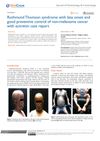 August 2024 in “Journal of Dermatology & Cosmetology”
 Acitretin effectively prevented skin cancer in a patient with late-onset Rothmund-Thomson syndrome.
1 citations
,
February 2020 in “The Journal of clinical investigation/The journal of clinical investigation” Certain cancer drugs interact with skin bacteria to cause acne-like rashes.
 2 citations
,
February 2010 in “Facial Plastic Surgery Clinics of North America”
2 citations
,
February 2010 in “Facial Plastic Surgery Clinics of North America” The document introduces a guide on facial plastic surgery for diverse ethnic groups.
 November 2021 in “International Journal of Research in Medical Sciences & Technology”
 Skin surface chemistry and OCT can improve skin disease diagnosis.
 December 2019 in “Buletin de psihiatrie integrativă”
 Skin treatments can improve both skin health and emotional well-being, but they require careful management of patient expectations and potential addiction risks.
3 citations
,
April 2011 in “Journal of the American Academy of Dermatology” A 19-year-old man had a rare skin condition on one side of his face that looked like another skin disease.
2 citations
,
January 1999 in “Dermatology” December 2025 in “Dietetics” European olive products are beneficial for skin care and are expected to become more important.
October 2025 in “Indian Dermatology Online Journal” Kitchen analogies help make skin conditions easier to understand and remember.
13 citations
,
November 2016 in “Human & Experimental Toxicology” Maternal exposure to artificial food coloring may increase skin disease risk in rat offspring.
Adult acne significantly affects quality of life, highlighting the need for early treatment to prevent scarring and psychological stress.
4 citations
,
November 2024 in “Current Opinion in Genetics & Development” 16 citations
,
November 2008 in “Journal of the American Academy of Dermatology” Consider necrolytic acral erythema in similar cases and treat with oral zinc sulfate.
 12 citations
,
June 2024 in “Archives of Dermatological Research”
12 citations
,
June 2024 in “Archives of Dermatological Research” Older people at home often have skin issues, but there's little evidence on how to prevent or treat them effectively.
36 citations
,
April 2022 in “Nutrients” Langsat fruit has health benefits like fighting malaria, bacteria, and aging, but its peel is toxic.
April 2018 in “The journal of investigative dermatology/Journal of investigative dermatology” Interest in acne is rising, but research funding has significantly decreased.
 August 2010 in “The Journal of Dermatology”
 The document concludes that low-dose acne treatment is most suitable for moderate acne, with high patient satisfaction and low relapse rates.
 28 citations
,
January 2010 in “Biological & pharmaceutical bulletin”
28 citations
,
January 2010 in “Biological & pharmaceutical bulletin” Certain essential oils can activate a human skin receptor, potentially helping with skin disorders.
 71 citations
,
January 2015 in “The Scientific World Journal”
71 citations
,
January 2015 in “The Scientific World Journal” Insulin resistance may contribute to various skin diseases and treating it could improve skin health and prevent more serious conditions.
 11 citations
,
January 2013 in “Postępy Dermatologii i Alergologii”
11 citations
,
January 2013 in “Postępy Dermatologii i Alergologii” The conclusion is that a combination of noninvasive treatments and lifestyle changes can improve skin health during menopause.
118 citations
,
January 1992 in “Experientia” 6 citations
,
August 2022 in “Journal of Herbal Medicine” Mangosteen extract may help with hair growth and prevent graying.
 17 citations
,
March 1955 in “British Journal of Cancer”
17 citations
,
March 1955 in “British Journal of Cancer” Skin components play a part in the development of cancer caused by chemicals.
 9 citations
,
March 1968 in “The BMJ”
9 citations
,
March 1968 in “The BMJ” A woman's severe skin reaction was caused by an allergy to a skin treatment.
 May 2023 in “Journal of Cosmetic Dermatology”
 Being overweight can cause or worsen skin problems in children, some more common in darker skin, and is often linked to insulin resistance.
2 citations
,
November 2014 in “International Scholarly Research Notices” The terpenoid fraction may cause thicker scars by delaying wound healing.
 78 citations
,
September 2008 in “International Journal of Cosmetic Science”
78 citations
,
September 2008 in “International Journal of Cosmetic Science” The document concludes that various clinical methods are used to assess ageing skin and the effectiveness of anti-ageing products.