
Water and fatty acids affect hair's surface differently based on hair damage, and models can help understand hair-cosmetic interactions.
 April 2017 in “Journal of Investigative Dermatology”
 Sweat glands and hair follicles are determined by opposing signals, with BMPs promoting sweat glands and blocking BMPs leading to hair follicles.
January 2025 in “Online Publication Service of Würzburg University (Würzburg University)” A protocol was developed to create 3D skin models from adult diseased cells to study Small Fiber Neuropathy.
45 citations
,
June 2003 in “Journal of Investigative Dermatology Symposium Proceedings” Understanding hair follicles through various models can help develop new treatments for hair disorders.
 10 citations
,
October 1993 in “Archives of dermatological research”
10 citations
,
October 1993 in “Archives of dermatological research” Vitamin D compounds may help treat psoriasis by promoting skin cell differentiation.
 3 citations
,
February 2021 in “Experimental dermatology”
3 citations
,
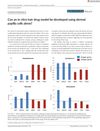
February 2021 in “Experimental dermatology” Dermal papilla microtissues could be useful for initial hair growth drug testing.
 6 citations
,
May 2013 in “PloS one”
6 citations
,
May 2013 in “PloS one” The Foxn1(-/-) nude mouse shows disrupted and expanded skin stem cell areas due to high Lhx2 levels.
July 2024 in “Journal of Investigative Dermatology” Bioengineered skin models aging well, useful for studying aging and testing treatments.
 75 citations
,
March 2014 in “Journal of Investigative Dermatology”
75 citations
,
March 2014 in “Journal of Investigative Dermatology” Aging mice have slower hair regeneration due to changes in signal balance, but the environment, not stem cell loss, controls this, suggesting treatments could focus on environmental factors.
1 citations
,
September 2019 in “Journal of Investigative Dermatology” Anti-Desmocollin 3 antibodies can cause pemphigus-like symptoms in mice.