 19 citations
,
June 2001 in “Annals of Internal Medicine”
19 citations
,
June 2001 in “Annals of Internal Medicine” Tamoxifen can cause total hair loss but its benefits outweigh this side effect.
22 citations
,
May 2016 in “Breast cancer research and treatment” Some patients using cold caps to prevent hair loss from chemotherapy got mild scalp injuries similar to frostbite.
 June 2018 in “Reactions Weekly”
 A 65-year-old man developed a serious skin cancer linked to a drug he was taking for a fungal infection after a bone marrow transplant.
2 citations
,
December 2019 in “Chinese medical journal/Chinese Medical Journal” A woman with a scalp infection and herpes recovered fully after treatment.
64 citations
,
March 2004 in “Journal of Clinical Investigation” Targeting ornithine decarboxylase can help prevent skin cancer.
8 citations
,
March 2001 in “PubMed” A man developed recurring scalp inflammation and hair loss after a head injury.
7 citations
,
December 1971 in “Calcified Tissue Research” Hair follicles in injured skin can quickly accumulate minerals, especially calcium and phosphorus.
 August 1978 in “Dicp-The annals of pharmacotherapy”
 Mannitol diuresis allows higher doses of cis-platinum for testicular cancer treatment without increasing kidney damage.
 74 citations
,
September 1980 in “Medical Clinics of North America”
74 citations
,
September 1980 in “Medical Clinics of North America” Toxic epidermal necrolysis is a severe skin condition often caused by drugs, with complex treatment and a high risk of death, but survivors usually heal without scars.
March 2025 in “Molecular Neurobiology” 4 citations
,
January 2023 in “Journal of Clinical Investigation” Specific mutations in a receptor cause facial abnormalities and hair loss.
 January 2024 in “Journal of cutaneous and aesthetic surgery”
 Scalp injuries and harsh hair care can cause severe hair matting in children.
December 2009 in “Faculty Opinions – Post-Publication Peer Review of the Biomedical Literature” Noggin promotes skin tumors by activating Wnt and Shh pathways.
9 citations
,
March 1991 in “American Journal of Contact Dermatitis” Minoxidil can cause allergic skin reactions, especially in long-term users.
August 2007 in “Faculty Opinions – Post-Publication Peer Review of the Biomedical Literature” Overexpression of a specific receptor in mice skin causes skin thinning, early skin barrier formation, eye issues, and hair loss.
 January 2020 in “Nihon Yakuri Gakkai nenkai yoshishu”
 Minoxidil protects brain tissue directly, not by lowering blood pressure.
15 citations
,
July 2015 in “Developmental Dynamics” Orai1 protein is crucial for tooth development and affects enamel thickness and mineralization.
138 citations
,
January 2004 in “AIDS” Some HIV treatments can harm mitochondria, potentially causing side effects like lactic acidosis and nerve damage.
 3 citations
,
July 2008 in “British journal of dermatology/British journal of dermatology, Supplement”
3 citations
,
July 2008 in “British journal of dermatology/British journal of dermatology, Supplement” Terbinafine can cause hair loss.
 May 2015 in “Journal of The American Academy of Dermatology”
 Oral minoxidil effectively increases hair growth in male baldness but can cause side effects like excessive hair growth and swelling.
 1 citations
,
September 2023 in “Journal of Investigative Dermatology”
1 citations
,
September 2023 in “Journal of Investigative Dermatology” Melatonin may protect hair follicle cells from damage caused by a chemotherapy drug.
11 citations
,
March 2021 in “The journal of investigative dermatology/Journal of investigative dermatology” A gene mutation causes early keratinocyte maturation leading to hair loss in Olmsted syndrome.
 July 2026 in “Open Science Framework”
 Radiation can cause hair loss, and better prevention and treatment methods are needed.
7 citations
,
January 1995 Silicone pretreatment protects hair from damage and reduces color fading without interfering with bleaching or dyeing.
28 citations
,
June 2012 in “International Journal of Molecular Medicine” Radiation damages hair stem cells and changes keratin expression, with Krt5 as a potential marker for radiation effects.
 11 citations
,
January 2022 in “Journal of Cancer”
11 citations
,
January 2022 in “Journal of Cancer” Low intensity ultrasound may reduce side effects of chemotherapy drugs like paclitaxel.
 9 citations
,
May 2001 in “Journal of the American Veterinary Medical Association”
9 citations
,
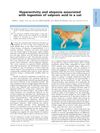
May 2001 in “Journal of the American Veterinary Medical Association” A cat's hyperactivity and hair loss were caused by eating valproic acid but improved after stopping access to the drug.
 15 citations
,
August 2008 in “Toxicology Letters”
15 citations
,
August 2008 in “Toxicology Letters” High doses of minoxidil can harm marmoset hearts and kidneys, possibly affecting humans similarly.
November 2025 in “Toxicology Communications” Minoxidil is very toxic to pets, especially cats.
 15 citations
,
June 2019 in “eLife”
15 citations
,
June 2019 in “eLife” Activin A and follistatin control when hair cells develop in mouse ears.