57 citations
,
April 2009 in “Differentiation” SDF-1/CXCL12 and its receptor CXCR4 are crucial for melanocyte movement in mouse hair follicles.
990 citations
,
October 1999 in “Development” Activated LEF/TCF complexes are crucial for hair development and cycling.
248 citations
,
April 1988 in “Differentiation” Human and bovine hair follicles have distinct cytokeratins specific to hair-forming cells.
 130 citations
,
June 2003 in “Journal of Investigative Dermatology Symposium Proceedings”
130 citations
,
June 2003 in “Journal of Investigative Dermatology Symposium Proceedings” Estrogen Receptor ß (ERß) is the main hormone controller in human skin and hair follicles, not Estrogen Receptor α (ERα) or the Androgen Receptor (AR).
 120 citations
,
August 2008 in “The journal of investigative dermatology/Journal of investigative dermatology”
120 citations
,
August 2008 in “The journal of investigative dermatology/Journal of investigative dermatology” Cytokeratin 19 and cytokeratin 15 are key markers for monitoring the quality and self-renewing potential of engineered skin.
95 citations
,
July 2006 in “British Journal of Dermatology” Vitamin D receptors in hair follicles change with the hair cycle, affecting hair growth.
70 citations
,
May 2008 in “The journal of investigative dermatology/Journal of investigative dermatology” Notch/RBP-J signaling is crucial for proper placement and timing of melanocyte development in hair follicles.
 67 citations
,
August 2013 in “International Journal of Cosmetic Science”
67 citations
,
August 2013 in “International Journal of Cosmetic Science” Hair greying is caused by oxidative stress damaging hair follicles and melanocytes.
65 citations
,
February 1992 in “Development” Type II keratin genes are crucial for hair follicle differentiation and have a conserved structure and expression pattern.
49 citations
,
July 2006 in “British Journal of Dermatology” Calcifying epithelioma cells can differentiate into hair cortex and outer root sheath.
 43 citations
,
February 2008 in “Journal of cutaneous pathology”
43 citations
,
February 2008 in “Journal of cutaneous pathology” Melanocyte precursors in human fetal skin follow a specific migration pattern and some remain in the skin's deeper layers.
35 citations
,
December 2014 in “Lasers in surgery and medicine” Red light promotes hair growth by directly stimulating hair cells and improving cell communication.
 11 citations
,
January 2012 in “Journal of cell science”
11 citations
,
January 2012 in “Journal of cell science” Rac1 is essential for proper hair structure and color.
 10 citations
,
December 2021 in “Frontiers in cell and developmental biology”
10 citations
,
December 2021 in “Frontiers in cell and developmental biology” Glypican-1 is important for blood vessel growth in hair follicles and could help treat hair loss.
9 citations
,
July 2014 in “PubMed” Different S100 proteins have specific roles in various parts of the hair follicle.
 7 citations
,
March 2005 in “Journal of dermatological science”
7 citations
,
March 2005 in “Journal of dermatological science” Apoptosis helps shape hair growth and prepares the skin for hair to emerge.
 4 citations
,
March 2019 in “Experimental Biology and Medicine”
4 citations
,
March 2019 in “Experimental Biology and Medicine” Exposure to 50 Hz electromagnetic fields may help mice grow hair faster.
2 citations
,
March 2011 in “Veterinary Dermatology” FGF18 is present in beagle dog hair follicles, mainly in the inner root sheath.
 1 citations
,
March 2014 in “Applied Microscopy”
1 citations
,
March 2014 in “Applied Microscopy” CK19 and Vimentin are proteins found in rat skin that help with skin renewal and maintaining cell structure.
 1 citations
,
January 1995 in “Skin Cancer”
1 citations
,
January 1995 in “Skin Cancer” Immunohistochemistry helps accurately identify and differentiate malignant trichilemmoma.
1 citations
,
January 2017 The document outlines criteria to identify and differentiate neoplasms based on follicular characteristics.
June 2024 in “The Journal of Nutritional Biochemistry” 1,25-(OH)2D3 helps hair grow by blocking certain harmful signals.
 June 2023 in “Biochimica and biophysica acta. Molecular and cell biology of lipids”
 Impaired ABCA5 activity disrupts cholesterol balance in hair follicle cells, affecting hair growth.
GPC1 is important for blood vessel growth in hair follicles and could help treat hair loss.
GPC1 is important for hair growth by helping blood vessels form around hair follicles.
GPC1 is important for blood vessel growth in hair follicles and could help treat hair loss.
Glypican-1 is important for hair follicle blood vessel growth and could be a target for treating hair loss.
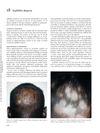 April 2012 in “Informa Healthcare eBooks”
 Syphilitic alopecia is a rare hair loss condition in secondary syphilis that looks similar to another condition but can be diagnosed with specific tests and responds to antibiotics.
March 2009 in “Chinese Journal of Dermatology” Melanocytes in the outer root sheath are likely stem cells that grow fast but stay immature.
Low-level light therapy can promote hair growth by stimulating cell interactions in hair follicles.