44 citations
,
October 1990 in “Archives of Dermatological Research” The connective tissue around hair follicles changes structure throughout the hair cycle.
7 citations
,
January 1992 in “Acta Histochemica” Porcine and human pilosebaceous units are very similar.
35 citations
,
December 2008 in “PubMed” Trichilemmoma, BCC, and SCC tumors have different stem cell marker expressions.
21 citations
,
October 2007 in “Journal of Investigative Dermatology” Fetuin-A helps wounds heal without scars by promoting cell movement.
 February 2024 in “International Journal of Biological Macromolecules”
 The study created a new type of microsphere that effectively regrows hair.
 33 citations
,
July 2021 in “Clinical, Cosmetic and Investigational Dermatology”
33 citations
,
July 2021 in “Clinical, Cosmetic and Investigational Dermatology” Nanocarrier technology in cosmetics improves ingredient delivery and effectiveness while reducing side effects.
 35 citations
,
March 2007 in “Skin Research and Technology”
35 citations
,
March 2007 in “Skin Research and Technology” The conclusion is that exogen is a unique hair cycle phase and the new sampling method specifically targets this stage, which may help in future hair loss research.
1 citations
,
December 2023 in “Skin Research and Technology” Combining hair follicle transplantation and a 308 nm excimer laser effectively treats perioral vitiligo without unwanted hair growth.
18 citations
,
February 2024 in “Skin Research and Technology” Combining different treatments often works best for acne scars, but see a dermatologist first.
 8 citations
,
November 2020 in “Optics and Laser Technology”
8 citations
,
November 2020 in “Optics and Laser Technology” LED light therapy is effective for skin and hair treatments but requires careful use to minimize risks.
 April 2017 in “Journal of Investigative Dermatology”
  4 citations
,
March 2012 in “Annals of oncology”
4 citations
,
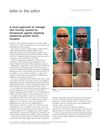
March 2012 in “Annals of oncology” New treatment with green tea polyphenols and nicotinamide improves skin problems from cancer therapy.
 1 citations
,
January 2015 in “Journal of nutrition & health”
1 citations
,
January 2015 in “Journal of nutrition & health” Fish oil improves skin health in people with diabetes and high cholesterol.
 July 2021 in “Journal of dermatology research and therapy”
 Using combined treatments can help manage acne by targeting the bacteria and skin changes that cause it.
 1 citations
,
July 2016 in “Elsevier eBooks”
1 citations
,
July 2016 in “Elsevier eBooks” Understanding skin structure and development helps diagnose and treat skin disorders.
 1039 citations
,
February 2009 in “Nature Reviews Molecular Cell Biology”
1039 citations
,
February 2009 in “Nature Reviews Molecular Cell Biology” Skin stem cells are crucial for maintaining and repairing the skin and hair, using a complex mix of signals to do so.
 418 citations
,
September 2012 in “Nature”
418 citations
,
September 2012 in “Nature” African spiny mice can regenerate skin, hair, and cartilage, but not muscle, and their unique abilities could be useful for regenerative medicine.
 138 citations
,
May 2000 in “Maturitas”
138 citations
,
May 2000 in “Maturitas” Estrogen replacement can improve skin health in menopausal women but doesn't reverse sun damage or prevent hair loss.
 56 citations
,
July 2005 in “Experimental Dermatology”
56 citations
,
July 2005 in “Experimental Dermatology” Injected human hair follicle cells can create new, small hair follicles in skin cultures.
 34 citations
,
April 2018 in “EMBO journal”
34 citations
,
April 2018 in “EMBO journal” The protein SLC1A3 is important for activating skin stem cells and is necessary for normal hair and skin growth in mice.
 31 citations
,
July 2017 in “Clinical Science”
31 citations
,
July 2017 in “Clinical Science” MicroRNAs are important for skin health and could be targets for new skin disorder treatments.
 28 citations
,
April 1996 in “Cell biology international”
28 citations
,
April 1996 in “Cell biology international” Changes in keratin affect skin health and can lead to skin disorders like blistering diseases and psoriasis.
 23 citations
,
June 2012 in “Molecular Biology Reports”
23 citations
,
June 2012 in “Molecular Biology Reports” VEGF stimulates hair cell growth and increases growth receptor levels through a specific signaling pathway.
 9 citations
,
May 2010 in “Journal of Investigative Dermatology”
9 citations
,
May 2010 in “Journal of Investigative Dermatology” Human sebaceous glands can grow back in skin grafts on mice and work like normal human glands.
 7 citations
,
October 2019 in “Elsevier eBooks”
7 citations
,
October 2019 in “Elsevier eBooks” Maintaining skin health is crucial for overall well-being and involves protecting against environmental damage and using skincare products.
 5 citations
,
August 2012 in “Journal of Dermatology”
5 citations
,
August 2012 in “Journal of Dermatology” Tamoxifen may cause female hair loss by increasing androgen receptor expression.
 3 citations
,
August 2011 in “InTech eBooks”
3 citations
,
August 2011 in “InTech eBooks” The document concludes that skin grafts are essential for repairing tissue loss, with various types available and ongoing research into substitutes to improve outcomes and reduce donor site issues.
 1 citations
,
January 2018 in “Stem cell biology and regenerative medicine”
1 citations
,
January 2018 in “Stem cell biology and regenerative medicine” DNA methylation is essential for skin and hair follicle development, and could be a target for treating skin diseases.
 September 2018 in “Cosmetics”
 Inositol and arginine solutions improve hair follicle health and turnover.
 January 2018 in “Stem cell biology and regenerative medicine”
 The conclusion is that the nuclear lamina and LINC complex in skin cells respond to mechanical signals, affecting gene expression and cell differentiation, which is important for skin health and can impact skin diseases.