 January 2016 in “Springer eBooks”
 Hyperandrogenism, often causing excessive hair growth and acne, can be treated with methods like weight reduction, hair removal, various medications, and in the case of acne, topical treatments.
 1 citations
,
October 2022 in “International journal of endocrinology”
1 citations
,
October 2022 in “International journal of endocrinology” Dihydrotestosterone changes some hormone-related gene expressions in rat pituitary glands but doesn't affect the estrous cycle.
 September 2023 in “Nature communications”
 Alk1 in specific cells is crucial for proper nerve branching and hair function.
 211 citations
,
April 2018 in “Cold Spring Harbor Perspectives in Biology”
211 citations
,
April 2018 in “Cold Spring Harbor Perspectives in Biology” Keratins are crucial for cell structure, growth, and disease risk.
 63 citations
,
March 2001 in “Fertility and Sterility”
63 citations
,
March 2001 in “Fertility and Sterility” Diane 35 plus finasteride is more effective for treating hirsutism.
 1 citations
,
February 1988 in “The BMJ”
1 citations
,
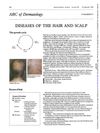
February 1988 in “The BMJ” The document explains different hair and scalp conditions, including common hair loss after pregnancy or illness, drug-induced hair loss, hereditary excessive hair growth, patterned baldness, autoimmune hair loss, and permanent loss due to skin disease, with generally limited treatment options.
80 citations
,
June 2002 in “Molecular Biology of the Cell” Type II keratins are uniquely phosphorylated during stress and mitosis, affecting their structure and function.
 October 2023 in “The Journal of clinical endocrinology and metabolism/Journal of clinical endocrinology & metabolism”
 Hyperandrogenism increases heart disease risk in premenopausal women, but this risk is linked to obesity in postmenopausal women.
 19 citations
,
September 2004 in “Reviews in gynaecological practice”
19 citations
,
September 2004 in “Reviews in gynaecological practice” Effective hirsutism management requires identifying the cause, combining new and traditional treatments, and setting realistic expectations for patients.
 1 citations
,
November 2011 in “Archives of Dermatology”
1 citations
,
November 2011 in “Archives of Dermatology” A woman's hair loss was caused by her husband's testosterone gel and a diabetic man's nail disease led to bone infection, both treated successfully.