158 citations
,
June 2014 in “Journal of Lipid Research” Lysophospholipids can act as anti-inflammatory agents through specific receptors, but more research is needed.
 59 citations
,
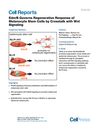
April 2016 in “Cell Reports”
59 citations
,
April 2016 in “Cell Reports” EdnrB signaling helps melanocyte stem cells regenerate and could be targeted to treat pigmentation issues.
 10 citations
,
October 2016 in “Monoclonal antibodies in immunodiagnosis and immunotherapy”
10 citations
,
October 2016 in “Monoclonal antibodies in immunodiagnosis and immunotherapy” Researchers created specific antibodies that detect a protein important in development and various conditions, and can be used for research and diagnosis.
4 citations
,
May 2024 in “Cytotechnology” 101 citations
,
June 2003 in “The EMBO Journal” Phospholipase Cδ1 is crucial for normal skin and hair development.
March 2026 in “Bioconjugate Chemistry” Peptide-based PROTACs show promise in targeting hard-to-treat proteins, especially for cancer therapy.
July 2025 in “Journal of Investigative Dermatology” Machine learning can help identify biomarkers for personalized Pemphigus vulgaris treatment.
 July 2025 in “Advanced Science”
 Collagen VI and Semaphorin 3C are important for hair pigmentation and could help treat pigmentation disorders.
July 2026 in “Research Square” April 2023 in “Journal of Investigative Dermatology” Increased TEMRA cells can predict treatment outcomes in rapidly progressive alopecia areata.
January 2009 in “Bradford Scholars (University of Bradford)” BMP signaling helps prevent skin tumors by blocking cancer-promoting pathways.
 1 citations
,
January 2013 in “MedChemComm”
1 citations
,
January 2013 in “MedChemComm” PF-05314882 selectively activates androgen receptors without much effect on prostate and may help in prostate cancer treatment and hair loss prevention.
7 citations
,
August 2020 in “Plastic and reconstructive surgery. Global open” QR 678 and QR 678 Neo are safe and promote hair growth, potentially helping chemotherapy-induced hair loss.
 April 2017 in “Journal of Dermatological Science”
 B cells can both help and hinder the body's defense against melanoma.
 29 citations
,
July 2014 in “PLoS ONE”
29 citations
,
July 2014 in “PLoS ONE” Inactivating β-catenin is essential for chick retina regeneration.
September 2023 in “Journal of the American Academy of Dermatology” Bullous pemphigoid can look like erythema multiforme, so awareness is needed for proper treatment.
11 citations
,
April 2021 in “Cancers” Activating GLI1 signaling without primary cilia could be a promising treatment for neuroblastoma.
37 citations
,
February 2007 in “Experimental Dermatology” Increasing PDCD4 protein may help prevent or treat some skin cancers.
3 citations
,
January 2016 NuMA-microtubule interactions are crucial for proper skin structure and hair growth.
 11 citations
,
August 2019 in “Journal of Molecular Histology”
11 citations
,
August 2019 in “Journal of Molecular Histology” NFIC helps rat dental cells grow and turn into bone-like cells.
26 citations
,
May 2007 in “Differentiation” Foxn1 helps skin cells mature by controlling a specific protein's activity.
 2 citations
,
February 2014 in “Animal Biotechnology”
2 citations
,
February 2014 in “Animal Biotechnology” The PTGER2 gene is highly active in Cashmere goat skin and its activity changes with the hair growth cycle.
January 2015 in “DukeSpace (Duke University)” Transferrin receptor 1 is essential for normal function in the intestines, pancreas, and skin.
28 citations
,
July 1980 in “British Journal of Dermatology” The hair disorder was caused by abnormal protein formation, making hair easily damaged.
November 2024 in “Journal of Investigative Dermatology” Skin and hair cells release serotonin and histamine naturally, which could help improve skin health.
28 citations
,
August 1992 in “Differentiation” A new pair of mouse keratins, 65 kD and 48 kD, are found in specific skin areas and are linked to a unique skin differentiation type.
March 2025 in “Laboratory Investigation” Mesothelioma of the tunica vaginalis testis is rare, often high-grade, and has a median survival of about 24 months.
123 citations
,
November 2003 in “Neuroscience Letters” TRPV4 helps sense pressure in mouse skin.
 February 2024 in “Journal of Cellular and Molecular Medicine”
 A hydrogel releasing pectolinarin speeds up wound healing and reduces scarring.
 April 2023 in “Journal of Investigative Dermatology”
 Disrupting a specific protein's function in hair follicle stem cells triggers their activation and a self-healing process.