18 citations
,
November 2009 in “Calcified tissue international” A genetic mutation caused severe rickets and alopecia in an Indian patient, but high-dose calcium and phosphate treatment improved their condition.
78 citations
,
May 2012 in “Journal of Investigative Dermatology” A specific gene mutation causes woolly hair and hair loss.
 February 2026 in “Frontiers in Medicine”
 Personalized sonidegib dosing can effectively treat Gorlin-Goltz syndrome with fewer side effects.
 115 citations
,
October 2009 in “The Journal of clinical endocrinology and metabolism/Journal of clinical endocrinology & metabolism”
115 citations
,
October 2009 in “The Journal of clinical endocrinology and metabolism/Journal of clinical endocrinology & metabolism” The research found that Atypical Progeroid Syndrome has unique symptoms and is not caused by the buildup of a certain mutant protein.
1 citations
,
January 1992 in “DNA sequence” Researchers found a non-functional sheep keratin gene due to mutations.
 1 citations
,
September 2019 in “Journal of Investigative Dermatology”
1 citations
,
September 2019 in “Journal of Investigative Dermatology” The research showed that CRISPR/Cas9 can fix mutations causing a skin disease in stem cells, which then improved skin grafts in mice, but more work on safety and efficiency is needed.
37 citations
,
February 2005 in “Journal of Investigative Dermatology” Overexpression of SSAT causes hair loss and skin issues, but reducing putrescine can help.
34 citations
,
July 2020 in “American journal of human genetics” Changes in the SREBF1 gene cause a rare genetic skin and hair disorder.
 May 2025 in “Frontiers in Genetics”
 A new genetic variant in the LIPH gene causes hair growth issues in a Chinese patient.
48 citations
,
April 2008 in “Human Molecular Genetics” Progerin affects cell shape but not hair or skin in mice.
12 citations
,
September 2017 in “JDR Clinical & Translational Research” Early detection of specific VDR mutations is crucial for effective treatment and better dental outcomes in children with hereditary vitamin D–resistant rickets.
16 citations
,
September 2015 in “International Journal of Molecular Sciences” A specific gene variant causes severe skin issues and increases infection risk, requiring careful medical monitoring.
 2 citations
,
March 2022 in “Portuguese Journal of Nephrology & Hypertension”
2 citations
,
March 2022 in “Portuguese Journal of Nephrology & Hypertension” A rare EGFR mutation in newborns leads to severe health issues and early death.
2 citations
,
April 2019 in “Journal of Investigative Dermatology” Gasdermin A3 causes hair follicle stem cells to activate too early, leading to hair loss.
 144 citations
,
March 2013 in “Circulation Research”
144 citations
,
March 2013 in “Circulation Research” K_ATP channel gene mutations are linked to heart diseases, but more research is needed to understand the connection and treatment potential.
5 citations
,
April 2022 in “The journal of investigative dermatology/Journal of investigative dermatology” A new therapy for a skin blistering condition has not been developed yet.
 3 citations
,
March 2010 in “Dermatologica Sinica”
3 citations
,
March 2010 in “Dermatologica Sinica” A Taiwanese patient had hair loss and skin bumps without the usual gene mutation, suggesting other genetic factors might be involved.
A new mutation in the TRPS1 gene caused Trichorhinophalangeal syndrome in a 17-year-old, highlighting the need for genetic testing.
10 citations
,
July 2001 in “PubMed” A new type of pachyonychia congenita may exist, caused by a different keratin mutation.
372 citations
,
December 2004 in “Nature Genetics” 53 citations
,
October 2003 in “Genetics” The mK6irs1/Krt2-6g gene likely causes wavy hair in mice.
26 citations
,
October 1998 in “Experimental Dermatology” A keratin hHb6 mutation causes a hair disorder with varying severity, influenced by other factors.
May 2005 in “Molecular Carcinogenesis” mrp/plf-mRNA can indicate tumor-promoting effects in skin.
9 citations
,
November 2007 in “Blood” TMPRSS6 is crucial for controlling hepcidin and normal iron absorption.
 April 2025 in “International Journal of General Medicine”
 The G allele of IFITM3 rs12252 is linked to more severe COVID-19.
 July 2018 in “Kidney international”
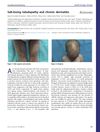
 Genetic testing for EGFR mutations is crucial in similar cases.
3 citations
,
April 2025 in “Science Advances” Loss of Ten1 in mice causes telomere shortening and symptoms similar to human dyskeratosis congenita.
 2 citations
,
July 2019 in “PLOS ONE”
2 citations
,
July 2019 in “PLOS ONE” Certain genetic variations are linked to higher liver enzyme levels in patients treated for chronic hepatitis C with specific drugs.
 80 citations
,
April 2017 in “Frontiers in Pharmacology”
80 citations
,
April 2017 in “Frontiers in Pharmacology” PDRN helps repair tissue and improve wound healing with a high safety profile.