19 citations
,
March 2010 in “Steroids” Certain progesterone derivatives can inhibit enzymes and reduce androgenic activity, potentially affecting prostate growth.
May 2010 in “Europe PMC (PubMed Central)” Near-infrared probes can safely and effectively image cysteine protease activity for disease diagnosis.
1 citations
,
July 2025 in “Journal of Photochemistry and Photobiology B Biology” Photobiomodulation helps protect hair follicle cells from damage caused by DHT.
37 citations
,
December 1995 in “Journal of Cell Science” Nexin 1 may help control hair growth.
6 citations
,
June 2016 in “Journal of cellular biochemistry” The Hr protein binds to DNA, interacts with p53, and affects cell cycle genes.
 29 citations
,
October 2016 in “Cell death and differentiation”
29 citations
,
October 2016 in “Cell death and differentiation” ΔNp63α stops TAp73β from working in skin cancer by blocking its access to specific genes, not by directly interacting with it.
May 2018 in “The Journal of Immunology” A(1-7) treatment reduces symptoms of lupus in mice.
415 citations
,
January 2008 in “Cell” NFATc1 controls hair stem cell activity, affecting hair growth and could be a target for hair loss treatments.
9 citations
,
April 2020 in “Journal of Cosmetic Dermatology” Immune checkpoint inhibitors can cause scalp inflammation and hair follicle issues.
April 2026 in “Case Reports in Dermatology” Tofacitinib effectively treated a woman's complex autoimmune and autoinflammatory disorders.
 56 citations
,
December 2011 in “The Plant Journal”
56 citations
,
December 2011 in “The Plant Journal” AGD1 is important for root hair development in Arabidopsis, working with phosphoinositide signaling and the actin cytoskeleton.
 223 citations
,
September 2018 in “Rheumatology”
223 citations
,
September 2018 in “Rheumatology” JAK inhibitors are effective in treating various immune-related diseases, not just rheumatoid arthritis.
 1 citations
,
May 2021 in “Scientific Reports”
1 citations
,
May 2021 in “Scientific Reports” Certain cancer drugs are strongly linked to nerve damage, requiring close monitoring and early treatment.
March 2026 in “Stem Cell Reviews and Reports” 29 citations
,
October 2010 in “Journal of Investigative Dermatology” Activating Kras in mouse skin causes excess skin and hair loss.
October 2021 in “Journal of Investigative Dermatology” Blocking IL-12 can help treat alopecia areata by preventing hair follicle immune issues.
151 citations
,
August 2011 in “The EMBO Journal” The enzyme PA-PLA1α is important for proper hair follicle development.

Ca²⁺-mediated protein citrullination controls cell growth in the CNS and may help treat brain tumors.
19 citations
,
April 2016 in “Case Reports in Dermatology” Nilotinib can cause keratosis pilaris, a skin condition.
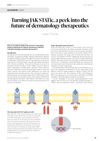 August 2024 in “New Zealand Medical Student Journal”
 JAK inhibitors show promise for treating skin diseases effectively and safely.
 11 citations
,
January 2000 in “The Journal of Steroid Biochemistry and Molecular Biology”
11 citations
,
January 2000 in “The Journal of Steroid Biochemistry and Molecular Biology” LY320236 is a strong blocker of two enzymes that change testosterone into dihydrotestosterone and might help treat conditions related to male hormones.
68 citations
,
January 2013 in “BMC Pharmacology and Toxicology” Glibenclamide slows breast cancer cell growth by stopping cell division.
7 citations
,
August 1996 in “The Journal of Clinical Endocrinology and Metabolism”  1 citations
,
March 2023 in “Frontiers in Cardiovascular Medicine”
1 citations
,
March 2023 in “Frontiers in Cardiovascular Medicine” A specific gene variant is linked to heart disease, increased heart muscle, curly hair, and thick skin on palms and soles.
 February 2024 in “Journal of Investigative Dermatology”
 Deleting NIPP1 in mouse skin cells causes early aging and chronic skin issues.
 2 citations
,
April 2012 in “Science-business Exchange”
2 citations
,
April 2012 in “Science-business Exchange” Blocking a protein called prostaglandin D2 might help treat hair loss.
March 2026 in “International Journal of Cosmetic Science” Pal-KCV peptide strengthens hair and reduces breakage by up to 52%.
21 citations
,
August 2007 in “Experimental Dermatology” Overexpression of hurpin in mice leads to abnormal skin and higher skin cancer risk.
 September 2017 in “The journal of investigative dermatology/Journal of investigative dermatology”
 Blocking CCR5 can prevent and improve hair loss in alopecia areata.
Inhibiting mTORC2 can reduce DNA repair and increase cancer cell death, suggesting potential for targeted brain cancer treatments.