11 citations
,
December 2013 in “Clinical and experimental dermatology” A child with skin and heart issues had rare genetic mutations affecting skin and heart cell cohesion.
97 citations
,
January 1999 in “International Journal of Dermatology” Pityriasis rubra pilaris is a rare skin disorder with reddish-orange patches and thickened skin, needing better treatment understanding.
A new genetic mutation was found causing hair and eye issues in a boy.
46 citations
,
May 2013 in “The journal of investigative dermatology/Journal of investigative dermatology” Significant progress was made in understanding PXE, but effective treatments are still needed.
8 citations
,
January 2014 in “Indian Journal of Paediatric Dermatology” Congenital atrichia with papular lesions causes permanent hair loss and skin bumps from birth.
 8 citations
,
November 2015 in “The American journal of dermatopathology/American journal of dermatopathology”
8 citations
,
November 2015 in “The American journal of dermatopathology/American journal of dermatopathology” Punctate follicular porokeratosis is a skin condition with specific features seen in hair follicles.
November 2025 in “JDDG Journal der Deutschen Dermatologischen Gesellschaft” Restoring phenylalanine levels improved skin and hair symptoms in a PKU infant.
21 citations
,
April 2004 in “Australasian Journal of Dermatology” A 3-year-old girl has a rare condition causing sparse hair and nail issues, with minimal improvement from treatment.
34 citations
,
June 1992 in “Journal of Cutaneous Pathology” Harlequin ichthyosis involves abnormal skin cell structures and giant mitochondria, affecting skin and hair.
February 2024 in “Pediatric Dermatology” A 5-year-old girl with a rare genetic disorder, lipoid proteinosis, showed reduced new lesions but persistent scars after avoiding skin trauma.
23 citations
,
December 2008 in “Pediatric neurology” The document adds two cases of Gomez-Lopez-Hernandez syndrome and suggests including trigeminal anesthesia and scalp alopecia as key diagnostic criteria.
 5 citations
,
January 2017 in “Anais brasileiros de dermatologia/Anais Brasileiros de Dermatologia”
5 citations
,
January 2017 in “Anais brasileiros de dermatologia/Anais Brasileiros de Dermatologia” Porokeratotic eccrine and hair follicle nevus is a very rare skin disorder possibly caused by a GJB2 gene mutation.
 January 1999 in “Journal of the European Academy of Dermatology and Venereology”
 RAPK is a rare skin disorder with pigmented spots, mainly on hands and feet, starting in youth.
January 2025 in “Indian Journal of Dermatopathology and Diagnostic Dermatology” Dermoscopy helps diagnose rare GLPLS in males.
11 citations
,
February 2011 in “The Journal of Dermatology” Mutations in the hairless gene cause a rare form of permanent hair loss.
January 1962 in “Archives of Dermatology” A 5-year-old girl has lipoid proteinosis, causing voice issues, hair thinning, skin lesions, and tongue movement problems.
 April 2026 in “Clinical Dermatology Review”
 Keratosis pilaris significantly affects quality of life and shows specific skin changes.
July 2025 in “Clinical Case Reports” A new genetic mutation in the TRPS1 gene causes Trichorhinophalangeal Syndrome, leading to specific hair, dental, and bone issues.
 April 2017 in “Journal of Investigative Dermatology”
 Deep phenotyping helps distinguish between xeroderma pigmentosum and trichothiodystrophy, aiding in diagnosis and treatment.
11 citations
,
April 2012 in “Journal of Investigative Dermatology” A specific mutation in PA-PLA1α causes abnormal hair growth.
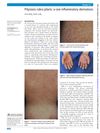 February 2018 in “BMJ case reports”
 An 18-year-old woman was diagnosed with a rare skin condition called Pityriasis rubra pilaris.
 January 1999 in “American Journal of Medical Genetics Part A”
 The report expanded knowledge of MBTPS1-related disorders by identifying new symptoms.
A rare skin condition in a 17-year-old was diagnosed late, stressing the need for careful evaluation and genetic testing.
July 1979 in “Archives of Dermatology” A 68-year-old woman with benign mucous membrane pemphigoid has eye, mouth, and skin issues, including thick plaques and nail changes.
 38 citations
,
March 2010 in “Medicine”
38 citations
,
March 2010 in “Medicine” Most patients with Porphyria Cutanea Tarda had skin blisters and were often affected by hepatitis C and alcohol abuse, with differences between familial and sporadic cases.
59 citations
,
November 2002 in “Pediatric Dermatology” A 19-month-old Saudi girl had a rare skin condition with no other defects, and her family was unaffected.
66 citations
,
December 1999 in “Journal of Investigative Dermatology” New mutations in the hairless gene may cause hair loss and affect bone development.
 4 citations
,
January 2025 in “Clinical Cosmetic and Investigational Dermatology”
4 citations
,
January 2025 in “Clinical Cosmetic and Investigational Dermatology” Papular acantholytic dyskeratosis of the vulva is a rare, benign skin condition that can be managed conservatively.
 August 2023 in “Acta Scientific Paediatrics”
 A baby from an Indian family had a rare genetic disorder causing no scalp or body hair due to a specific gene deletion.
 October 2023 in “Journal of dermatological science”
 New mutations in MBTPS2 reduce its function and cause IFAP syndrome with unusual symptoms.