 February 2024 in “Molecules/Molecules online/Molecules annual”
 NMN could potentially treat hair loss by reducing oxidative stress and improving cell health.
 April 2023 in “Advanced functional materials”
 The study created a tool that mimics natural cell signals, which increased cell growth and could help with hair regeneration research.
 August 2021 in “Journal of Investigative Dermatology”
 Stress causes hair loss by making the body produce cortisol, which stops hair cells from growing.
 May 2015 in “Journal of The American Academy of Dermatology”
 The research shows a potential way to regenerate hair using adult cells that have been grown and guided to produce new hair fibers.
 April 2017 in “Journal of Investigative Dermatology”
 Early and late matrix progenitors in hair follicles create different cell layers, with early ones forming the companion layer and later ones forming the inner root sheath and hair shaft.
32 citations
,
October 2004 in “Experimental Dermatology” α-MSH may help treat skin inflammation and fibrosis.

Growing hair follicles from cultured cells could potentially treat baldness, but more research is needed.
25 citations
,
October 1975 in “Journal of Cutaneous Pathology” Hair growth in alopecia areata is hindered due to impaired cell activity in the surrounding tissue.
28 citations
,
October 2014 in “Development” Fz3 and Fz6 can partially replace each other in tissue polarity and axon guidance.
 1113 citations
,
August 1999 in “The New England Journal of Medicine”
1113 citations
,
August 1999 in “The New England Journal of Medicine” Hair follicle biology advancements may lead to better hair growth disorder treatments.
 418 citations
,
September 2012 in “Nature”
418 citations
,
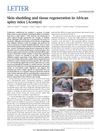
September 2012 in “Nature” African spiny mice can regenerate skin, hair, and cartilage, but not muscle, and their unique abilities could be useful for regenerative medicine.
 375 citations
,
February 2006 in “Journal of Cell Science”
375 citations
,
February 2006 in “Journal of Cell Science” The document concludes that the hair cycle is a complex process involving growth, regression, and rest phases, regulated by various molecular signals.
 277 citations
,
June 2003 in “The journal of investigative dermatology. Symposium proceedings/The Journal of investigative dermatology symposium proceedings”
277 citations
,
June 2003 in “The journal of investigative dermatology. Symposium proceedings/The Journal of investigative dermatology symposium proceedings” Epithelial-mesenchymal interactions control hair growth cycles through specific molecular signals.
 270 citations
,
March 2012 in “Dermatologic Surgery”
270 citations
,
March 2012 in “Dermatologic Surgery” Platelet-rich plasma can potentially promote hair growth by stimulating cell growth and increasing certain proteins.
 184 citations
,
December 2018 in “Nature Communications”
184 citations
,
December 2018 in “Nature Communications” Researchers created human hair follicles using a new method that could help treat hair loss.
147 citations
,
April 2004 in “PubMed” Sex steroid receptors are found in specific skin cells, affecting skin and hair functions.
 118 citations
,
August 2010 in “Developmental Cell”
118 citations
,
August 2010 in “Developmental Cell” MIM is crucial for hair follicle formation and regeneration by controlling cilia formation and hedgehog signaling through its interaction with Cortactin and Src.
 108 citations
,
November 2006 in “Phytomedicine”
108 citations
,
November 2006 in “Phytomedicine” Green tea component EGCG could potentially promote human hair growth.
105 citations
,
December 1998 in “Archives of Dermatological Research” Dermal papilla cells mainly drive blood vessel growth in hair follicles.
 103 citations
,
January 2006 in “Journal of Cell Science”
103 citations
,
January 2006 in “Journal of Cell Science” The document concludes that the hair cycle is a complex process involving growth, regression, and rest phases, regulated by various molecular signals.
 89 citations
,
September 2010 in “Annual Review of Genomics and Human Genetics”
89 citations
,
September 2010 in “Annual Review of Genomics and Human Genetics” The document concludes that understanding the genes and pathways involved in hair growth is crucial for developing treatments for hair diseases.
72 citations
,
January 1983 in “The Anatomical Record” Epidermal growth factor delays skin and hair development in mice.
 71 citations
,
February 2020 in “Journal of Translational Medicine”
71 citations
,
February 2020 in “Journal of Translational Medicine” Progress has been made in skin and nerve regeneration, but more research is needed to improve methods and ensure safety.
 63 citations
,
October 2013 in “Dermatologic Surgery”
63 citations
,
October 2013 in “Dermatologic Surgery” Platelet-Rich Plasma (PRP) increases the number of new hair follicles and speeds up hair formation.
 60 citations
,
April 2012 in “Physiology”
60 citations
,
April 2012 in “Physiology” The document concludes that understanding hair and feather regeneration can help develop new regenerative medicine strategies.
 57 citations
,
February 2013 in “Journal of Dermatological Science”
57 citations
,
February 2013 in “Journal of Dermatological Science” Improving the environment and cell interactions is key for creating human hair in the lab.
 56 citations
,
August 2005 in “Journal of Investigative Dermatology Symposium Proceedings”
56 citations
,
August 2005 in “Journal of Investigative Dermatology Symposium Proceedings” Different women's hair and skin glands respond to hormones in varied ways, which can cause unwanted hair growth even with normal hormone levels, and more research is needed to treat this effectively.
 51 citations
,
April 2020 in “Cells”
51 citations
,
April 2020 in “Cells” Special cell particles from macrophages can help hair grow.
 40 citations
,
March 2017 in “The journal of investigative dermatology/Journal of investigative dermatology”
40 citations
,
March 2017 in “The journal of investigative dermatology/Journal of investigative dermatology” Growing hair follicles have high mitochondrial activity and ROS in specific regions, aiding hair formation.
34 citations
,
October 1998 in “PubMed” Future drugs targeting specific hair growth steps could improve treatments for hair growth issues.