 April 2019 in “Dermatology reports”
 A 12-year-old boy's hair fully regrew after 8 weeks of treatment for tinea capitis, and dermoscopy was useful for diagnosis and monitoring.
 January 2019 in “Elsevier eBooks”
 Early detection and skin biopsies are crucial for treating skin cancer and diagnosing various skin conditions.
 January 2019 in “Springer eBooks”
 Acne can appear or persist in adulthood due to hormonal changes, external factors, or substance use, and requires appropriate treatment.
 January 2019 in “Global Dermatology”
 Genetic hair shaft abnormalities can be seen with microscopes and often affect scalp hair.
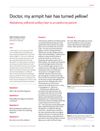
A 15-year-old boy's smelly, yellow armpit hair improved with clindamycin treatment.
 August 2018 in “Journal of The American Academy of Dermatology”
 A 90-year-old woman's hand lesion was a rare, aggressive skin cancer treated successfully with surgery.
 August 2018 in “Journal of The American Academy of Dermatology”
 A 16-year-old girl's skin rash was likely caused by an infection and improved with topical steroids.
 August 2018 in “Journal of The American Academy of Dermatology”
 A 54-year-old man with painful skin blisters and fever was diagnosed with Sweet syndrome and successfully treated with corticosteroids.
 July 2018 in “International Journal of Research in Dermatology”
 The patient was diagnosed with hypothyroidism and treated with medication and supplements.
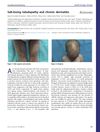 July 2018 in “Kidney international”
 Genetic testing for EGFR mutations is crucial in similar cases.
 April 2018 in “Nasza Dermatologia Online”
 People with Down's syndrome are more likely to have syringomas.
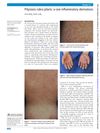 February 2018 in “BMJ case reports”
 An 18-year-old woman was diagnosed with a rare skin condition called Pityriasis rubra pilaris.
 January 2018 in “Springer eBooks”
 The document says that early treatment of Acne Vulgaris is important to prevent scarring and that adult onset acne is common in women, often due to hormonal imbalances.
 January 2018 in “Elsevier eBooks”
 The document concludes that proper diagnosis and treatment of follicular disorders are crucial, with specific treatments for conditions like acne, drug-induced eruptions, and rosacea.

Tailored nonsurgical cosmetic procedures are crucial for safely treating diverse skin types, especially skin of color.
 September 2017 in “Clinical and Experimental Dermatology”
 The document summarized various dermatology studies and case reports.
 June 2017 in “Çocuk Enfeksiyon Dergisi/Journal of Pediatric Infection”
 Tinea capitis can rarely cause urticarial skin reactions in children.
 May 2017 in “InTech eBooks”
 Some hair loss disorders cause permanent loss due to scarring, and treatments like steroids don't always work well.
 April 2017 in “Australasian Journal of Dermatology”
 Most patients with Lichen planopilaris improved with acitretin, but treatments often didn't work well; preventing infection in skin surgery is important, and bupivacaine might be a better anesthetic.
 December 2016 in “John Wiley & Sons, Ltd eBooks”
 The document concludes that proper recognition and treatment of skin appendage disorders are important for management.
 November 2016 in “Faridpur Medical College Journal”
 Betamethasone oral mini-pulse therapy showed good or fair results in treating lichen planus.
 October 2016 in “Elsevier eBooks”
 Common noncancerous skin diseases have various treatments, including topical applications, light therapy, surgery, and medications, with psychological support being important.
 July 2016 in “British Journal of Dermatology”
 The book provides an overview of new trends and techniques in cosmetic dermatology.
 November 2015 in “European journal of dermatology/EJD. European journal of dermatology”
 A 55-year-old woman with several health conditions did not see hair regrowth after a transplant.

Skin changes throughout life, from development before birth to aging effects like wrinkles, influenced by both genetics and environment.

Different connective tissue disorders have unique symptoms and treatments, with varying outcomes and often require ongoing care from a specialist.
 July 2014 in “Disease-a-Month”
 The document gives treatment advice for various skin conditions, like using metronidazole for perioral dermatitis and minoxidil for hair loss.
 March 2014 in “Journal of the American Academy of Dermatology”
 Alopecia areata is relatively common in children, has a variable course, and shows different responses to treatment; thyroid testing is recommended for those affected.
 January 2014 in “Journal of the Egyptian Women's Dermatologic Society (Print)”
 Women with acne after adolescence are more likely to have PCOS and should be checked for it.
 December 2012 in “Drugs & Therapy Perspectives”
 Doctors use their experience to choose treatments for scarring hair loss because it's hard to diagnose and treat.