1 citations
,
January 2022 in “Annals of Dermatology” A new mutation in the MBTPS2 gene causes a mild form of IFAP syndrome.
24 citations
,
December 2011 in “International Journal of Cancer” PTH-CBD agonists may help regrow hair after chemotherapy.
26 citations
,
May 2016 in “Journal of biological chemistry/The Journal of biological chemistry” sPLA2-IIE is crucial for normal hair follicle structure and skin health.
July 2024 in “International journal of agriculture and food sciences research.” The new fish peptide conditioner significantly improves and repairs damaged hair better than a commercial wheat protein conditioner.
 1 citations
,
January 2025 in “American Journal of Translational Research”
1 citations
,
January 2025 in “American Journal of Translational Research” PPARα agonists may help treat alopecia areata by reducing inflammation.
 20 citations
,
September 2013 in “Anti-Cancer Drugs”
20 citations
,
September 2013 in “Anti-Cancer Drugs” PTH-CBD could help prevent and treat hair loss caused by chemotherapy in mice.
3 citations
,
July 2023 in “Acta Biomaterialia” PepACS offers a safer, eco-friendly way to perm, dye, and repair hair.
 March 2016 in “West Indian medical journal”
 There is no significant link between alopecia areata and the PON1 enzyme polymorphisms studied.
June 2025 in “Molecular Genetics & Genomic Medicine” Severe genetic variants in children with a specific adrenal condition match predicted symptoms well, but milder variants do not.
January 1990 in “대한피부과학회지” Peanut agglutinin staining helps differentiate malignant melanoma from nevocellular nevus.
 8 citations
,
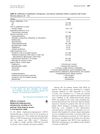
January 2018 in “Journal of the American Academy of Dermatology”
8 citations
,
January 2018 in “Journal of the American Academy of Dermatology” Diphenylcyclopropenone treatment helps prevent hair loss relapse in alopecia areata patients.
February 2013 in “Journal of the American Academy of Dermatology” 16 citations
,
June 1992 in “Journal of Investigative Dermatology” January 1985 in “Clinical research” Topical alpha-terthienyl with UVA may safely treat psoriasis without cancer risk.
39 citations
,
February 1990 in “The journal of cell biology/The Journal of cell biology” Trichohyalin, a hair follicle protein, has a part with repeating patterns of 23 amino acids.
 6 citations
,
November 2019 in “The application of clinical genetics”
6 citations
,
November 2019 in “The application of clinical genetics” The study found that a specific genetic variation in the TNFα gene is significantly linked to Alopecia Areata in the Jordanian Arab population.
January 1988 in “Toxicological Sciences” 4PeCDF is highly toxic to male rats, causing weight loss, organ damage, and death.
3 citations
,
November 2021 in “Skin Appendage Disorders” Home-use treatment for severe alopecia areata is as effective as office-use but costs half as much.
 35 citations
,
August 2010 in “The American journal of pathology”
35 citations
,
August 2010 in “The American journal of pathology” Researchers created a new mouse model for studying Citrullinemia Type I and similar conditions, showing symptoms and treatment responses like those in humans.
3 citations
,
January 2011 in “Yearbook of Dermatology and Dermatologic Surgery” May 2005 in “Molecular Carcinogenesis” mrp/plf-mRNA can indicate tumor-promoting effects in skin.
 April 2018 in “Journal of Investigative Dermatology”
 CENPV, a new partner of CYLD, helps regulate ciliary acetylated tubulin and is overexpressed in certain skin tumors.
22 citations
,
September 1986 in “Journal of Investigative Dermatology” Low-dose topical alpha-terthienyl may be a safer option for treating skin conditions with light therapy.
 September 2016 in “Journal of Dermatological Science”
 A gene mutation worsens skin irritation in mice due to a lack of certain fats.
37 citations
,
September 2009 in “JEADV. Journal of the European Academy of Dermatology and Venereology/Journal of the European Academy of Dermatology and Venereology” Diphencyprone (DPC) is an effective and safe long-term treatment for alopecia areata, especially with maintenance therapy.
1 citations
,
March 2004 in “Patty's Toxicology” These chemicals can be toxic and cause health issues like irritation, liver damage, and cancer.
 April 2018 in “bioRxiv (Cold Spring Harbor Laboratory)”
 A gene variant causes patched hair loss in mice, similar to alopecia areata in humans.
CCC1 is crucial for pH balance in plant cells, affecting growth and stress tolerance.
39 citations
,
August 1998 in “FEBS Letters” Two new enzymes, PAD-R11 and PAD-R4, were cloned and showed activity, with PAD-R11 resembling epidermal enzymes.
 31 citations
,
October 2010 in “Progress in lipid research”
31 citations
,
October 2010 in “Progress in lipid research” LPA3 is crucial for embryo implantation and links LPA to prostaglandin signaling.