 1 citations
,
May 2017 in “InTech eBooks”
1 citations
,
May 2017 in “InTech eBooks” Hair loss in Androgenetic alopecia (AGA) is due to altered cell sensitivity to hormones, not increased hormone levels. Hair growth periods shorten over time, causing hair to become thinner and shorter. This is linked to miscommunication between cell pathways in hair follicles. There's also a change in gene expression related to blood vessels and cell growth in balding hair follicles. The exact molecular causes of AGA are still unclear.
 November 2025 in “International Journal of Research in Medical Sciences”
 Unani medicine may help treat a rare, hard-to-treat hair loss pattern in children.
 September 2021 in “CRC Press eBooks”
 CCCA is a common hair loss condition in African American women, often inherited and influenced by hairstyling, with unique scalp features detectable by special tools.
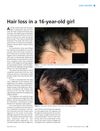 November 2014 in “Prescriber”
 The 16-year-old girl with hair loss was successfully treated for alopecia areata, leading to significant hair regrowth.
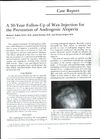 December 1986 in “Plastic and Reconstructive Surgery”
 Wax injection did not stop hair loss and caused changes to the skull.
 April 2019 in “Journal of emerging technologies and innovative research”
 Early treatment of Female Pattern Hair Loss is important to stop it from getting worse, and various treatments can help, especially in mild to moderate cases.
 October 2020 in “International journal of Ayurvedic medicine”
 Leech therapy and Ayurvedic treatment can effectively regrow hair in recent Alopecia areata cases.
 November 2017 in “Pediatrics in Review”
 A 4-year-old girl with hair loss was diagnosed with early-onset trichotillomania and improved with behavioral interventions.
 September 2017 in “Pediatric Dermatology”
 A 14-year-old boy was diagnosed with a rare hair condition that may lead to hair thinning and has no known effective treatments.
 33 citations
,
August 2013 in “British Journal of Dermatology”
33 citations
,
August 2013 in “British Journal of Dermatology” Lack of small, fine hair on the front hairline is a key sign of frontal fibrosing alopecia.
 6 citations
,
January 2016 in “Annals of Dermatology”
6 citations
,
January 2016 in “Annals of Dermatology” Human hair contains more glycosaminoglycans in children than adults, and these compounds decrease with age, possibly affecting hair thickness.
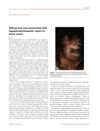 2 citations
,
February 2014 in “Journal of the European Academy of Dermatology and Venereology”
2 citations
,
February 2014 in “Journal of the European Academy of Dermatology and Venereology” High levels of prolactin in the blood can be linked to widespread hair loss.
 March 2025 in “Forum Dermatologicum”
 Trichoscopy is crucial for accurately diagnosing fibrosing alopecia in pattern distribution.
 September 2016 in “Más dermatología”
 New factors in female hair loss include genetics, hormones, stress, and inflammation; future treatments should also focus on these areas and consider the patient's emotional well-being.
 50 citations
,
December 2010 in “Dermatologic Surgery”
50 citations
,
December 2010 in “Dermatologic Surgery” Laser treatment can stimulate hair growth for male pattern hair loss.
 49 citations
,
January 2003 in “Clinical and Experimental Dermatology”
49 citations
,
January 2003 in “Clinical and Experimental Dermatology” The document concludes that post-menopausal frontal fibrosing alopecia is a poorly understood condition that does not respond well to common treatments.
 38 citations
,
June 2003 in “Journal of Investigative Dermatology Symposium Proceedings”
38 citations
,
June 2003 in “Journal of Investigative Dermatology Symposium Proceedings” Finasteride effectively improves hair growth and slows hair loss in men with male pattern baldness.
 27 citations
,
September 2008 in “British Journal of Dermatology”
27 citations
,
September 2008 in “British Journal of Dermatology” Traction may not be the only cause of cicatricial marginal alopecia.
 21 citations
,
November 2012 in “Plastic and Reconstructive Surgery”
21 citations
,
November 2012 in “Plastic and Reconstructive Surgery” Both genetic and lifestyle factors significantly affect female hair loss.
 8 citations
,
June 2012 in “Australasian Journal of Dermatology”
8 citations
,
June 2012 in “Australasian Journal of Dermatology” A rare form of alopecia causes hair thinning without bald spots and may be more common than thought, responding well to steroid treatment.
 5 citations
,
May 2020 in “Diagnostics”
5 citations
,
May 2020 in “Diagnostics” Lower zinc levels may predict less effective hair loss treatment.
 4 citations
,
January 2010 in “Acta dermato-venereologica”
4 citations
,
January 2010 in “Acta dermato-venereologica” Low androgen levels can still cause female pattern hair loss.
 1 citations
,
September 2015 in “Serbian Journal of Dermatology and Venereology/Serbian Journal of Dermatology and Venerology”
1 citations
,
September 2015 in “Serbian Journal of Dermatology and Venereology/Serbian Journal of Dermatology and Venerology” A 19-year-old male had two rare skin conditions causing scarring and permanent hair loss.
 May 2026 in “Journal of Basic and Clinical Health Sciences”
 FAGA shows varied hair thickness, while TE has more empty follicles.
 February 2026 in “Frontiers in Medicine”
 Oral minoxidil improved hair loss more than oral dutasteride.

A 12-year-old girl was misdiagnosed with alopecia areata but actually had a nevus sebaceus with a genetic mutation.
 June 2022 in “World Journal Of Advanced Research and Reviews”
 Low-level laser therapy can significantly regrow hair in alopecia areata.
 July 2021 in “British Journal of Dermatology”
 A woman with systemic sclerosis developed a unique scarring hair loss combining features of systemic sclerosis and frontal fibrosing alopecia.
 March 2019 in “Applied sciences”
 Laser therapy might help regrow hair in alopecia totalis better than steroids alone.
 July 2018 in “International Journal of Research in Dermatology”
 The patient was diagnosed with hypothyroidism and treated with medication and supplements.