 1 citations
,
January 2014 in “The Journal of Dermatology”
1 citations
,
January 2014 in “The Journal of Dermatology” A patient with Ivemark syndrome developed mixed type vitiligo after a hepatitis C infection, showing different treatment responses and immune cell involvement in the skin.
 1 citations
,
January 2014 in “International Journal of Trichology”
1 citations
,
January 2014 in “International Journal of Trichology” A patient with a rare hair condition and skin disorder showed hair improvement after treatment.
1 citations
,
January 2011 Thorough evaluation and lab tests are crucial for understanding hair loss causes.
 1 citations
,
July 1990 in “PubMed”
1 citations
,
July 1990 in “PubMed” The document's conclusion cannot be determined from the provided text.

A coordinated approach combining medical, trichological, and visual support is needed to better manage hair loss.
January 2026 in “Clinical and Experimental Dermatology” Ruxolitinib helped a patient with alopecia areata regrow hair.
November 2025 in “Journal of the Dermatology Nurses’ Association” September 2025 in “Value in Health” January 2025 in “The Journal of Dermatology” Patients prefer the higher 50 mg dose of ritlecitinib for better hair regrowth despite higher risks.
 September 2024 in “Journal of the American Academy of Dermatology”
 Baricitinib helps long-term hair regrowth in severe alopecia areata patients.
 July 2024 in “Journal of Investigative Dermatology”
 Most women continued using oral minoxidil for hair loss despite mild to moderate side effects.
July 2024 in “Journal of Investigative Dermatology” Alopecia areata causes negative emotions and stress due to hair loss and emotional triggers.

A patient with Myotonic dystrophy type 1 had multiple tongue hemangiomas and was sensitive to anesthesia.

A patient's gum problems worsened after using cyclosporine for a scalp condition, but improved with a lower dose.
 June 2023 in “British journal of dermatology/British journal of dermatology, Supplement”
 Patients with alopecia areata face challenges accessing Janus kinase inhibitors, but some see positive results.
April 2023 in “Journal of Investigative Dermatology” Patients were very satisfied with the multidisciplinary group visit for alopecia areata.
 November 2022 in “The journal of investigative dermatology/Journal of investigative dermatology”
 A patient with a new PLEC gene mutation showed symptoms of both muscular dystrophy and myasthenia gravis, which improved with steroid treatment.
 July 2022 in “The journal of investigative dermatology/Journal of investigative dermatology”
 A patient with a PLEC mutation has epidermolysis bullosa, muscular dystrophy, and myasthenia gravis, which improved with steroid treatment.
July 2022 in “American Journal of Kidney Diseases” Cultural awareness in healthcare improves patient care and relationships.
 June 2021 in “Revista da Sociedade Portuguesa de Dermatologia e Venereologia”
 A patient with lupus experienced complete hair regrowth after treatment with thalidomide.
 May 2021 in “Journal of the Endocrine Society”
 A patient produced cortisol after adrenalectomy, possibly due to residual tissue or other body parts making steroids.
 April 2020 in “Journal of the Endocrine Society”
 A patient with untreated congenital adrenal hyperplasia had large benign tumors in her adrenal glands removed, improving her symptoms.
 September 2019 in “Journal of Investigative Dermatology”
 There are various tools available to help psoriasis patients manage their condition, but their effectiveness is unclear and they face issues like lack of financial support.
January 2019 in “International Journal of Clinical & Medical Images” The patient showed signs of liver disease due to alcohol use but didn't need treatment for Dupuytren’s contracture.
January 2016 in “Indian dermatology online journal” The patient has frontal fibrosing alopecia (FFA).
 January 2015 in “Indian Dermatology Online Journal”
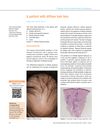
 The patient's hair loss is most likely due to diffuse alopecia areata.
 December 2014 in “PubMed”
 A scalp biopsy can help confirm hair loss types when other methods don't provide a clear diagnosis.
June 2014 in “The Journal of Dermatology” A patient with a rare chromosome condition also had a rare type of hair loss.
 May 2014 in “Hair transplant forum international”
 Improve patient comfort during medical care.
 January 2014 in “Progress of Digestive Endoscopy”
 Prednisolone improved symptoms in a woman with Cronkhite-Canada syndrome, but regular screenings are needed due to cancer risk.