 March 2009 in “International Journal of Dermatology and Venereology”
 Androgenic alopecia, or male pattern baldness, is caused by genes.
1 citations
,
January 2020 in “Postepy Dermatologii I Alergologii” Family history, especially on the mother's side, increases the risk of female pattern hair loss.
140 citations
,
October 2008 in “Nature Genetics”  December 2022 in “Curēus”
 Genetic testing confirmed a young girl has Atrichia with Papular Lesions due to mutations in the hairless gene.
 18 citations
,
October 2023 in “Nature Communications”
18 citations
,
October 2023 in “Nature Communications” Men with baldness are more prone to skin cancers on the scalp due to sun exposure, not testosterone.
 March 2025 in “Human Genetics and Genomics Advances”
 Genetic predictions of baldness in Europeans don't apply well to African men.
 August 2025 in “BMC Pregnancy and Childbirth”
 A new EDA gene variant causes X-linked hypohidrotic ectodermal dysplasia in a Chinese family.
75 citations
,
September 1985 in “Archives of dermatology” Two boys had a rare skin condition needing to be differentiated from similar disorders, with unclear inheritance due to few cases.
 5 citations
,
December 2017 in “The Journal of Dermatology”
5 citations
,
December 2017 in “The Journal of Dermatology” A new gene mutation caused a man's rare skin condition, Schöpf-Schulz-Passarge syndrome.
 January 2023 in “Indian dermatology online journal”
 A boy with Pachyonychia congenita has a confirmed gene mutation, highlighting the need for a local genetic database in India.
3 citations
,
June 2017 in “Reproductive biomedicine online” A certain mutation in the fetal alpha 5-reductase gene is linked to a higher risk of late miscarriage.
61 citations
,
September 1994 in “Journal of Medical Genetics” Pachyonychia congenita is linked to a keratin gene on chromosome 17.
40 citations
,
December 2010 in “Human Genetics”  19 citations
,
April 1995 in “Clinical Genetics”
19 citations
,
April 1995 in “Clinical Genetics” Two siblings were the first reported cases of inheriting both eye coloboma and loose anagen syndrome together.
 December 2016 in “Int J Genet”
 Male pattern baldness is partly caused by specific genes, but most genetic factors are still unknown.
21 citations
,
January 2008 in “Journal of Pediatric Endocrinology and Metabolism” Anastrozole and cyproterone acetate treatment can help increase adult height in boys with testotoxicosis.
April 2010 in “Dermatology Times” 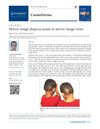
Mirror-image twins can have alopecia areata on opposite sides of their heads.
November 2025 in “Cancers” Men with male pattern baldness may have a slightly higher risk of prostate cancer.
15 citations
,
March 2015 in “PloS one” Scientists restored fertility in male mice lacking a key fertility gene by using a modified gene.
September 2019 in “The journal of investigative dermatology/Journal of investigative dermatology” New RIPK4 gene mutations were found to cause a type of skin and limb birth defect.
 1 citations
,
February 2009 in “Clinical Genetics”
1 citations
,
February 2009 in “Clinical Genetics” New genes linked to male pattern baldness were found on chromosome 20p11.
 January 2013 in “Faculty of Health; Institute of Health and Biomedical Innovation”
 Four genetic risk areas related to male-pattern baldness were identified, with WNT signaling playing a role in its development.
5 citations
,
June 2014 in “Pediatric dermatology” A baby girl grew extra hair from contact with her grandfather's hair medicine, but it went away after stopping exposure.
 9 citations
,
January 2014 in “Medical Hypotheses”
9 citations
,
January 2014 in “Medical Hypotheses” Higher DHT in male baldness may protect against prostate cancer.
13 citations
,
June 2012 in “European journal of medical genetics” Identical twins had different symptoms because one had more cells with an extra chromosome fragment in different tissues.
 8 citations
,
November 2018 in “Australasian Journal of Dermatology”
8 citations
,
November 2018 in “Australasian Journal of Dermatology” Frontal fibrosing alopecia in families shows similar signs to individual cases and may have a genetic link.
 122 citations
,
July 1990 in “Teratology”
122 citations
,
July 1990 in “Teratology” Finasteride exposure in pregnancy causes genital abnormalities in male rats.
 April 2024 in “Human genomics”
 Identified genes linked to male-pattern baldness may help develop new treatments.
4 citations
,
January 2011 in “Dermatopathology”