2 citations
,
April 2025 in “Pediatric Dermatology” Macular alopecia is a distinct, non-scarring hair loss pattern that mostly affects young Hispanic/Latinx females and often resolves on its own.
1 citations
,
July 2016 in “PubMed” 5% minoxidil foam is effective and safe for hair regrowth in women with hair loss.
 1 citations
,
April 2016 in “Journal of Investigative Dermatology”
1 citations
,
April 2016 in “Journal of Investigative Dermatology” UV photography can help identify people at higher risk for skin cancer, and male pattern baldness at age 45 is linked to a higher risk of certain skin cancers.
1 citations
,
March 1990 in “Clinical Drug Investigation” 2% topical minoxidil can help reduce hair loss and promote hair growth in male pattern baldness.
January 2026 in “Journal of Clinical and Investigative Dermatology” Verilich serum effectively and safely improves hair loss treatment.
May 2025 in “International Journal of Trichology” Low-dose oral minoxidil often causes excess hair growth but doesn't significantly affect quality of life.
 March 2025 in “Pakistan journal of physiology.”
 Many women with female pattern hair loss also have metabolic syndrome.
 March 2025 in “Forum Dermatologicum”
 Trichoscopy is crucial for accurately diagnosing fibrosing alopecia in pattern distribution.
 February 2025 in “Clinical Cosmetic and Investigational Dermatology”
 Certain blood metabolites are linked to female pattern hair loss, with some increasing risk and others offering protection.
Combining oral vitamin D with topical minoxidil is most effective for improving female pattern hair loss.
 December 2024 in “International Journal For Multidisciplinary Research”
 Topical creams are commonly used for treating non-infective skin diseases in children, with antifungals being the most prescribed.
 September 2024 in “Frontiers in Genetics”
 A specific genetic marker is linked to male pattern baldness in Han Chinese men.
 September 2024 in “Indian Journal of Dermatology Venereology and Leprology”
 Mesotherapy with bicalutamide has limited effectiveness for female hair loss.
 July 2024 in “Journal of Investigative Dermatology”
 Most women continued using oral minoxidil for hair loss despite mild to moderate side effects.
 May 2024 in “Dermatologic surgery”
 Nonactivated low leukocyte PRP injections can significantly increase hair and follicle density in women with alopecia.
 March 2024 in “Middle East Fertility Society Journal/Middle East Fertility Society Journal ”
 PCOS patients have more central body fat, which can be effectively measured using DEXA.
 January 2024 in “Research Square (Research Square)”
 The research identified genes linked to male-pattern baldness and potential drug targets for treatment.
 December 2023 in “JEADV Clinical Practice”
 A woman's hair grew back with baricitinib treatment, but she developed a temporary hairy tongue that was treated with regular tongue brushing.
 October 2023 in “Dermatology practical & conceptual”
 Many patients experienced hair loss after COVID-19, with women affected more, starting on average 49 days post-infection.
 August 2023 in “Journal of Cosmetic Dermatology”
 Both minoxidil-spironolactone and minoxidil-finasteride treatments work for hair loss, but minoxidil-spironolactone is slightly more effective, especially in women.
January 2023 in “Journal of Clinical and Diagnostic Research” Trichoscopic patterns often overlap in scalp disorders, so dermatologists need to stay updated.
Skin diseases are common and need more specialized care.
October 2020 in “Indian Journal of Forensic Medicine & Toxicology” Most people in Raichur have loop fingerprint patterns.
 August 2020 in “Pakistan Journal of Zoology”
 A new mutation in the Hairless gene causes hair loss in two Pakistani families.
 September 2019 in “IP Indian journal of clinical and experimental dermatology”
 Hormones and iron deficiency are linked to female pattern hair loss, and hair thinning patterns are similar across different types of this condition.
January 2018 in “프로그램북(구 초록집)” Botulinum toxin type A is a safe and effective treatment for male pattern baldness.
January 2016 in “프로그램북(구 초록집)” The revised BASP classification for hair loss is less accurate and harder to use but could still be a viable option.
 April 2012 in “Informa Healthcare eBooks”
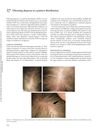
 Fibrosing alopecia in a pattern distribution is a unique hair loss condition with inflammation and scarring, resembling but distinct from common balding.
 May 2004 in “Dermatologic Surgery”
 Most men stopped using finasteride for baldness due to unsatisfactory results or were lost to follow-up, and those who continued saw minimal to moderate improvement.
 May 2025 in “Journal of Investigative Medicine”
 FAI is a better marker for predicting female hair loss than testosterone or SHBG alone.