July 2026 in “Editora Pasteur eBooks” New diagnostic tools and treatments are improving management of female pattern hair loss.
 February 2026 in “Aesthetic Cosmetology and Medicine”
 The treatment improved hair density and condition without side effects.
January 2026 in “JPRAS Open” Sleeping position can influence hairline recession in men with certain hair loss patterns.
 December 2025 in “BENTHAM SCIENCE PUBLISHERS eBooks”
 PCOS often causes skin issues like excess hair, acne, hair thinning, and dark patches due to hormone imbalances and insulin resistance.
 December 2025 in “Zenodo (CERN European Organization for Nuclear Research)”
 Hair loss is caused by nutritional deficiencies, hormonal imbalances, and stress, with treatments like minoxidil and hair transplants available.

Removing follicular plugging is crucial for effective alopecia treatment.
 June 2025 in “Medical alphabet”
 The HFE hair transplant method is effective, safe, and provides natural-looking results with quick recovery for men with hair loss.
 April 2025 in “Cytotherapy”
 UC-MSCs derived secretome therapy may help treat hair loss safely.
 December 2023 in “Journal of Korean Society of Beauty Cultral Arts”
 Scalp massages and medical treatments for hair loss are more satisfying than folk remedies.
 December 2023 in “Bulletin of the Medical Institute of Continuing Education”
 Angelica Dahurica extract helps reduce hair loss and improve hair growth and scalp condition.
 September 2023 in “Gynäkologische Endokrinologie”
 Menopause causes skin and hair to become drier and thinner, but hormone therapy can improve these conditions.
 September 2023 in “Skin Research and Technology”
 The paper suggests a way to diagnose male hair loss and check treatment results using a dermoscope at four specific scalp points.
 August 2023 in “Dermatologic Surgery”
 Wounding may stimulate hair growth, but more research is needed to confirm the safety and effectiveness of related treatments.
 January 2023 in “Journal of Cutaneous Pathology”
 The study found certain scalp biopsy features can help tell apart alopecia areata from pattern hair loss even when typical immune cells are not seen.
 September 2022 in “Journal of Case Reports and Medical History”
 Many new moms lose hair after childbirth due to hormonal changes, but it usually grows back within a year.
 May 2021 in “Pakistan Journal of Medical and Health Sciences”
 Trichogram is useful for diagnosing hair disorders, but newer, non-invasive methods like trichoscopy are becoming more popular due to their sensitivity and ability to monitor treatment responses.
 May 2021 in “Journal of the Endocrine Society”
 A woman's hair loss and other symptoms were due to a rare hormone deficiency treatable with steroids.
 March 2021 in “CRC Press eBooks”
 Hair loss without scarring is more common than permanent hair loss with scarring, and is often due to genetic factors.
 March 2021 in “CRC Press eBooks”
 The document concludes that different patterns of hair thickness and scalp changes can help diagnose types of non-scarring hair loss.
 January 2021 in “International journal of dermatology, venereology and leprosy sciences”
 Most adult women experiencing hair loss are aged 21-40, with the most common type being female pattern hair loss. Trichoscopy is a useful tool for diagnosing different types of hair loss.
 May 2020 in “Hair transplant forum international”
 Younger people and those with existing acne are more likely to get folliculitis after hair restoration surgery, but it doesn't affect the overall good hair growth result.
 April 2020 in “Journal of the Endocrine Society”
 An ovarian tumor caused a woman's male-like symptoms, which improved after surgery.
 January 2020 in “Journal of Cosmetics, Dermatological Sciences and Applications”
 DEEPLY ROOTED® supplement seems to effectively improve hair growth and quality in women with no side effects.
 August 2018 in “Reactions Weekly”
 A woman had an allergic skin reaction to a hair loss treatment called minoxidil.
Combining FUT and FUE techniques improves hair transplant results for severe baldness in Asians.
PRP hair treatment is generally safe but may cause minor pain, bleeding, redness, and scalp tightness, and isn't suitable for everyone.
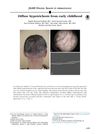 September 2016 in “Journal of The American Academy of Dermatology”
 The girl has a genetic hair condition causing thin hair since childhood.
October 2015 in “CRC Press eBooks” Classifying alopecia helps diagnose and treat different types of hair loss accurately.
 May 2015 in “Cancer Research”
 A new treatment may prevent hair loss from chemotherapy by normalizing scalp cell death and reducing inflammation.
 May 2014 in “Hair transplant forum international”
 Scalp tools, tracking progress, targeting scalp inflammation, and avoiding certain hair treatments can improve female hair loss treatment.