Search
for
Sort by
Research
30 / 194 resultsresearch Correcting Post-burn Scar Using PCI
Microneedling improves the appearance and feel of post-burn scars.

research 51895 Interim Analysis of Platelet-Rich Plasma (PRP) Treatment for Endocrine Therapy-Induced Alopecia (EIA) and Permanent Chemotherapy-Induced Alopecia (pCIA) in Breast Cancer Patients: A Randomized Controlled Trial
PRP treatment may help improve hair density and thickness in breast cancer patients with therapy-induced hair loss.

research Permanent Chemotherapy-Induced Alopecia in Patients with Breast Cancer: A 3-Year Prospective Cohort Study
Some breast cancer patients still experience hair loss three years after chemotherapy, especially with taxane-based treatments.

research Assessment of Quality of Life and Treatment Outcomes of Patients With Persistent Postchemotherapy Alopecia
Hair regrowth treatments had modest benefits for patients with long-term hair loss after chemotherapy.
research Treatment of permanent chemotherapy-induced alopecia with low dose oral minoxidil
Low dose oral minoxidil helps regrow hair in permanent chemotherapy-induced alopecia.

research Permanent chemotherapy-induced alopecia after hematopoietic stem cell transplantation treated with low-dose oral minoxidil
The document concludes that low-dose oral minoxidil successfully regrew hair in a patient with permanent hair loss after chemotherapy and stem cell transplant.

research Permanent Alopecia in Breast Cancer Patients: Role of Taxanes and Endocrine Therapies
Some breast cancer treatments, like taxanes, can cause long-term hair loss.
research Persistent chemotherapy-induced alopecia: updates in diagnosis and treatment persistent chemotherapy induced alopecia: an updated approach
Scalp cooling and minoxidil can help manage hair loss after chemotherapy.
research Clinical and genetic predictors of persistent chemotherapy-induced alopecia despite scalp cooling in breast cancer
Tamoxifen increases the risk of lasting hair loss after chemotherapy despite scalp cooling.

research Expert consensus for prevention, diagnosis and management of persistent chemotherapy-induced alopecia.
Prevent persistent hair loss after chemotherapy with scalp cooling and early minoxidil use.
research Eco-engineered recombinant collagen III-PEG hydrogels with curcumin synergy for accelerated skin regeneration: A green crosslinking strategy in wound therapeutics
The new hydrogel with curcumin speeds up wound healing safely and effectively.

research Platelet-Rich Plasma Treatment for Endocrine-Induced Alopecia and Persistent Chemotherapy-Induced Alopecia in Breast Cancer Survivors: A Randomized, Controlled, Pilot Study
PRP may increase hair density but doesn't improve quality of life in breast cancer survivors with hair loss.

research Pediatric Ewing's Sarcoma and Permanent Chemotherapy‐Induced Alopecia: A Case–Control Study
Some pediatric Ewing's sarcoma patients may experience permanent hair loss after chemotherapy, and treatments might not fully restore hair.

research Chemotherapy-Induced Alopecia by Docetaxel: Prevalence, Treatment and Prevention
Docetaxel often causes hair loss, with limited effective treatments and no cure for permanent hair loss.

research BI39 Oncological therapies and hair disorders: a narrative approach on permanent chemotherapy-induced alopecia. A literature review of cancer-related therapies and their associated hair and scalp disorders
Permanent hair loss from chemotherapy significantly impacts patients' mental health and social life, highlighting the need for better patient education and support.

research Treatment of persistent chemotherapy-induced hair loss (Alopecia) with human mesenchymal stromal cells exosome enriched extracellular vesicles: A case report
A woman regrew her hair after receiving injections of special cell-derived vesicles.

research Alopécia Permanente Pós-Quimioterapia com Resposta Favorável ao Minoxidil Tópico
Topical minoxidil may help regrow hair after permanent hair loss from chemotherapy.
research Applying Machine Learning Technique on Registry Data to Assess Factors Associated With In-Hospital Mortality Among STEMI Patients With Hypertension
Age, diabetes, and cardiogenic shock at PCI are key factors linked to in-hospital death in STEMI patients with hypertension.

research Clinicopathologic Characteristics and Response to Treatment of Persistent Chemotherapy-Induced Alopecia in Breast Cancer Survivors
Different types of persistent hair loss after chemotherapy respond differently to treatments.
research Racial and Ethnic Disparities in Persistent Chemotherapy-Induced Alopecia Among Women With Breast Cancer
Asian women with breast cancer experience the highest rates of long-term hair loss and related distress after chemotherapy.
research Peroxisome proliferator-activated receptor-γ signalling protects hair follicle stem cells from chemotherapy-induced apoptosis and epithelial–mesenchymal transition
Activating PPAR-γ signalling can protect hair follicle stem cells from damage caused by chemotherapy.
research Effects of prasugrel versus clopidogrel on coronary microvascular function in patients undergoing elective percutaneous coronary intervention: A randomized double-blind study
Prasugrel is better than clopidogrel at preventing heart damage and improving blood flow in small heart vessels during heart artery procedures.

research Chemotherapy-Induced Alopecia in Breast Cancer Patients: Treatment-Specific Incidence and Risk of Persistent Hair Loss
Chemotherapy for breast cancer often causes significant and lasting hair loss.
research Chemotherapy‐induced alopecia: an exploratory questionnaire‐based study from Israel comparing knowledge, attitudes, and management practices among dermatologists and oncologists
Improved collaboration and education between dermatologists and oncologists can enhance care for chemotherapy-related hair loss.
research 599 PPARg signaling modulation protects from hair follicle bulge stem cell damage and cyclophosphamide-induced hair follicle cytotoxicity
PPARγ signaling modulation can protect hair follicle stem cells from chemotherapy-induced damage.
research Limited stage small cell lung cancer
Treat limited stage small cell lung cancer with chemotherapy and radiation, and consider preventive brain radiation for better survival chances.
research Microarray analysis reveals distinct RNA expression profiles in endothelial progenitor cells exposed to pro-inflammatory environment or oxidized LDL
Different cells affect hair follicle blood vessels, endothelial cells react differently to inflammation and oxidized fats, and prasugrel better protects heart vessels during a procedure than clopidogrel.
research This Week in JAMA
Providing housing and case management reduces hospital visits for chronically ill homeless adults.
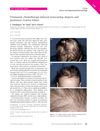
research Permanent chemotherapy-induced nonscarring alopecia and premature ovarian failure
Chemotherapy caused a woman's permanent hair loss and early menopause.