January 2005 in “Journal of Zhejiang University(Sciences Edition)” Yuyi hairless mice lose hair after birth, develop thick, loose skin with folds, and show disorganized skin structure as they age.
 9 citations
,
July 2020 in “Journal of Dermatology”
9 citations
,
July 2020 in “Journal of Dermatology” Asian patients with Frontal Fibrosing Alopecia often lose eyebrow hair and respond well to combined antiandrogen or antimalarial and topical treatments.
 April 2012 in “Informa Healthcare eBooks”
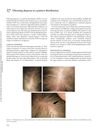
 Fibrosing alopecia in a pattern distribution is a unique hair loss condition with inflammation and scarring, resembling but distinct from common balding.
 February 2026 in “Cosmetics”
 Perifollicular elastolysis is poorly understood, with limited treatment options and inconsistent results.
4 citations
,
June 1989 in “Archives of Dermatology” A man had a black pore on his cheek, which was removed and found to be a hair follicle tumor.
January 2011 in “The Chinese Journal of Dermatovenereology” The woman's skin condition improved with specific oral and topical treatments.
Vertex accentuation is a common pattern in female hair loss.
24 citations
,
January 2018 in “Development” Frizzled 3 and Frizzled 6 together control the orientation of mouse hair follicles.
96 citations
,
December 1995 in “Journal of Investigative Dermatology” November 2019 in “British Journal of Dermatology” FOL-005 peptide may help treat excessive hair growth safely.
24 citations
,
December 1957 in “Experimental Cell Research” The glassy layer of hair follicles has different fibril sizes and arrangements in guinea pigs and young mice.
 89 citations
,
February 2002 in “Australasian journal of dermatology”
89 citations
,
February 2002 in “Australasian journal of dermatology” A premenopausal woman had hair loss and skin issues, treated with topical steroids.
 August 2024 in “Microscopy Research and Technique”
 The study identifies the pheromone gland's location and structure in Endoclita vietnamensis, aiding future pest control methods.
 40 citations
,
June 2011 in “Journal of biological chemistry/The Journal of biological chemistry”
40 citations
,
June 2011 in “Journal of biological chemistry/The Journal of biological chemistry” FA2H is essential for normal fur and sebum production in mice.
 May 2024 in “Frontiers in medicine”
 A genetic mutation in the LIPH gene causes tightly curled hair that stops growing in some Japanese individuals.
 2 citations
,
February 2019 in “Anais brasileiros de dermatologia/Anais Brasileiros de Dermatologia”
2 citations
,
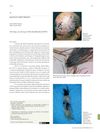
February 2019 in “Anais brasileiros de dermatologia/Anais Brasileiros de Dermatologia” Tufted folliculitis is common in patients with folliculitis decalvans.
 155 citations
,
September 2008 in “British journal of dermatology/British journal of dermatology, Supplement”
155 citations
,
September 2008 in “British journal of dermatology/British journal of dermatology, Supplement” FFA is more common in postmenopausal women, can affect younger women, and may stabilize over time.
2 citations
,
May 2004 in “SKINmed/Skinmed” Proper shaving techniques and treatments can help prevent and manage ingrown hairs and inflammation in people with curly hair.
 September 2022 in “Tạp chí Y Dược học Cần Thơ”
 Grapefruit peel essential oil with Gleditsia sinensis extract can make hair grow faster and longer in mice.
28 citations
,
October 2014 in “Development” Fz3 and Fz6 can partially replace each other in tissue polarity and axon guidance.
 November 2018 in “Skin appendage disorders”
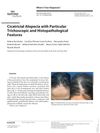
 The document concludes that a woman has both Frontal Fibrosing Alopecia and Lichen Simplex Chronicus, a previously unreported combination of conditions.
264 citations
,
October 1958 in “Archives of Dermatology” A 4-year-old girl has a rare hair condition causing fragile, short hair.
January 2016 in “Indian dermatology online journal” The patient has frontal fibrosing alopecia (FFA).
7 citations
,
September 2017 in “Advances in Clinical and Experimental Medicine” Lanugo hair develops earlier on the back than the front of human fetuses.
2 citations
,
December 2018 Alopecia frontal fibrosante affects facial vellus hair and can be diagnosed with dermatoscopy.
 6 citations
,
July 2015 in “Journal of Investigative Dermatology”
6 citations
,
July 2015 in “Journal of Investigative Dermatology” Chicken feather gene mutation helps understand human hair disorders.
 1 citations
,
September 2021 in “The Journal of Dermatology”
1 citations
,
September 2021 in “The Journal of Dermatology” Japanese cases of fibrosing alopecia show a unique age and hair loss pattern, possibly due to racial differences.
26 citations
,
January 2012 in “Journal of the American Academy of Dermatology” Eflornithine cream makes laser hair removal more effective for treating pseudofolliculitis barbae.
3 citations
,
December 1967 in “Australasian Journal of Dermatology” Becker's Melanosis and Hypertrichosis mainly affects young males, causing brown skin patches and extra hair on one side of the upper body.
Early diagnosis and treatment of frontal fibrosing alopecia are crucial to prevent permanent hair loss.