A boy on a ketogenic diet and anti-epileptic drugs developed skin issues due to stopping vitamin supplements, which improved with proper supplementation.
 8 citations
,
September 2019 in “Eating and Weight Disorders - Studies on Anorexia, Bulimia and Obesity”
8 citations
,
September 2019 in “Eating and Weight Disorders - Studies on Anorexia, Bulimia and Obesity” A woman with anorexia nervosa improved after treatment for pellagra, reminding doctors to check for this deficiency in patients with eating disorders.
October 2019 in “Postgraduate Medical Journal” Pellagrous dermatitis, caused by niacin deficiency, can be cured with vitamin supplements.
2 citations
,
November 1961 in “American Journal of Clinical Nutrition”  June 2017 in “International Journal of Research in Dermatology”
 Skin problems in Timbi were linked to jobs, education, and often improved by treating related health issues, but were worsened by steroid misuse.
 9 citations
,
March 2011 in “Clinical and experimental dermatology”
9 citations
,
March 2011 in “Clinical and experimental dermatology” The document concludes that anticonvulsants like phenytoin may cause skin reactions by affecting tryptophan metabolism and suggests researching vitamin levels in patients with drug reactions.
 December 2024 in “Genome Biology and Evolution”
 Snakes and worm lizards lost claw proteins due to similar evolutionary changes.
Pangolin scales evolved for protection, hardening with age, due to keratin gene diversification.
158 citations
,
January 2009 in “The International Journal of Developmental Biology” Reptile scales help us understand the evolution of skin features like hair and feathers.
 26 citations
,
August 1971 in “Journal of Morphology”
26 citations
,
August 1971 in “Journal of Morphology” Lizards can regrow their tail scales with the same structure, distribution, and gender-specific features as the original ones, and this unique ability is not seen in adult mammals.
 May 2025 in “Journal of Developmental Biology”
 Jawless vertebrates have teeth proteins similar to those in mammalian hair and nails.
72 citations
,
December 2018 in “Journal of Experimental Zoology Part B Molecular and Developmental Evolution” Corneous beta-proteins evolved uniquely in reptiles and birds, forming scales, claws, beaks, and feathers.
 2 citations
,
November 2018 in “JAAD case reports”
2 citations
,
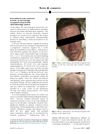
November 2018 in “JAAD case reports” Drinking kava tea can cause a skin reaction with red, swollen bumps, which may improve with steroids.
2 citations
,
August 2021 in “Animal Cells and Systems” Egfl6 is not needed for zebrafish face development.
33 citations
,
October 2012 in “Journal of Morphology” Reptile skin hardens by layering beta-proteins on keratin.
38 citations
,
July 2004 in “Journal of experimental zoology. Part B, Molecular and developmental evolution” Reptilian scales, feathers, and hairs evolved from changes in skin cell interactions.
 9 citations
,
July 2019 in “Folia Morphologica”
9 citations
,
July 2019 in “Folia Morphologica” Brandt's hedgehog has thick skin on its back and many glands near its nostrils.
25 citations
,
October 2002 in “The journal of investigative dermatology/Journal of investigative dermatology” Mouse profilaggrin helps in skin cell differentiation and may be involved in calcium signaling.
 2 citations
,
September 2014 in “Journal of evolution of medical and dental sciences”
2 citations
,
September 2014 in “Journal of evolution of medical and dental sciences” Most HIV patients in the study showed skin and mucous membrane issues, with oral thrush being the most common.
 1 citations
,
May 2023 in “Journal of molecular evolution”
1 citations
,
May 2023 in “Journal of molecular evolution” Pangolins have lost some skin-related genes, but kept others, leading to their unique scales and skin features.
20 citations
,
December 2010 in “Journal of Morphology” Lizard claws have hair-like keratins similar to those in mammals.
 30 citations
,
January 2013 in “Obesity Surgery”
30 citations
,
January 2013 in “Obesity Surgery” Bariatric surgery affects skin health, causing both direct complications and changes in existing skin conditions, often related to nutritional deficiencies.
 1 citations
,
July 2024 in “Indian Journal of Case Reports”
1 citations
,
July 2024 in “Indian Journal of Case Reports” GAPO syndrome causes growth issues, hair loss, missing teeth, and vision problems.
 December 2014 in “Bangladesh Journal of Veterinary Medicine”
 Ectoparasites cause skin issues in Egyptian lesser blind mole rats, affecting their population.
 August 2024 in “Microscopy Research and Technique”
 The study identifies the pheromone gland's location and structure in Endoclita vietnamensis, aiding future pest control methods.
2 citations
,
January 2022 in “Indian dermatology online journal” Dermoscopy may not show hookworms clearly, and comparing it with tissue studies could improve diagnosis accuracy for skin conditions caused by parasites.
 2 citations
,
October 2007 in “Kafrelsheikh Veterinary Medical Journal”
2 citations
,
October 2007 in “Kafrelsheikh Veterinary Medical Journal” Buffalo lips are well-suited for eating plants.
61 citations
,
February 1982 in “Cell and Tissue Research” 24 citations
,
May 2000 in “Journal of the American Academy of Dermatology” Pseudopelade can affect both the scalp and beard, causing hair loss.
8 citations
,
October 2024 in “Developmental Cell”