18 citations
,
January 2018 in “BMC dermatology” A new mutation in the PLEC gene causes a rare condition with skin blistering, muscle weakness, and hair loss.
 September 2024 in “Genes”
 CRABP1 boosts hair cell growth in Hu sheep by affecting key genes.
4 citations
,
February 2023 in “Stem Cell Research & Therapy” Mouse skin cells can become sperm-like cells in the lab.
 2 citations
,
June 2024 in “Frontiers in Plant Science”
2 citations
,
June 2024 in “Frontiers in Plant Science” LLPS is crucial for RALF signaling, aiding plant growth and stress resilience.
49 citations
,
January 2010 in “Plant and Cell Physiology” LPR1 regulates root growth under low phosphate stress independently of SIZ1 in Arabidopsis thaliana.
May 2005 in “Molecular Carcinogenesis” mrp/plf-mRNA can indicate tumor-promoting effects in skin.
 August 2015 in “MOJ proteomics & bioinformatics”
 ePUKs could be valuable for regenerative medicine due to their wound healing abilities.
3 citations
,
July 2022 in “Indian Journal of Dermatology” ALEP is a drug-triggered skin reaction with pustules that clears up in a week after stopping the drug.
Lablab purpureus peptides may effectively kill cancer cells with fewer side effects.
 12 citations
,
June 2020 in “Frontiers in Cell and Developmental Biology”
12 citations
,
June 2020 in “Frontiers in Cell and Developmental Biology” The PP2A-B55α protein is essential for brain and skin development in embryos.
10 citations
,
December 2008 in “Molecular Carcinogenesis” The PML protein helps prevent skin cancer in mice.
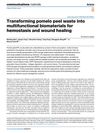 November 2025 in “Communications Materials”
 Pomelo peel can be turned into materials that help stop bleeding and heal wounds better than commercial dressings.
2 citations
,
February 2022 in “bioRxiv (Cold Spring Harbor Laboratory)” Impaired LEF1 activation speeds up skin cell development in Hutchinson-Gilford Progeria Syndrome.
253 citations
,
April 2009 in “Journal of Biological Chemistry” p2y5, now called LPA6, is a receptor important for human hair growth.
 January 2025 in “Cellular and Molecular Biology”
 The PIP5K1A gene helps cashmere growth in goats by promoting cell proliferation, and melatonin boosts its expression.
January 2020 in “Archivio Istituzionale della Ricerca (Universita Degli Studi Di Milano)” Polycomb Repressive Complex 1 is crucial for keeping stem cells stable and maintaining healthy adult tissues.
 November 2022 in “The journal of investigative dermatology/Journal of investigative dermatology”
 A patient with a new PLEC gene mutation showed symptoms of both muscular dystrophy and myasthenia gravis, which improved with steroid treatment.
1 citations
,
January 2026 in “Science Advances” The 3D skin model mimics pemphigus vulgaris and helps test treatments.
August 2015 in “PubMed Central” Epithelial-derived Pop-Up Keratinocytes (ePUKs) may enhance wound healing in regenerative medicine.
8 citations
,
June 2024 in “Pharmaceutics” PEA-ENL improves skin delivery and reduces inflammation without side effects.
1 citations
,
May 2022 in “International journal of molecular sciences” Faulty LEF1 activation causes faster skin cell differentiation in premature aging syndrome.
18 citations
,
February 2024 in “Nutrients” A new pomegranate extract lowers blood pressure and has health benefits.

PmtHEE is a better model for studying pigmented skin because it includes melanocytes and shows improved cell differentiation.
22 citations
,
February 2018 in “International Journal of Pharmacy and Pharmaceutical Sciences” Peperomia pellucida shows promise for developing new therapeutic drugs.
6 citations
,
December 2023 in “Journal of Molecular Cell Biology” Removing Gsdma1/2/3 genes reduces skin cell overgrowth by blocking a specific cell pathway.
2 citations
,
May 2023 in “Biology” New mouse models of Pemphigus show severe symptoms and need better treatments.
 1 citations
,
June 2022 in “Curēus”
1 citations
,
June 2022 in “Curēus” Early detection and multidisciplinary treatment are crucial for managing Papillon-Lefévre syndrome.
33 citations
,
August 2000 in “Experimental Cell Research” 4 citations
,
April 2012 in “The journal of investigative dermatology/Journal of investigative dermatology” Krt16-deficient mice help understand skin disorders like PC and FNEPPK.
1 citations
,
November 2024 in “Orphanet Journal of Rare Diseases” Changes in genes FGA, VWF, and ACTG1 may contribute to pemphigus vulgaris.