660 citations
,
December 2011 in “Cell” Different hair follicles in the skin are innervated by unique combinations of mechanosensory neurons, crucial for touch sensation.
173 citations
,
July 1995 in “Biochemical and biophysical research communications” Male hormones promote hair cell growth by using a growth factor from nearby skin cells.
253 citations
,
December 2007 in “Journal of Investigative Dermatology” Hair follicles prevent NK cell attacks to avoid hair loss.
 23 citations
,
May 2005 in “British Journal of Cancer”
23 citations
,
May 2005 in “British Journal of Cancer” Plucked human hair can be used to study drug effects on certain cell markers.
March 1983 in “The Journal of the American Dental Association”  September 2019 in “The journal of investigative dermatology/Journal of investigative dermatology”
 Mouse skin glands need healthy nerves to grow properly during hair growth phases.
 September 2019 in “Asian Pacific journal of health sciences”
 The study concludes that hair loss in children has specific patterns and causes.
 January 2012 in “Journal of the Dermatology Nurses’ Association”
 The document explains hair growth, hair loss types, and other hair-related terms.
 7 citations
,
August 2005 in “Evolutionary anthropology”
7 citations
,
August 2005 in “Evolutionary anthropology” Human hair is unique and important for understanding human evolution and identity.
86 citations
,
May 2002 in “Journal of comparative neurology” Nerve growth in mouse skin and hair follicles happens in stages and is closely linked to hair development.
 April 2020 in “International journal of research in dermatology”
 An 8-year-old girl has a rare, irreversible hair loss condition caused by a genetic mutation.
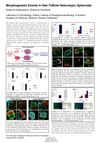
Researchers developed a method to create artificial hair follicles that may help with hair loss treatment and research.
 2 citations
,
July 2005 in “Journal of The American Academy of Dermatology”
2 citations
,
July 2005 in “Journal of The American Academy of Dermatology”  January 2023 in “Vìsnik problem bìologìï ì medicini”
 Androgenic alopecia causes hair follicle degradation and skin restructuring, but some hair elements remain.
2 citations
,
July 2021 in “Bali Medical Journal” A preauricular crease is common in people with coronary artery disease.
 1 citations
,
January 2021 in “Pakistan journal of zoology”
1 citations
,
January 2021 in “Pakistan journal of zoology” Red fox, golden jackal, and gray wolf hairs have similar features but differ in length, thickness, and inner structure.
9 citations
,
January 2005 in “Experimental Dermatology” Human hair follicles can produce stress hormones like the body's main stress response system.
65 citations
,
December 2000 in “PubMed” The biology of skin and hair is complex and not fully understood.
59 citations
,
August 1981 in “PubMed” Trichilemmal keratinization is a unique process in hair follicles where the outer root sheath turns into keratin without a specific layer.
research Hair
May 2024 in “Australasian Journal of Dermatology” Alopecia areata causes significant emotional and social challenges, especially with more hair loss.
July 2026 in “arXiv (Cornell University)” Hair has varying structures and properties along its length.
27 citations
,
July 1993 in “The journal of investigative dermatology/Journal of investigative dermatology”  16 citations
,
November 2022 in “eLife”
16 citations
,
November 2022 in “eLife” Both gene and non-gene areas of DNA evolved to make some mammals hairless.
405 citations
,
January 2004 in “Journal of Investigative Dermatology” Hair follicle size and distribution vary significantly across different body sites.
46 citations
,
May 2006 in “Laser Physics” Particles similar in size to hair cells penetrate hair follicles better.
18 citations
,
April 2010 in “Langmuir” Human hair surface varies in wettability, showing daily and monthly patterns.
3 citations
,
July 1990 in “PubMed” Human hair follicles can grow and form structures in a collagen gel, useful for studying hair cell growth.
13 citations
,
March 2020 in “Spectrochimica Acta Part A Molecular and Biomolecular Spectroscopy” Alopecic hair has more irregular structures and chemical changes than normal hair, reducing its strength.
2 citations
,
January 1986 in “PubMed” PIXE is an effective method to analyze hair's elemental composition.
71 citations
,
January 2012 in “PloS one” The conclusion is that genetic differences affect how the cochlea heals after hair cell loss, which may challenge the creation of hearing loss treatments.