 9 citations
,
September 2016 in “Dermatologic Surgery”
9 citations
,
September 2016 in “Dermatologic Surgery” New LPP subtype affects vellus hairs, mimics AGA, and needs biopsy for diagnosis.
 3 citations
,
February 2020 in “Dermatologic Therapy”
3 citations
,
February 2020 in “Dermatologic Therapy” Reducing micro-inflammation didn't change hair growth patterns in AGA.
 1 citations
,
July 2009 in “Journal of dermatology”
1 citations
,
July 2009 in “Journal of dermatology” A 29-year-old man had a jaw plaque diagnosed as follicular mucinosis, linked to nestin-positive hair follicle stem cells.
October 2025 in “Clinical and Experimental Dermatology” Fibrosing alopecia can be stabilized or improved with anti-inflammatory treatments and hair growth agents.
 14 citations
,
March 2002 in “The journal of investigative dermatology/Journal of investigative dermatology”
14 citations
,
March 2002 in “The journal of investigative dermatology/Journal of investigative dermatology” Patients with severe alopecia areata have higher levels of MIF, which decrease after successful treatment.
January 2013 in “대한피부과학회지” Gefitinib can cause rare scarring hair loss.
4 citations
,
September 2011 in “Journal of the American Academy of Dermatology” A man developed a skin cancer called folliculotropic mycosis fungoides after a kidney transplant.
 17 citations
,
May 1998 in “Contact Dermatitis”
17 citations
,
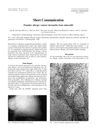
May 1998 in “Contact Dermatitis” Minoxidil can cause pustular allergic reactions on skin.
 November 2020 in “DOAJ (DOAJ: Directory of Open Access Journals)”
 Inflammation plays a key role in male and female pattern hair loss, and focusing on this could help develop better treatments.
 95 citations
,
January 2004 in “Archives of Dermatological Research”
95 citations
,
January 2004 in “Archives of Dermatological Research” Peripilar signs can help diagnose androgenetic alopecia and reveal its cause.
 15 citations
,
December 2011 in “Journal of the European Academy of Dermatology and Venereology”
15 citations
,
December 2011 in “Journal of the European Academy of Dermatology and Venereology” Hair loss in systemic lupus erythematosus patients is unique and improves with treatment.
 16 citations
,
February 2010 in “Journal of the European Academy of Dermatology and Venereology”
16 citations
,
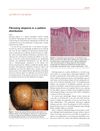
February 2010 in “Journal of the European Academy of Dermatology and Venereology” Fibrosing alopecia in a pattern distribution is a unique hair loss condition that may respond to antiandrogen therapy.
 9 citations
,
July 2020 in “Journal of Dermatology”
9 citations
,
July 2020 in “Journal of Dermatology” Asian patients with Frontal Fibrosing Alopecia often lose eyebrow hair and respond well to combined antiandrogen or antimalarial and topical treatments.
September 2025 in “Brazilian Journal of Health Review” Early diagnosis and less aggressive hair care improve outcomes for Black women with frontal fibrosing alopecia.
January 2024 in “International Journal of Trichology” Recognizing perinevoid alopecia and concentric regrowth is important for diagnosing and treating alopecia areata.
 August 2023 in “JAAD Case Reports”
 A woman with lupus experienced hair regrowth after treatment, but hair transplantation is not advised for her condition.
 November 2022 in “JAAD case reports”
 A man with skin and hair symptoms improved partially with specific treatment.
 March 2019 in “Nasza Dermatologia Online”
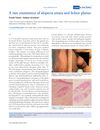
 A man had both alopecia areata and lichen planus, which is uncommon.
 November 2018 in “Skin appendage disorders”
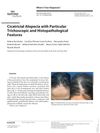
 The document concludes that a woman has both Frontal Fibrosing Alopecia and Lichen Simplex Chronicus, a previously unreported combination of conditions.
 76 citations
,
June 2008 in “Journal of the American Academy of Dermatology”
76 citations
,
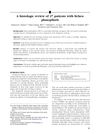
June 2008 in “Journal of the American Academy of Dermatology” The conclusion is that certain scalp tissue changes are characteristic of lichen planopilaris, with mucinous perifollicular fibroplasia being a new feature for diagnosis.
7 citations
,
August 2019 in “American Journal of Dermatopathology” Frontal fibrosing alopecia on limbs shows permanent inflammatory hair loss, not typical scarring.
 January 2018 in “Skin appendage disorders”
 A woman's hair loss was correctly diagnosed as Lichen planopilaris after initial misdiagnosis, highlighting the usefulness of trichoscopy in diagnosing hair disorders.
 February 2013 in “Journal of the American Academy of Dermatology”
 A woman's hair loss looked like a different condition due to her hairstyle, and treatment stopped further hair loss but didn't regrow hair.
September 2011 in “Chinese Journal of Dermatology” A man's skin condition was misdiagnosed and later identified as a rare type of skin cancer, which did not improve with treatment.
 7 citations
,
January 2009 in “Immunological investigations”
7 citations
,
January 2009 in “Immunological investigations” A 3-year-old boy lost all his hair due to a rare reaction to phenobarbital, but it grew back after steroid treatment.
 33 citations
,
July 1992 in “Journal of Investigative Dermatology”
33 citations
,
July 1992 in “Journal of Investigative Dermatology” Minoxidil doesn't affect perifollicular lymphoid infiltration in alopecia areata patients.
 16 citations
,
April 2007 in “Journal of Medical Primatology”
16 citations
,
April 2007 in “Journal of Medical Primatology” The monkey's hair loss was due to an autoimmune disease, not genetics.
 19 citations
,
September 2014 in “JAMA Dermatology”
19 citations
,
September 2014 in “JAMA Dermatology” Eosinophilic infiltrate is not a reliable indicator for diagnosing chronic alopecia areata.
 May 2015 in “Journal of The American Academy of Dermatology”
 Some people may temporarily lose more hair in certain areas after a hair transplant.
 9 citations
,
August 2014 in “The Journal of Dermatology”
9 citations
,
August 2014 in “The Journal of Dermatology” Scalp areas that look normal in people with hair loss may still show signs of disease under a microscope.