 19 citations
,
August 2012 in “Cell death and differentiation”
19 citations
,
August 2012 in “Cell death and differentiation” Intu gene is crucial for hair follicle formation by helping keratinocytes differentiate through primary cilia.
5 citations
,
August 2012 in “Experimental Dermatology” Artemis phosphorylation at Ser516 may help regulate skin and hair structures.
 January 2018 in “bioRxiv (Cold Spring Harbor Laboratory)”
 Researchers found key regions in the mouse hairless gene that control its activity in skin and brain cells, affecting hair follicle function.
 20 citations
,
August 2005 in “Journal of Cutaneous Pathology”
20 citations
,
August 2005 in “Journal of Cutaneous Pathology” The protein ARA70/ELE1 is involved in male pattern baldness, and lower levels of its short form may lead to hair thinning.
 18 citations
,
December 2020 in “Frontiers in cell and developmental biology”
18 citations
,
December 2020 in “Frontiers in cell and developmental biology” miR-140-5p in certain cell vesicles helps hair growth by boosting cell proliferation.
 October 2025 in “bioRxiv (Cold Spring Harbor Laboratory)”
 Aging reduces hair cell size and function in mice, contributing to hearing loss.
 17 citations
,
September 2010 in “Pediatric dermatology”
17 citations
,
September 2010 in “Pediatric dermatology” A 15-year-old with KID syndrome developed a rare skin condition called PEHFN.
 January 2021 in “Plant Archives/Plant archives”
 Dogs with ear infections have a higher rate of yeast infection, especially German Shepherds, with seasonal variations observed.
April 2023 in “The journal of investigative dermatology/Journal of investigative dermatology” MEF2C is crucial for normal hair cycle progression.
January 2026 in “PLoS Biology” ARHGEF3 is essential for proper hair follicle development in mice.
3 citations
,
February 2015 in “Mechanisms of development” Hormones and stretching both needed for nipple area skin growth in mice.
April 2023 in “Journal of Investigative Dermatology” PRP can improve hair growth in people with hair loss, but more research is needed.
December 1978 in “Indian Journal of Otolaryngology and Head & Neck Surgery”  26 citations
,
January 2014 in “Cell Structure and Function”
26 citations
,
January 2014 in “Cell Structure and Function” Human sweat glands contain stem cells capable of self-renewal and forming different cell types.
 December 2020 in “Research Square (Research Square)”
 150 kHz Electromagnetic Radiation seems to reduce the number and size of ovarian cysts in rats with PCOS, with minimal changes in developing follicles.
10 citations
,
August 2013 in “Experimental Dermatology” Hairless protein and putrescine regulate each other, affecting hair growth and skin balance.
 61 citations
,
October 1996 in “Development”
61 citations
,
October 1996 in “Development” Hair growth can be stimulated by combining certain skin cells, which can rejuvenate old cells and cause them to specialize in hair follicle creation.
 14 citations
,
June 2001 in “Endocrinology”
14 citations
,
June 2001 in “Endocrinology” Prolactin affects when mice shed and grow hair.
 103 citations
,
March 2015 in “Nature Communications”
103 citations
,
March 2015 in “Nature Communications” A genetic region near the PAX1 gene is linked to a higher risk of scoliosis in females.
26 citations
,
May 1988 in “Pediatric dermatology” Eruptive vellus hair cysts can run in families.

Skin stem cells in hair follicles are important for touch sensation.
 April 2016 in “Journal of Investigative Dermatology”
 Mice without the p21 gene can fully regenerate injured ears due to reduced Sdf1 increase and leukocyte recruitment, suggesting new ways to induce tissue regeneration in mammals.
 April 2026 in “Communications Biology”
 The development of breeding tubercles in male zebrafish relies on a specific enzyme that processes hormones.
24 citations
,
March 2008 in “Neuroscience Research” Cat paws have complex touch sensors for detailed sensory processing.
 6 citations
,
January 2011 in “Journal of pediatric endocrinology & metabolism/Journal of pediatric endocrinology and metabolism”
6 citations
,
January 2011 in “Journal of pediatric endocrinology & metabolism/Journal of pediatric endocrinology and metabolism” An 11-year-old Greek girl was diagnosed with a rare genetic disorder, highlighting the importance of genetic testing and family history.
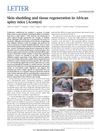 418 citations
,
September 2012 in “Nature”
418 citations
,
September 2012 in “Nature” African spiny mice can regenerate skin, hair, and cartilage, but not muscle, and their unique abilities could be useful for regenerative medicine.
3 citations
,
April 2024 in “Molecular Human Reproduction” Paxillin may help manage androgen-related disorders like PCOS by stabilizing androgen receptor proteins.
 November 2020 in “bioRxiv (Cold Spring Harbor Laboratory)”
 Dermal EZH2 controls skin cell growth and differentiation in mice.
 4 citations
,
October 2018 in “Cell Stem Cell”
4 citations
,
October 2018 in “Cell Stem Cell” Hox genes control hair growth patterns in mammals by regulating stem cell activity in the skin.
March 1998 in “Journal of Dermatological Science” Eccrine gland activity may be linked to alopecia areata.